Top dairy CEO quits
Arguably one of the country's top dairy company's chief executives, Richard Wyeth has abruptly quit Chinese owned Westland Milk Products (WMP)
 increase font size
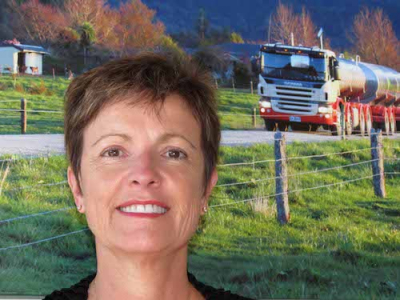 Toni Brendish, Westland Milk.
Troubled milk processor Westland Milk is on track to achieve a target of saving $78 million, says chief executive Toni Brendish.
The savings are equivalent to $1.20/kgMS for the co-op and its 350 farmer shareholders.
However, Brendish cautions that the cost savings must be more than a one-off.
“The efficiencies and savings have to be embedded as part of the way we work; this has included a review of our strategy to ensure it is fit for purpose for the dairy market and, more specifically, the future of Westland,” she says in the co-op’s 2017 annual report.
After a rocky couple of years Westland Milk is on the road to recovery; it posted a break-even profit of $29,000 before tax for the financial year to July 31.
Last year’s dismal result brought shareholder discontent to its peak and prompted big changes to the company’s leadership.
The co-op has announced a forecast payout range for the current season of $6.40 - $6.80/kgMS.
Brendish is spearheading a recovery achieved by increasing efficiencies and cutting costs in key areas of the business. Notable tactics are making it right first time, efficiencies in transportation and logistics, getting sales and IT right, improving procurement processes and contracts, and getting much better at sales and operating planning.
Westland chairman Pete Morrison agrees the new ways of working at board and management levels have led to a change of culture at the co-op.
Extensive new thinking had come into the company with new management, a revised board structure and better ways of working, he says.
“The 2016-17 financial year for Westland Milk Products was characterised by challenge and change,” Morrison says.
“We began the 2016-17 year under considerable financial pressure. Shareholders, quite rightly, were demanding answers and calling for the board and management to do much better and reverse the loss making result of the year before.”
Morrison said shareholders, boosted by an industry-competitive payout prediction, are now showing more confidence in their company.
“We have a new way of working at board and management levels, and this has permeated throughout the staff, where I am seeing and hearing a new confidence and culture emerging.
“This will be reflected in our shareholder community as we restore and grow pride in our company and utilise its heritage as an asset. Establishing our point of difference and securing our place in a growing and increasingly diverse international market is vital.”
Arguably one of the country's top dairy company's chief executives, Richard Wyeth has abruptly quit Chinese owned Westland Milk Products (WMP)

OPINION: This old mutt well remembers the wailing, whining and gnashing of teeth by former West Coast MP and Labour Agriculture Minister Damian O’Connor when Chineseowned Yili took over the troubled dairy company Westland Milk a few years back.
Westland Milk has reaffirmed its commitment to pay farmer suppliers 10c above Fonterra farm gate milk price for the following two seasons.
Not all milk processors in New Zealand are struggling; just look at Westland Milk Products on the West Coast.
Dairy farmers supplying Chinese-owned Westland Milk Products in Hokitika had another reason to celebrate this holiday season.
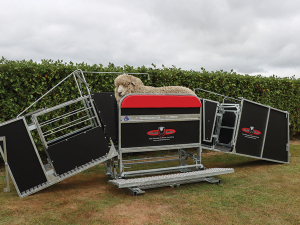
Oamaru-based livestock handling specialist Te Pari has bought Combi Clamp, the New Zealand manufacturer of Combi Clamp manual sheep handlers.
Agriculture Minister Todd McClay has admitted that a scheme bringing workers from Pacific nations to work on orchards has become too hard to navigate but says changes are coming.
A new app designed in New Zealand aims to help sheep, beef and deer farmers capture, analyse and use body condition score data more effectively.
Canterbury farmer Andy Macfarlane has been appointed to the board of AgriZeroNZ, the public-private partnership designed to accelerate the development and deployment of emissions reduction tools for New Zealand farmers.
For over 50 years Mel Ewers has been supporting the apple sector navigate through compliance and quality assurance issues.
The apple sector is enjoying a bumper harvest season.