Fonterra FY26 Results: $9.69 Milk Price, $3.4bn Profit
Fonterra has unveiled its annual results for the 2026 financial year, posting $27 billion in revenue and close to $20 billion returned to New Zealand farmer owners and unit holders.
 increase font size
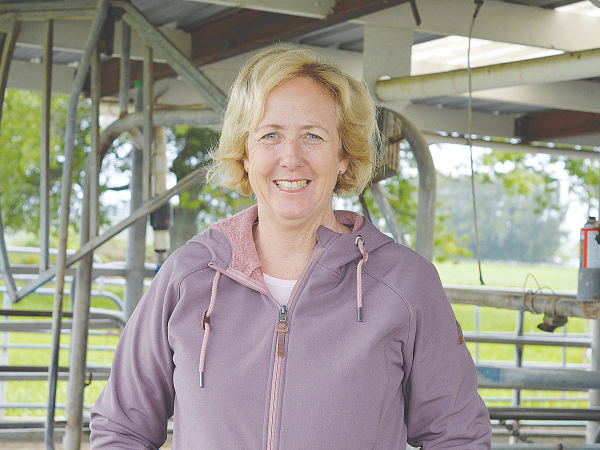 Former Fonterra director Donna Smit says it’s been a privilege to serve on the co-op board.
Former Fonterra director Donna Smit's six-year tenure on the board can be best described as a game of three halves.
There was the baptism of fire at the start, the reset in the middle and then Fonterra entering a "future facing phase".
The Edgecumbe farmer stepped down at the co-op's annual meeting in Rotorua earlier this month, confident that the company is in an excellent position.
Speaking to Dairy News on her farm, Smit recalled her first day as a director.
"It started with a baptism of fire, with my first day at Fonterra being something I will never forget," she tells Dairy News.
She quickly adds that she's pleased to say that things are a lot better now.
"Everything has changed: the strategy, the culture, the people, the financial results - they had to."
Smit believes a lot of the "less than ideal behaviours" were a function of the stress that everyone was under.
There were a few offshore investments that were not performing. Fonterra had just come through a five year period of milk supply growth, facing a 25% increase in milk being processed, loaded and sold to 150 markets worldwide.
The balance sheet was squeezed, building large manufacturing assets ahead of the milk supply forecast, she recalls.
The co-op had also just come through a capital structure change to Trading Among Farmers (TAF), which had divided the shareholder base and not raised a cent of capital for Fonterra's balance sheet.
"We had a 'three V' strategy, which did not resonate with its farmer supplier owners, to be globally relevant by moving volume to value at velocity.
"We had had the Sanlu issue and then the false positive WPC80 precautionary recall.
"We had competitor processors increasing their footprints in NZ. Fonterra's credit rating had gone from A+ to A. We had the very unpopular 90 day supplier payment terms.
"The growth in the dairy industry had meant not only Fonterra's balance sheet was highly geared, but the dairy industry was also highly geared."
Smit says there were "dominant personalities" that appeared not hear an alternative view. Directors that challenged were treated badly: one director Leonie Guiney couldn't re-contest and lost her place for a year before shareholders brought her back.
"Everyone was doing their best but there were layer upon layer of issues and the culture reflected this," she says.
Then came the "reset" where Smit felt the directors were like commercial cleaners.
There were wholesale changes to the board and management.
New independent directors Scott St John and Bruce Hassall and new farmer directors joined the board, long-time director John Monaghan had to step in as interim chair and a few years later Peter McBride took over as chair.
Fonterra also appointed Miles Hurrell as the new chief executive and Marc Rivers as new chief financial officer. A new auditor was also appointed.
There were changes on how the company operated: a new strategy to focus on New Zealand milk was announced, new dividend and debt gearing policies were announced and a new risk appetite.
The function of the Shareholders Council was reviewed.
Smit notes that during this time Fonterra posted its first loss.
But she points out that although the co-op was trading at a profit, it had to write down the book value of some offshore assets (China Farms and Beingmate, DPA Brazil, Fonterra brands NZ and Australia) and there was the Danone settlement.
"Although this was a difficult period, I believe the owners of the business appreciate the new openness and transparency," she says.
But it wasn't all doom and gloom.
There were shining lights: the Foodservice business in China was experiencing excellent growth and returns, says Smit.
"Our balance sheet was strengthening with a better dividend policy, and asset sales funds were being used to reduce debt.
"The risk appetite statement made a real difference, and the post investment reviews are driving accountability.
"Our annual financial statements even won a communications award and a gold medal at the Australasian Reporting Awards.
"There were big changes to the notes with better explanations of how valuations were calculated. The road show presentations were shortened and there was more time allocated for questions. Price relativities and their impact on Fonterra's earnings are clearly reported."
Smit believes Fonterra then moved into a "future facing Fonterra" stage.
"We addressed the capital structure and the potential fund size exceeding the pre-set guidelines with the new Flexible Capital Structure proposal, which is before Parliament right now.
"Fonterra's Long Term Aspiration blueprint to 2030 was released which sets Fonterra up for the future. It not only shows the co-op's strategy, focus on NZ milk, to lead innovation & science, and to lead in sustainability, the best thing is it has the financial metrics which strengthens Fonterra's accountability to its farmer shareholders and unit holders."
Smit says it's been a privilege to serve on the Fonterra board.
"I would like to thank all those who have supported me on this journey."
She remains excited about the innovation space - especially some of the items in the pipeline with the partnership with Massachusetts Institute of Technology (MIT) and Professor Ian Hunter.
"The Nutritional Science strategy, which will focus on moving farmers' milk up the value chain, could really move the dial," she says.
Fonterra has unveiled its annual results for the 2026 financial year, posting $27 billion in revenue and close to $20 billion returned to New Zealand farmer owners and unit holders.
Fonterra Co-operative Group has confirmed the independently assessed candidates standing for election to its board in 2026.
Fonterra has revised its Farmgate Milk Price forecast for the 2026/27 season, lifting the midpoint and narrowing the range on the back of improving global dairy commodity prices.
Outgoing Fonterra Co-operative Council chair John Stevenson says that it has been a privilege to represent the co-op's farmer shareholders.
OPINION: It seems Canterbury processor Synlait is still in the doldrums.


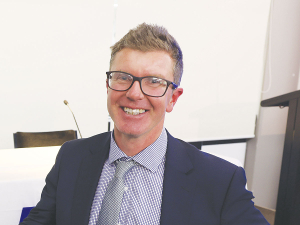
LIC shareholders have elected a new North Island representative to the co-operative's Board, along with five representatives to its Shareholder Reference Group (SRG), following the company's Annual Meeting held in Invercargill.
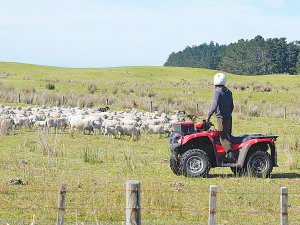
Farmers across parts of Southland and South Otago are continuing to deal with difficult conditions after a prolonged run of wet weather, with pressure building around feed supply, stock management, pasture damage, farm infrastructure and everyday workloads.
Federated Farmers says it welcomes Labour's commitment to reviewing the Sharemilking Agreements Act, calling on other major parties to do the same.
For Canterbury dairy farmers Sian Meijer and Rick Wobben, wearable technology has become one of their most valuable on-farm tools - helping manage 1850 cows across an expansive, high-performing dairy operation while improving efficiency, mating outcomes and day-to-day decision making.
Fonterra has unveiled its annual results for the 2026 financial year, posting $27 billion in revenue and close to $20 billion returned to New Zealand farmer owners and unit holders.
The first major update to the Dairy Cattle Code of Welfare in more than a decade has been released, marking what DairyNZ describes as an important step in ensuring animal welfare standards continue to evolve alongside scientific evidence and on-farm realities.