Fonterra CFO Andrew Murray Resigns
Fonterra Co-operative Group chief financial officer Andrew Murray has resigned to take up a role outside the dairy giant.
 increase font size
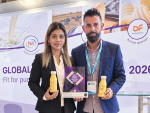
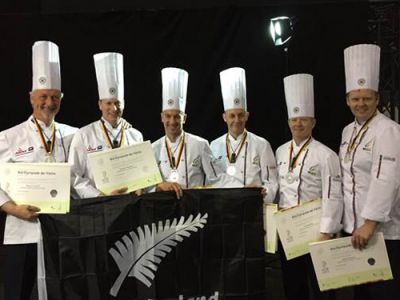 NZ Anchor Food Professionals team bring home silver from the Culinary Olympics. From left to right: Stephen Le Corre, Richard Hingston, Darren Wright, Corey Hume, John Kelleher and Mark Sycamore.
The New Zealand Anchor Food Professionals’ team of chefs has taken out silver at the 2016 Culinary Olympics in Erfurt, Germany.
The team won the silver medal in the all-important Hot Kitchen section with their New Zealand-focused menu of salmon entrée, lamb loin main course, and South Pacific-inspired dessert.
This comes on top of winning two bronze medals in the cold Culinary Arts section two days earlier. Pastry chef Ganesh Khedekar created a chocolate centrepiece featuring Gollum which was a huge drawcard for the crowds.
Fonterra’s director of Global Foodservice Grant Watson, who’s with the team in Germany, congratulated the team and says the silver medal is thoroughly deserved.
“It’s been 28 years since a New Zealand last competed in the Culinary Olympics here in Germany. What they’ve accomplished is nothing short of amazing. Their hot dishes were exquisite and loved by the 110 guests and judges who were at the dinner.”
Fonterra’s global foodservice business, Anchor Food Professionals, sponsored the team to compete at the Culinary Olympics through a shared love of creating great food, using top quality ingredients.
Prior to heading to Germany, the team honed their skills and the menu at a series of regional ‘feasts’ up and down the country, while also practising for their cold table presentation.
NZChefs’ president and chef de mission to the New Zealand team, Graham Hawkes, says the team is thrilled with the result.
“The chefs have put everything into this competition. The food they served up to a sold out service really wowed the guests and the judges, and gave them a real taste of New Zealand,” Hawkes says.
The chefs who competed in the Hot Kitchen section at the Culinary Olympics are Steve Le Corre, Mark Sycamore, John Kelleher, Darren Wright, Richard Hingston and Corey Hume, aided by kitchen technician Anita Sarginson.
The first Culinary Olympics was held in 1900 in Germany, when four countries competed but has grown to more than 2000 chefs from 40 countries serving up their best for the judges.
Fonterra Global Category and Innovation manager Keith McDonald, who’s handled logistics for the team in Germany says the chefs have run on adrenalin and very little sleep since arriving there.
“Every minute has been spent driving perfection in their dishes so to take out silver against other countries’ teams that spend all year travelling from competition to competition is a fantastic achievement. These guys have definitely earned this medal,” McDonald says.
“And in 2020, we hope to be back for gold,” adds Hawkes.
The overall winner for 2016 was Singapore.
Fonterra Co-operative Group chief financial officer Andrew Murray has resigned to take up a role outside the dairy giant.

Four candidates have been confirmed for two director positions on Fonterra’s board.
A record farmgate milk price and strong global demand is laying the foundation for continued growth of organic dairy farming in New Zealand.
Waikato milk processor Tatua has again declared a record milk payout to farmer shareholders, leaving other processors in the dust.
Fonterra has unveiled its annual results for the 2026 financial year, posting $27 billion in revenue and close to $20 billion returned to New Zealand farmer owners and unit holders.


Fonterra Co-operative Group chief financial officer Andrew Murray has resigned to take up a role outside the dairy giant.
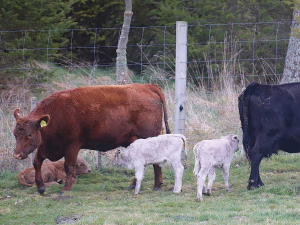
A major move is about to get underway to improve the quality and viability of dairy beef and cattle in NZ.
Veterinarians say changes to the code of welfare for dairy cattle provides a positive foundation for improved cattle welfare across the country.
Today, 15 October, is the International Day of Rural Women, which recognises rural women’s contribution to farming, communities and the environment.
Global dairy giant Lactalis has integrated its Australian operations with the Mainland Dairy consumer business it acquired from Fonterra earlier this year.
High country stations, mixed sheep and beef farms, Māori-owned farms, corporates and family operations are among the nine commercial farms taking part in the Livestock Innovation Farming Transformation programme, known as LIFT.