PC1 Pause Looms as Coalition Targets Waikato Farm Rules
A pause on Waikato Regional Council's (WRC) plan change that sets new freshwater rules for farming could be announced in the coming weeks.
 increase font size
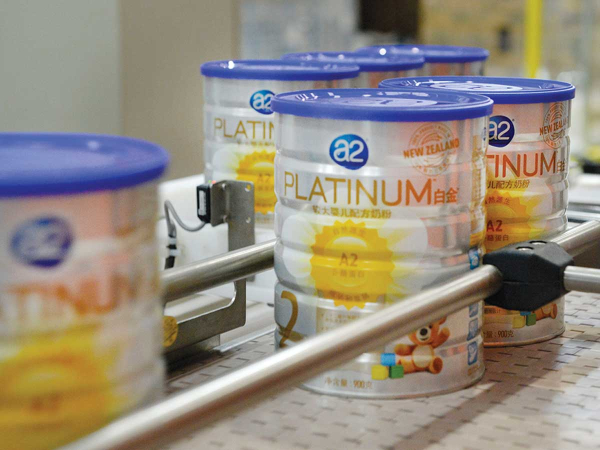 Some NZ manufacturers are unhappy with proposals to change the standards for how infant formula is labelled, marketed and sold to consumers.
A trans-Tasman battle is brewing over a proposal to introduce changes to packaging and labelling regulations for infant formula.
Earlier this year, Food Standards Australia New Zealand (FSANZ) issued several proposals to change the standards for how infant formula is marketed and sold to consumers.
Several NZ infant formula manufacturers oppose the proposed changes: they come after a review of the standards, which according to FSANZ’s 445-page approval report, were “functioning adequately”, however there was room to clarify some standards and improve alignment with newer international benchmarks.
The proposed new and altered standards include the introduction of new restrictions on the labelling of ingredients within infant formulas.
FSANZ claims in its Decision Regulation Impact Statement that, currently, the labelling and packaging of infant formula are misleading for parents and caregivers.
“For example, consumer research has shown that the marketing of formulas for colic and reflux can suggest to some caregivers that what the infant is eating must be causing the problem and can imply that changing (either from another infant formula or from breastfeeding) to a specialised formula for the condition will solve the problem,” the statement says.
The statement also claims that the similarities between packaging for toddler formula and infant formula – which are often displayed next to each other in supermarkets – have led some parents and caregivers to provide their infants with toddler formula.
It also states that “the majority of caregivers find reading the nutrition information panel on infant formula different”.
However, according to Infant Nutrition Council chief executive, Jonathan Chew, the proposed standards would undermine the ability of parents to make informed choices regarding the food they give their children.
“Several New Zealand manufacturers of infant formula believed this would have significant unintended consequences for their businesses, both domestically and overseas,” Chew told Dairy News.
Thus, late last month, at the trans-Tasman Food Ministers meeting in Adelaide, New Zealand Food Safety Minister Andrew Hoggard voted to reject the standards, something the industry supports.
However, the Australian Ministers – who outnumber Hoggard nine to one – blocked that move, meaning New Zealand will be left to come up with a modified standard.
“It is unfortunate that the Australians believed that in order to protect breastfeeding, you need to make formula as unappealing and complicated to use as possible,” says Chew.
According to Chew, the new standards put Australia out of alignment not only with New Zealand, but also the European Union, the US, and other regions.
“The Infant Nutrition Council believes you can promote breastfeeding without creating confusion and chaos for parents who – for whatever reason – need to use infant formula as the only safe and healthy alternative to breastmilk,” he adds.
Questions emailed to Hoggard’s office remain unanswered when we went to print.
A pause on Waikato Regional Council's (WRC) plan change that sets new freshwater rules for farming could be announced in the coming weeks.
New Zealanders are being urged to be alert following a confirmed positive case of H5 bird flu this week.
OPINION: Farmers are being put on notice by the Green Party.
Retiring MP and dairy farmer Mark Cameron is blasting the Green Party for proposing to ban the use of synthetic fertiliser and cutting cow numbers.
OPINION: While we're on the topic of lumberjacks, Biosecurity Minister Andrew Hoggard has no doubt used a chainsaw hundreds of times, but your old mate reckons he would’ve still been sweating on getting it right when cutting down a pine in front of the cameras, as he did above Queenstown during a recent pre-Budget announcement around extra funding for wilding pine control efforts.



Testing confirms H5 bird flu in a single northern giant petrel, found dead on a remote Cape Palliser beach in the Wairarapa, says Dr Mary van Andel, the Ministry for Primary Industries' (MPI) Chief Veterinary Officer.

"What's for dinner?" may sound like a simple question, but for many Kiwi parents, answering it has become a job in itself.
Fifty Eight years ago, on the 16th of August 1968, August Claas, the founder of the harvesting company and father of Helmut Claas, personally presented a Claas Senator combine harvester to Scottish farmer John Steven.
New Zealand consumers are paying more for beef mince than ever before, with the average retail price now sitting above $24 per kilogram, according to Rabobank.
State farmer Pamu has delivered its strongest operating result on record.
Four years since it was first detected in New Zealand, researchers and growers now know much more about management of maize pest fall armyworm (FAW).