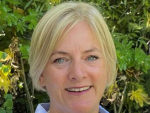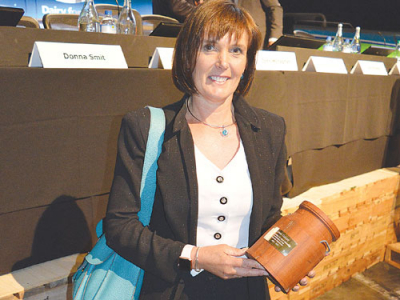
Guiney says she made herself available for re-election via the independent nomination process but wasn’t endorsed by a key board sub-committee. Here’s what she told shareholders at Fonterra’s annual meeting this month:
It says ‘it starts here’ on all our supply numbers in Fairlie. It’s especially poignant for me that we should be in Hawera today because my life working with dairy farmers began here in 1991.
South Taranaki farmers taught me how to farm a pasture curve for cash. That inspired my entire career in dairying, I developed a particular passion for what is done with that cash, to secure the long term future of New Zealand dairy farming.
Thank you for your support in giving me a mandate to serve on our cooperative and for your investment in me in the last three years. I have poured myself into our cooperative, as I have into the industry I love, for 26 years.
The co-op is greater than any one individual, and what matters most is that we never forget why the co-op exists. It was formed to give us competitive market strength offshore; the risk of becoming a price-taking peasant is real, but easy to take for granted when we have known nothing but a strong co-operative.
Value can be added anywhere along the supply chain, but the question of who captures that is the reason we need to own and control it.
Fonterra’s milk supply depends on shareholders trusting the stewardship of their capital. We need to be sure, not to surrender our business sense at corporate governance level.
I was committed to the desire to see Fonterra management allocate time and capital in proportion to where we can best compete and succeed. As a shareholder -- one of many who has built capital from profitable farming of cows -- I remain committed to that.
However, the greatest competitive strength of our co-operative -- which competitors can’t match -- is the loyal supply that comes as a result of trust in a collective purpose. That depends on the trust being reciprocated, on people on the board believing they can entrust farmers with bad news as well as good.
Farmers need to be confident that the board is asking the same the questions they (the farmers) would ask if they had access to all the information the (board) has, and that is where our now-undemocratic election creates a risk.
Forthrightness and candour with shareholders is not a Fonterra strength yet. An election system that gives a committee of the board the tools to remove their colleagues has implications over time for courage, bluntness and honesty on a board.
I congratulate the new directors and genuinely look forward to your contribution.
We do have a champion; retaining farmer control of that is in shareholders’ hands.
We have a very bright future, if we stay focussed on why we exist and for whom; you can be reassured we have high quality and very committed staff and senior management in Fonterra.
It is in shareholders’ hands to elect governors who can give a clear steer to management on why we exist. We need to be careful not to surrender our business sense to corporate slogans.