Federated Farmers Welcomes ACT’s New Farming Policies
Federated Farmers has welcomed new rural policies released by ACT, saying they align closely with its own election priorities.
 increase font size
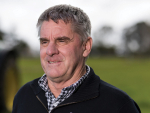
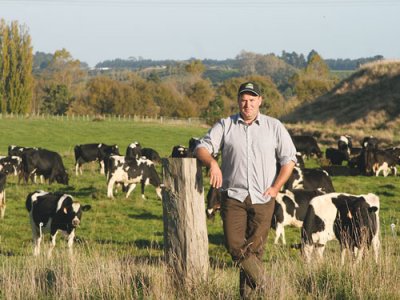 Andrew Hoggard.
Expect more flak from politicians and others as New Zealand moves into general election mode, says Federated Farmers Dairy chair Andrew Hoggard.
He told Dairy News that election year traditionally means people put the boot into dairy farmers for whatever reason; it’s a time when various parties offer solutions which normally mean taxing farmers more.
He says this past year has been pretty tough for farmers and everyone has dug deep to get through it, a few people dropping out because the going has got too hard.
“But it’s not only the payment side of it, but all the SAFEs and Greenpeaces who have put the boot into us. Everyone seems to have nitrogen myopia when it comes to water quality. They seem to forget that phosphates and E.coli and sediment are also problems that can occur in waterways. We have been under a siege mentality for the last year. But the payment side of things is looking positive.”
In an attempt to counter negative criticism Hoggard says he’s made a point of getting on the front foot by telling the public the true story about the dairy sector. Much of the criticism is due to the expansion of the dairy industry, he says.
“Dairy has done well and this has had an impact to some degree. I don’t know if the criticism was unjust, but certainly the level of it was.
“I get annoyed that the good things dairy does don’t get recognised. There has been a concerted effort by farmers to mitigate things and the industry has improved the situation and it would be nice to occasionally get some credit for that.”
Hoggard says most New Zealanders have some understanding of dairying’s contribution to the economy, but he acknowledges it is hard for someone in, say, retailing in a city to think about the value of dairying.
Various mayors of Palmerston North, near where he lives, have said that if dairying was to go the local economy would be severely impacted.
Looking back on the last two years of low farmgate milk prices, Hoggard says dairy farmers should learn from this, especially the pressure of excessive debt.
“Farmers must budget on the fact that the industry will be up and down, and structure their businesses to meet that.”
They must also consider the environment, animal welfare and treating their staff well.
Federated Farmers has welcomed new rural policies released by ACT, saying they align closely with its own election priorities.
Federated Farmers is backing Feilding High School’s call to keep Agriculture and Horticultural Science as a standalone subject in Year 11.
As part of its Election 2026 coverage, Rural News asked political parties how they would help pull the arable sector out of the doldrums. Here's what they said:
National’s pledge to introduce 19 new national standards shows the party is serious about getting Wellington out of farming, Federated Farmers says.
OPINION: Rivers never sit still. They start as snowmelt and rain in the high country, pick up a creek here and a stream there, and carry all of it down to where it's needed.


Federated Farmers has welcomed new rural policies released by ACT, saying they align closely with its own election priorities.

Rural Contractors NZ says proposed changes to land transport rules for agricultural vehicles are a welcome response by the Government to out of date regulations which have seen members hit with huge fines.
Alliance is calling for final applications for its 2027 Graduate Programme, with applications closing on Sunday 25 October.
Decades piloting planes has ensured vet and farmer David Hayes is focused on safety. So, after a serious accident while welding on farm, he is sharing his experience so others can learn from it.
Canterbury milk processor, Synlait Milk has confirmed Leon Fung as its chief executive officer.
OPINION: Making it easier to collect rainwater and use it to grow crops and livestock is a no brainer.