Environment Southland Urges Vigilance After New Old Man's Beard Infestation Found Near Dipton
Environment Southland is calling on residents to be vigilant and check their properties after a new Old Man's Beard site was discovered near Dipton.
 increase font size
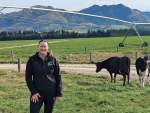
 Karl Erikson, Environmental Southland.
Environment Southland has taken to the air in an effort to identify potential trouble spots ahead of this year’s winter grazing season.
A helicopter has made two flights around the province, concentrating on “risky” hill country areas and looking for paddocks where recently-sown winter forage crops are beginning to show themselves.
Environment Southland land sustainability officer Karl Erikson said they were looking for spots that could be risky when grazed by animals, such as gullies and swales that lead into waterways, where forage crops appeared to have been sown right up to water without much buffer, or where winter rain could create mud and overland flow into waterways.
Farmers identified as having potential problem areas will be offered help in managing them.
The initiative follows a fractious winter grazing season last year, when Southland winter grazing practises were targetted in national publicity campaigns by environmentalists, leading to some confrontations between farmers and activists.
Erikson said research by AgResearch on managing critical source areas in two different catchments produced “quite staggering” results with up to 90% difference in sediment flow.
“We’ve got ways and means and strategies on how to keep animals out, basically how to keep vegetation between animals and waterways, throughout the winter grazing period.”
Speaking before the flights, Erikson said they couldn’t do every farm but were looking for the ones that looked the worst.
“We’re not going to get everyone but we want to be able to try to fly over and find those areas that could be risky.
“It’s really a proactive measure to try and improve the winter grazing practises from what we saw last year.”
Environment Southland chief executive Rob Phillips said ES focused on working with the rural community to understand and support good management practices.
“No one wants to see a repeat of last year’s winter grazing issues, so this is a proactive, positive step to help farmers be in the best position to improve this year.”
 |
|---|
|
Environment Southland chief executive Rob Phillips. |
The ES land sustainability team will now offer the identified farmers a voluntary winter grazing plan and advice on improving and grazing those paddocks.
“The plan is being offered as part of our service, so comes at no additional cost,” said Phillips.
“The plan will be like a road map for how to apply good management practice in a challenging winter grazing paddock.”
Erikson conceded that some farmers might resent the aerial intrusion.
“But I’d like to think that farmers will support it because it is a proactive measure. These plans are going to be offered; they’re not an obligation.
“We’re going to be saying ‘we’ve seen this winter grazing paddock and it could be risky in winter time. We’re going to offer this winter grazing plan at no extra charge just to help you manage the winter grazing period, with some strategies that might help you reduce the contaminant losses to waterway.”
Farmers back aerial blitz
Federated Farmers Southland president Geoffrey Young said the Feds “absolutely” supported the aerial effort because it was more about education than compliance.
“Everyone in the farming community along with Environment Southland and other environmentalists all want to do better.”
Young said farmers were more conscious of the issues, both environmental and around animal welfare.
“Nothing will ever be perfect with winter grazing but we all want to do the very best that we possibly can.”
Both DairyNZ and Beef+Lamb NZ back the ES initiative: extension staff also went on the helicopter to help identify crops and problem areas.
DairyNZ strategy and investment leader, Dr Jenny Jago, said much work had been done to address poor winter grazing practices.
“We’re encouraged by progress that’s been made on many dairy farms, but there is still opportunity for improvement.
“We all share a vision for healthy water quality and excellent animal care in Southland, and we are committed to continuing to improve wintering practices and support farmers through change.”
Environment Southland is calling on residents to be vigilant and check their properties after a new Old Man's Beard site was discovered near Dipton.

Southland farmers staring down a May deadline to submit freshwater farm plans under current regional plan rules have been given an 18-month reprieve by the Government.
Southland farmers are being encouraged to get ahead of the winter grazing season by attending a practical field day in Pukerau next week.
Environment Southland is welcoming this week’s decision by the Environmental Protection Authority (EPA) to approve the release of Blaptea elguetai, a leaf‑feeding beetle that will help control the highly invasive Chilean flame creeper.
Environment Southland is inviting feedback on two bylaws that play a critical role in safeguarding the region's waterways and ensuring the safety of the local community.
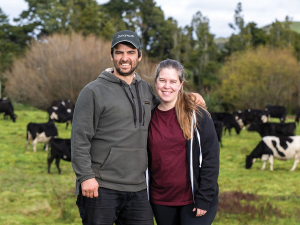
Signing up to a benchmarking tool is not about competition, but about improving collectively, says Ximena Puig and Alvaro Luzardo who are 50-50 sharemilkers at a 164-hectare (effective) dairy farm in Eketāhuna in the Lower North Island.

A leading British farming politician says he's impressed with the positive attitude of New Zealand farmers that he met during his recent trip here.
OPINION: With 10,500 dairy farms, New Zealand continues to punch above its weight around the world.
The Southern Dairy Hub (SDH), which runs a demonstration farm for South Island farmers, has a new general manager.
Esther Guy-Meakin has been announced as the new chief executive of the New Zealand Meat Board (NZMB).
According to a progress report on the Aotearoa Horticulture Action Plan (AHAP), New Zealand's horticulture sector is making real progress on the big issues facing growers.