Dairy Sector Drives Strong Rural Property Market Activity in NZ
The latest data from the Real Estate Institute of New Zealand (REINZ) reveals a mixed rural property market due to consistent inflation concerns.
 increase font size
 Farm sales increased by 22.3% in the three months ended December 2019 compared to the three months ended November 2019.
Farm sales were down 21.6% for the three months ended December 2019 versus the year prior — but sales look to be lifting.
Data released today by the Real Estate Institute of New Zealand (REINZ) shows that farm sales increased by 22.3% in the three months ended December 2019 compared to the three months ended November 2019, with 345 and 282 sales respectively.
The lift follows a fall in the year ending December 2019: 1,266 farms were sold in 2019, 15.8% fewer than 2018, with 41.6% less dairy farms, 2.8% less Grazing farms, 31.4% less finishing farms, and 10.8% less arable farms sold.
The median price per hectare for all farms sold in the three months to December 2019 was $38,152 compared to $40,589 recorded for three months ended December 2018 (-6.0%).
The median price per hectare decreased by 3.8% compared to November 2019.
Five of the 14 regions recorded an increase in the number of farm sales for the three months ended December 2019 compared to the three months ended December 2018 with the most notable being Auckland (+12) and West Coast and Otago (both +5).
Waikato recorded the most substantial decline in sales (-32 sales) followed by Northland and Southland (both -16 sales).
Compared to the three months ended November 2019, nine regions recorded an increase in sales with the biggest increase being in Manawatu/Wanganui (+23), Waikato (+19) and Taranaki (+7 sales).
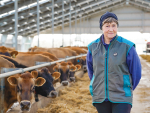
“Whilst sales volumes for the 3-month period ending December 2019 were down significantly on the equivalent period 12 months ago, there was nevertheless a distinct improvement on the previous 3-month period ending November 2019,” says REINZ Rural Spokesman, Brian Peacocke.
 |
|---|
|
REINZ Rural Spokesman, Brian Peacocke. |
“Of particular significance was the lift in dairy farm sales in the Waikato, from 2 per month for October and November to 11 for December 2019.
“Modest gains were also recorded in the finishing and horticulture sectors, with a strong lift in volume in the grazing sector during the month of December.
“Product prices remained strong leading into the Christmas/New Year holiday period, with increasingly optimistic forecasts emerging for the milk payout in the dairy sector.
“There is little evidence of change in the market-suppressing stance from the majority of the trading banks where it would appear one bank in particular is enjoying the benefit of leaving the shop door open.
“Whilst rural morale is generally good, a mood of caution exists relating to the forthcoming summer dry period, and huge sympathy is evident as New Zealand farmers empathize with their fire-ravaged Australian counterparts,” says Peacocke.
The latest data from the Real Estate Institute of New Zealand (REINZ) reveals a mixed rural property market due to consistent inflation concerns.
The Real Estate Institute of New Zealand (REINZ) has released its latest rural property report, providing a detailed view of New Zealand’s rural real estate market for the 12 months ending December 2025.
Buoyed by strong forecasts for milk prices and a renewed demand for dairy assets, the South Island rural real estate market has begun the year with positive momentum, according to Colliers.
Farm sales are on the rise. According to recent data from the Real Estate Institute of New Zealand (REINZ), there was an 18.9% increase in farm sales for the three months ending August 2024 compared to the same period in 2023.
It could be that buyers are hunting out the right farm to purchase as farm sales drop for the three months ended December 2023. That’s according to the Real Estate Institute of New Zealand (REINZ).


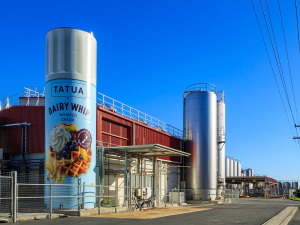
Waikato milk processor Tatua has again declared a record milk payout to farmer shareholders, leaving other processors in the dust.

A Labour-led Government won’t be bringing back the controversial freshwater rules of 2020.
National’s much-touted free trade deal with India featured in the Rural Issues Debate at Mystery Creek, Hamilton on Wednesday night.
New Zealand's 2026-27 freshwater fishing season has opened, with anglers encouraged to head to rivers and lakes over the coming days as conditions look favourable across much of the country.
Central Otago District Council (CODC) has voted against a plan to spread treated sewage sludge from Cromwell and Alexandra on farmland near Lauder, a decision Federated Farmers says reflects strong opposition from rural residents.
Pāmu has released its FY26 Integrated Annual Report, reporting a Net Operating Profit of $113 million, more than double the $49 million recorded in FY25.