Dairy Sector Drives Strong Rural Property Market Activity in NZ
The latest data from the Real Estate Institute of New Zealand (REINZ) reveals a mixed rural property market due to consistent inflation concerns.




 increase font size
 Uncertainty surrounding product prices, particularly for the dairy and pastoral farming sectors, is weighing heavily on buyers’ decisions.
Recent data from the Real Estate Institute of New Zealand (REINZ) shows October was another month in which there were fewer farm sales than at the same time in 2022.
Overall, there were 156 farm sales in the three months ended October 2023, down 20% on the 195 farm sales completed in the three months ended October 2022.
In the year to October 2023, 34.5% fewer dairy farms and 8.6% fewer dairy support farms were sold compared to October 2022.
For the three months ended October 2023, the median sales price per hectare for dairy farms was $32,690 (15 properties), compared to $32,690 (15 properties) for the three months ended September 2023, and $47,565 (24 properties) for the three months ended October 2022.
The median price per hectare for dairy farms has decreased 31.3% over the past 12 months. The median dairy farm size for the three months ended October 2023 was 118 hectares.
Three regions recorded an increase in the number of farm sales for the three months ended October 2023 compared to the three months ended October 2022, with the most notable being Waikato (+6 sales) and Auckland (+5 sales).
Canterbury ( -15 sales) and Bay of Plenty ( -9 sales) recorded the largest decreases in sales.
REINZ rural spokesperson Shane O’Brien says these latest statistics represent a continuing trend throughout 2023 with a decrease in the volume of sales across all categories across most of the country. “An increase in sales is noted in both the Auckland and Waikato regions but a drop in the volume of sales compared to the same time last year was evident in Canterbury and Southland,” O’Brien says.
He says much of the decrease in volume can be offset by a late Spring with many properties coming to the market later than normal due to the wet winter while some vendors could be choosing to wait for some direction from the recent general election before going to market.
“There appears to be no shortage of listings across New Zealand this spring, giving buyers a healthy selection,” O’Brien says.
“Many buyers however are being cautious around environmental compliance and future land uses.”
O’Brien says uncertainty surrounding product prices, particularly for the dairy and pastoral farming sectors, is weighing heavily on buyers’ decisions.
However, he says, the recent confirmation of the three-way coalition between National, ACT and NZ First and the promise of a ‘farmer-friendly’ government should impact market sentiment.
“Strong recent sales in the Waikato in the dairy support sector are an encouraging sign, but there are still some headwinds facing the horticulture and forestry sectors that have slowed sales this quarter,” he explains.
O’Brien says that the median sale price paid across New Zealand has increased slightly in the last quarter and is up on the same time 12 months earlier.
“While this is an encouraging sign, market vendors do need to be mindful that with an abundance of listings and a cautious pool of buyers, any offers when presented may need to be carefully considered as buyers take into account the changing dynamics of the market.”
The latest data from the Real Estate Institute of New Zealand (REINZ) reveals a mixed rural property market due to consistent inflation concerns.
Farm sales are on the rise. According to recent data from the Real Estate Institute of New Zealand (REINZ), there was an 18.9% increase in farm sales for the three months ending August 2024 compared to the same period in 2023.
It could be that buyers are hunting out the right farm to purchase as farm sales drop for the three months ended December 2023. That’s according to the Real Estate Institute of New Zealand (REINZ).
Recently released data from the Real Estate Institute of New Zealand (REINZ) shows there were 77 fewer farm sales for the three months ended November 2023 than for the three months ended November 2022.
Recent data from the Real Estate Institute of New Zealand (REINZ) shows a 22.5% drop in the amount of farm sales for the three months ended July 2023 than for the same period in 2022.


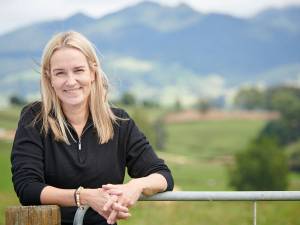
Minister of Conservation Hon Tama Potaka has appointed Susan O'Regan as Chair of the Queen Elizabeth II National Trust (QEII) for a three-year term.
Red meat farmers are welcoming Labour’s plan to review the Emissions Trading Scheme and not to campaign on pricing agricultural emissions.
Where any worker in the kiwifruit industry is mistreated, we expect the authorities to take action.
Mid Canterbury Federated Farmers arable chair, Bevan Lill, said Beef + Lamb NZ data indicated that for the last six years, the average arable return on investment was about 0.8% while inflation ran about 4% - so the average arable farm was going backwards at about 3% a year.
Seed and grain companies share the concerns of arable farmers about the viability of their sector, says Seed and Grain New Zealand chief executive Dr Sarah Clark.
The New Zealand Institute of Forestry (NZIF) says unnecessary changes to New Zealand’s Emissions Trading Scheme (NZ ETS) will seriously erode investor confidence and result in significant reductions in forest planting rates.




OPINION: It seems Canterbury processor Synlait is still in the doldrums.
OPINION: Get offside with New Zealand First leader Winston Peters at your own peril.




