EU dairy co-ops to merge
Two European dairy co-operatives are set to merge and create a €14 billion business.
 increase font size
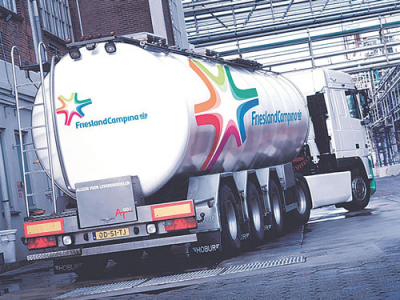 FrieslandCampina is eyeing GE-free milk cheese for German consumers.
A group of farmer shareholders in the European co-op FrieslandCampina will start producing milk without using genetically engineered animal feed.
The few hundred farmers living near two FrieslandCampina cheese plants in Germany will participate in the pilot project. They will get a premium price for the GE-free milk, to be made into cheese for the German market.
The products will conform to the VLOG standard set by a German association responsible for certifying products and issuing the Ohne Gentechnik label. The VLOG association was founded in 2010 and is recognised by the German government.
A number of FrieslandCampina dairy farmers in Germany are already producing milk bearing the Ohne Gentechnik label for Landliebe products.
FrieslandCampina says the move will capitalise on the growing demand from German supermarkets for foodstuffs produced without any genetic engineering in the production chain.
A few hundred member dairy farmers in the vicinity of the cheese plants in Born and Workum have the opportunity to participate in the pilot. These may give their cows only feed that meets the VLOG criteria.
“It is of major importance that no use is made of feed produced with or from genetically modified organisms, like much soy meal coming from the US,” the co-op says.
“Locally grown roughage, such as grass and maize, which is by far the most important feed for cows, does meet the VLOG criteria. Before the milk may be used in products featuring the VLOG label, the cows must have been fed in conformity with the VLOG criteria for three months.”
As a result of the higher feed costs at the farms, and higher logistic and production costs, cheese with the VLOG label costs more than regular cheese. Participating dairy farmers will receive an extra $1.59/100 kgMS on top of the
FrieslandCampina guaranteed price for farm milk to compensate for the higher feed costs.
FrieslandCampina says its cheese plants in Born and Workum (the Netherlands) will be prepared for separate processing of the different milk flows.
On genetic modification, the co-op says it remains open to “research, innovation, basic materials and products in which, in a responsible way, use is made of genetic modification proven safe and approved as such by the responsible authorities”.
Two European dairy co-operatives are set to merge and create a €14 billion business.
One of the world's largest dairy co-operatives is reporting a slump in half-year profits on the back of declining commodity prices and lower sales volumes.
Three major Dutch agribusinesses are joining forces to reduce nitrogen emissions at dairy farms.
European dairy co-operative FrieslandCampina is trialling a feed additive that is said to reduce methane emissions from cows by 30%.
One of the world's largest dairy co-operatives celebrated its 150th birthday this month.


Now in its fourth year, the 2026 Fencing Industry Awards, formed part of the proceedings of the FCANZ Conference, held in Nelson during August.
DairyNZ deputy chair Cameron Henderson has been re-appointed unopposed for another term.
OPINION: The stats speak for themselves.
Farms across the upper North Island are trialling different pasture mixes as part of a research programme that aims to build greater resilience into farming systems.
Election years are always a concerning time for farmers, according to DairyNZ chair Tracy Brown.
The Ballance Farm Environment Awards are coming to the West Coast of the South Island.