EU dairy co-ops to merge
Two European dairy co-operatives are set to merge and create a €14 billion business.




 increase font size
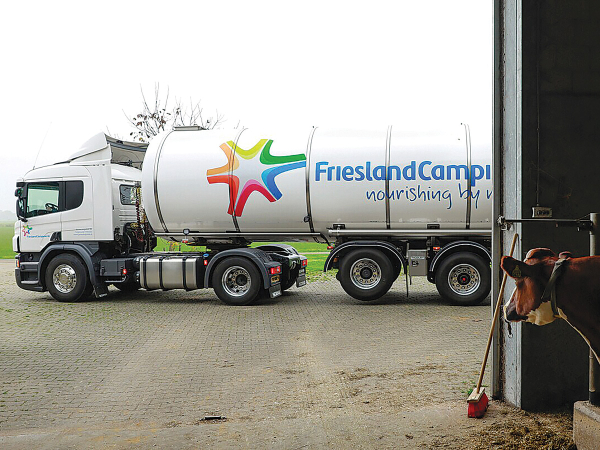 Dutch co-op FrieslandCampina’s half-year profit has plummeted.
One of the world's largest dairy co-operatives is reporting a slump in half-year profits on the back of declining commodity prices and lower sales volumes.
For the first six months of 2023, Royal FrieslandCampina, owned by 15,000 farmers in Netherlands, Belgium and Germany, recorded an operating profit of 47 million Euros, an 86% drop compared to the same period last year. Net profit decreased by 94.2% in comparison to the first half of 2022 to 8 million Euros.
The co-operative says the first half of 2023 was challenging.
The milk price that FrieslandCampina paid to its member dairy farmers was high relative to the sharply declined market prices for commodity dairy products, particularly for cheese and butter.
Expensive product stocks had to be sold in a declining dairy market. Furthermore, volumes declined as markets suffered due to a loss of purchasing power and a shift in consumer spending towards private label.
The co-op says its Food & Beverage and Trading business groups were hit the hardest by this. The Ingredients and Specialised Nutrition business groups on the other hand had a good start of the year, but this could not compensate the loss in profitability at the other two business groups.
As a result of the above developments, net profit declined sharply in the first half of the year.
In the first half of 2023, FrieslandCampina's revenue increased by 4.6% to 6.9 billion Euros compared to 6.6 billion Euros in the same period last year, primarily driven by earlier implemented price increases.
However, in the first half of 2023, commodity dairy prices dropped faster than the milk price paid by FrieslandCampina to its member dairy farmers based on its milk price system. On top of this, stocks produced at a higher cost price had to be sold at a lower market value, which had an adverse effect on profitability.
FrieslandCampina chief executive Jan Derck van Karnebeek says the results for the first half of the year are not at the level one can expect from the co-op.
"Improving our profitability in 2023 and beyond is therefore our top priority," he says.
"That is why we have implemented short-term cost savings without jeopardising our long-term growth prospects. In addition, we are working on refining our strategy, known as 'Expedition 2030', to structurally improve the profitability of the company, including the lower-margin product and customer segments.
"We look at both the revenue and the cost side of the company for this. Making FrieslandCampina more sustainable, for example by implementing our climate plan, will also be an important focus point within Expedition 2030."
Despite the challenging circumstances, FrieslandCampina says it is investing in future growth and sustainability.
In the Netherlands, FrieslandCampina Ingredients opened a new, sustainable production facility for lactoferrin, an important, high-quality protein for infant and adult nutrition.
A large-scale pilot with a methane-reducing feed additive, in which almost 160 dairy farms with a total of almost 20,000 cows participated, was successfully completed.
This is promising news relating to the future reduction of greenhouse gas emissions at dairy farms, it says.
The co-op is expecting a slightly better second half this year.
"For the second half of 2023, the milk price paid to the member dairy farmers and commodity dairy prices are expected to converge," it says.
"As a result, losses seen in the first half of 2023 due to the difference between milk price paid to member dairy farmers and the lower market value of stocks at the time of sale are expected to have a lower impact in the second half of the year."
However, volumes are expected to remain under pressure in all markets due to inflation.
Two European dairy co-operatives are set to merge and create a €14 billion business.
Three major Dutch agribusinesses are joining forces to reduce nitrogen emissions at dairy farms.
European dairy co-operative FrieslandCampina is trialling a feed additive that is said to reduce methane emissions from cows by 30%.
One of the world's largest dairy co-operatives celebrated its 150th birthday this month.
One of the world’s largest dairy cooperatives is moving to 100% recycled polyethylene terephthalate (PET) bottles from next month.


Federated Farmers says it welcomes Labour's commitment to reviewing the Sharemilking Agreements Act, calling on other major parties to do the same.
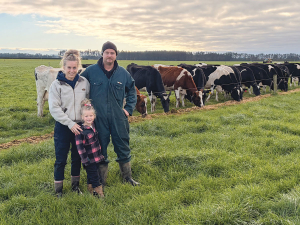
For Canterbury dairy farmers Sian Meijer and Rick Wobben, wearable technology has become one of their most valuable on-farm tools - helping manage 1850 cows across an expansive, high-performing dairy operation while improving efficiency, mating outcomes and day-to-day decision making.
Fonterra has unveiled its annual results for the 2026 financial year, posting $27 billion in revenue and close to $20 billion returned to New Zealand farmer owners and unit holders.
The first major update to the Dairy Cattle Code of Welfare in more than a decade has been released, marking what DairyNZ describes as an important step in ensuring animal welfare standards continue to evolve alongside scientific evidence and on-farm realities.
Ravensdown shareholders have elected Jane Montgomery and Kate Acland to the Ravensdown Board for three-year terms, following a closely contested director election.
Federated Farmers says new legislation replacing the Resource Management Act will cut red tape, unlock investment and help grow New Zealand's export-led economy, after the Planning Bill and Natural Environment Bill passed their third reading in Parliament yesterday.



OPINION: It seems Canterbury processor Synlait is still in the doldrums.
OPINION: Get offside with New Zealand First leader Winston Peters at your own peril.




