Fonterra FY26 Results: $9.69 Milk Price, $3.4bn Profit
Fonterra has unveiled its annual results for the 2026 financial year, posting $27 billion in revenue and close to $20 billion returned to New Zealand farmer owners and unit holders.
 increase font size
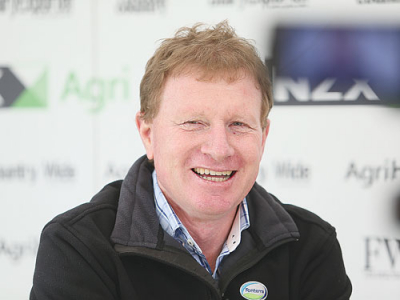 John Wilson.
Fonterra chairman John Wilson says weather conditions over spring will be crucial to this season’s milk production.
While Fonterra is forecasting a 3% rise in milk production this season, Wilson points out that comes off a poor 2016-17 season.
Last year it collected 1.526 billion kgMS; this season’s forecast is 1.575b kgMS.
Wilson says last year’s season was impacted by a poor spring.
“We had a difficult spring and quite a good summer and autumn, yet we ended 3% down,” he told Dairy News.
“This season, we looked at what a normal spring would be like and given that some regions might be drier than others, overall we are looking at 3% more milk based on last year.”
Wilson says conditions so far have been challenging; the last nine months saw normal 12-month rainfall across much of the country.
In the North Island such difficult conditions have not been seen for many years.
“It has been difficult for farmers, their families, staff and stock,” he says.
“A lot depends on what sort of weather we get over the next three to four weeks; it’s getting warmer and that’s a good sign.”
Wilson says at the moment milk production is flat on last year but he expects it to rise as the co-op moves towards peak production later this month.
ANZ rural economist Con Williams agrees the weather will play a crucial role. Right now New Zealand production is on a “knife-edge” and could go either way.
“Pasture remains sodden in the North Island but generally better in the South Island.
“But equally last year’s poor performance through the seasonal peak for milk production would appear difficult to repeat, especially with farmers using more supplementary feed to maintain pasture quality and cow condition and to fill feed deficits.
“So all eyes will be on the weather for the next month or so.”
Williams says the latest dairy auction disappointed and it may now take more than a NZ production downgrade and reduced GDT volumes to hold the milk price at $6.75/kgMS.
“Prices fell for all products apart from cheese.”
Noticeably milk powder and milkfat curves were all going down.
“That means that while there is still short-term supply/demand pressure, the market appears to be banking on a rebound in NZ supply and increases elsewhere [namely Europe].”
He says last week’s auction confirms that the only thing holding up whole milk powder and butter prices recently was short NZ supplies.
While Chinese demand has been solid, it hasn’t been spectacular. Other Asian and Middle East buyers have stepped up to the mark but have struggled to absorb the higher GDT supply (Oct is peak).
“All up, softer NZ production could still see a milk price of $6.75/kgMS, but if not it seems something around the mid-$6/kgMS is more likely,” says Williams.
Fonterra has unveiled its annual results for the 2026 financial year, posting $27 billion in revenue and close to $20 billion returned to New Zealand farmer owners and unit holders.
Fonterra Co-operative Group has confirmed the independently assessed candidates standing for election to its board in 2026.
Fonterra has revised its Farmgate Milk Price forecast for the 2026/27 season, lifting the midpoint and narrowing the range on the back of improving global dairy commodity prices.
Outgoing Fonterra Co-operative Council chair John Stevenson says that it has been a privilege to represent the co-op's farmer shareholders.
OPINION: It seems Canterbury processor Synlait is still in the doldrums.



Federated Farmers says it welcomes Labour's commitment to reviewing the Sharemilking Agreements Act, calling on other major parties to do the same.
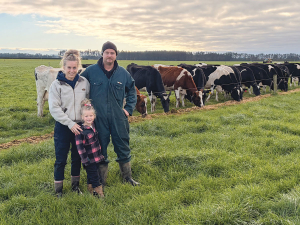
For Canterbury dairy farmers Sian Meijer and Rick Wobben, wearable technology has become one of their most valuable on-farm tools - helping manage 1850 cows across an expansive, high-performing dairy operation while improving efficiency, mating outcomes and day-to-day decision making.
Fonterra has unveiled its annual results for the 2026 financial year, posting $27 billion in revenue and close to $20 billion returned to New Zealand farmer owners and unit holders.
The first major update to the Dairy Cattle Code of Welfare in more than a decade has been released, marking what DairyNZ describes as an important step in ensuring animal welfare standards continue to evolve alongside scientific evidence and on-farm realities.
Ravensdown shareholders have elected Jane Montgomery and Kate Acland to the Ravensdown Board for three-year terms, following a closely contested director election.
Federated Farmers says new legislation replacing the Resource Management Act will cut red tape, unlock investment and help grow New Zealand's export-led economy, after the Planning Bill and Natural Environment Bill passed their third reading in Parliament yesterday.