Fonterra FY26 Results: $9.69 Milk Price, $3.4bn Profit
Fonterra has unveiled its annual results for the 2026 financial year, posting $27 billion in revenue and close to $20 billion returned to New Zealand farmer owners and unit holders.
 increase font size
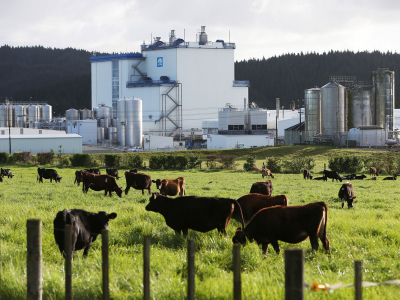 Fonterra lost $605 million in the 2019-20 year.
Fonterra has announced a loss of $605 million for 2019-20.
The co-op’s normalised earnings before interest and tax (EBIT) was $819 million, down 9%: return on capital was 5.8%, down from 6.3%. The co-op says its free cashflow was $1,095 million, up 83% - mostly on the back of proceeds from sale of assets.
Fonterra chief executive Miles Hurrell says that 2019 was incredibly tough for the co-op but it was also the year Fonterra made decisions to set it up for future success.
“These included us reflecting changing realities in asset values and future earnings, lifting our financial discipline, getting clear on why we exist and completing a strategy review.
“Many of these calls were painful, but they were needed to reset our business and achieve success in the future.
“We made the decision to reduce the carrying value of several of our assets and take account of one-off accounting adjustments. These totalled $826 million, which contributed to a Net Loss After Tax of $605 million for FY19.
“As we do every year, we took a hard look at our asset valuations and future earnings potential. When it came to DPA Brazil, Fonterra Brands New Zealand and China Farms, we saw there were either some changes in their local economies, increased competition or business challenges impacting their forecast earnings. This meant we needed to reduce their carrying value.
“Clearly, any write-down of an asset is not done lightly. But what I hope people can also see is that we’re leading the co-op with a clear line of sight on potential opportunities as well as the risks.”
Commenting on the underlying performance of Fonterra, Hurrell said Fonterra’s normalised earnings per share for the year was 17 cents, which was above the last forecast for the year of 10-15 cents.
“The gross margin from our largest business, New Zealand Ingredients, was $1,332 million, up 3% on last year due to increased sales and price performance.
“Our Foodservice performance also improved on last year, with gross margin up 10%. This was despite lower total sales volumes, following a slow start to butter sales in Greater China and Asia.
“But we can’t ignore that we had a number of challenges across the year – these included Australia Ingredients, our businesses in Latin America and the consumer businesses in Sri Lanka, Hong Kong and New Zealand.”
Fonterra has unveiled its annual results for the 2026 financial year, posting $27 billion in revenue and close to $20 billion returned to New Zealand farmer owners and unit holders.

Fonterra Co-operative Group has confirmed the independently assessed candidates standing for election to its board in 2026.
Fonterra has revised its Farmgate Milk Price forecast for the 2026/27 season, lifting the midpoint and narrowing the range on the back of improving global dairy commodity prices.
Outgoing Fonterra Co-operative Council chair John Stevenson says that it has been a privilege to represent the co-op's farmer shareholders.
OPINION: It seems Canterbury processor Synlait is still in the doldrums.


Federated Farmers says it welcomes Labour's commitment to reviewing the Sharemilking Agreements Act, calling on other major parties to do the same.
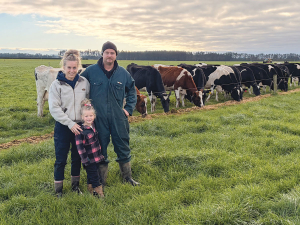
For Canterbury dairy farmers Sian Meijer and Rick Wobben, wearable technology has become one of their most valuable on-farm tools - helping manage 1850 cows across an expansive, high-performing dairy operation while improving efficiency, mating outcomes and day-to-day decision making.
Fonterra has unveiled its annual results for the 2026 financial year, posting $27 billion in revenue and close to $20 billion returned to New Zealand farmer owners and unit holders.
The first major update to the Dairy Cattle Code of Welfare in more than a decade has been released, marking what DairyNZ describes as an important step in ensuring animal welfare standards continue to evolve alongside scientific evidence and on-farm realities.
Ravensdown shareholders have elected Jane Montgomery and Kate Acland to the Ravensdown Board for three-year terms, following a closely contested director election.
Federated Farmers says new legislation replacing the Resource Management Act will cut red tape, unlock investment and help grow New Zealand's export-led economy, after the Planning Bill and Natural Environment Bill passed their third reading in Parliament yesterday.