Fonterra CFO Andrew Murray Resigns
Fonterra Co-operative Group chief financial officer Andrew Murray has resigned to take up a role outside the dairy giant.
 increase font size
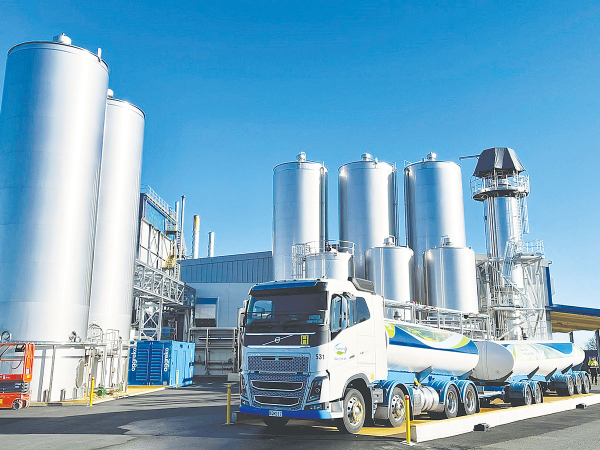 Fonterra will spend $700 million to improve its manufacturing operations and supply chain emissions footprint.
Fonterra is splashing out $700 million to improve its manufacturing operations and supply chain emissions footprint.
The cc-operative has come out with a new Scope 1&2 emissions reduction target which it says will be achieved by bringing forward some of its work to get out of coal. The Government will chip in $90m.
Fonterra chief executive Miles Hurrell says the co-op is targeting a 50% absolute reduction in Scope 1&2 emissions by 2030, from a 2018 baseline, an increase on its previous target of a 30% reduction by 2030.
“Fonterra’s Scope 1&2 emissions largely come from our manufacturing operations and supply chain. Strengthening our emissions reduction target supports our ambition to be net zero by 2050,” says Hurrell.
Achieving the new target will require Fonterra to continue to undertake energy efficiency improvements and fuel switching to renewable energy source activities across its milk collection fleet and manufacturing sites, with a focus on the six where it uses coal.
To do this, Fonterra is forecasting an investment of $790 million, including a government contribution of up to $90 million through the Government Investment in Decarbonising Industry (GIDI) fund.
Hurrell says as a co-op, Fonterra understands how it can achieve more by working together.
“The addition of Government funding enables us to lift our 2030 ambition to reduce Scope 1&2 emissions by 50% and optimise our process to get out of coal by 2037.
“Our decarbonisation plan will see us explore multiple technologies to ensure the most efficient phase out of coal and transition to renewable energy across our manufacturing sites, while building resilience into our operations.
“We are already well underway with shifting our manufacturing operations to renewable energy sources. Over the past five years, we have carried out decarbonisation projects at five different sites and we’re looking forward to continuing this momentum.
“We’re currently assessing biomass, electrification and heat pump technology at our Clandeboye and Edendale sites. We see these technologies as the best solutions possible at this stage.
“Accelerating our plans will help Fonterra continue to present our customers with the world’s lowest carbon dairy at scale. It will also contribute to New Zealand meeting its climate targets while delivering benefits across regional New Zealand, such as job opportunities in local communities,” says Hurrell.
The co-op is currently talking with farmers about a Scope 3 emissions target, which will be announced shortly.
Fonterra Co-operative Group chief financial officer Andrew Murray has resigned to take up a role outside the dairy giant.

Four candidates have been confirmed for two director positions on Fonterra’s board.
A record farmgate milk price and strong global demand is laying the foundation for continued growth of organic dairy farming in New Zealand.
Waikato milk processor Tatua has again declared a record milk payout to farmer shareholders, leaving other processors in the dust.
Fonterra has unveiled its annual results for the 2026 financial year, posting $27 billion in revenue and close to $20 billion returned to New Zealand farmer owners and unit holders.


National’s pledge to introduce 19 new national standards shows the party is serious about getting Wellington out of farming, Federated Farmers says.
The National Party’s policies to make it easier to grow fresh vegetables, secure reliable water and energy and simplify farm planning are practical changes that will give growers the confidence to invest, according to Horticulture New Zealand (HortNZ).
Fonterra Co-operative Group chief financial officer Andrew Murray has resigned to take up a role outside the dairy giant.
A major move is about to get underway to improve the quality and viability of dairy beef and cattle in NZ.
Veterinarians say changes to the code of welfare for dairy cattle provides a positive foundation for improved cattle welfare across the country.
Today, 15 October, is the International Day of Rural Women, which recognises rural women’s contribution to farming, communities and the environment.