New Rural Recycling Scheme to Replace Voluntary Farm Plastics Programmes by 2027
Environment Minister Nicola Grigg has announced details of a new rural plastics recycling scheme.
 increase font size
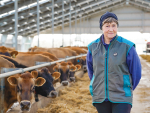
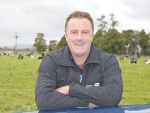
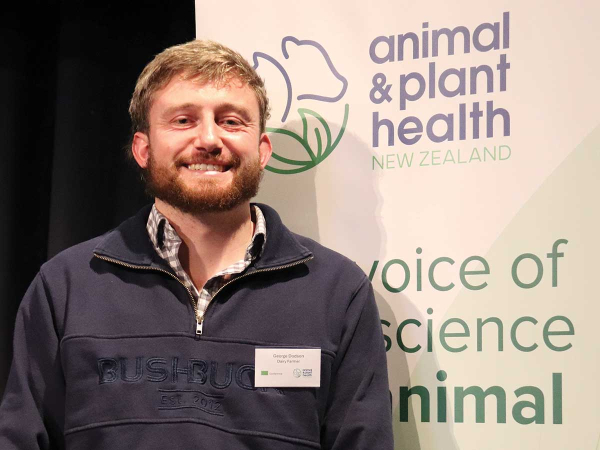 Young farmer George Dodson says dairy farming has always been a low-cost business and he wants to keep it that way.
Efficiency is the big one because it tracks back into what is done on farm.
That's the view of George Dodson, the 2024 FMG Young Farmer of the Year and the founder of the Canterbury Young Dairy Farmers Leaders Network.
He was a special guest speaker at the recent Animal Health and Plant Association conference in Wellington, where he talked about his insights as a young up-and-coming dairy farmer.
George Dodson is a partner in a 50/50 share milking operation, along with his father and cousin. It milks 400 cows on a property at Leeston in Canterbury. As soon as he left school, Dodson began his farming career and by 20 was already managing a dairy farm. He has a great passion for the sector and in a relatively short time has emerged as leader with some valuable insights into dairy farming.
He says dairy farming has always been a low-cost business and it’s his intention to keep it that way.
“It’s just about managing production verses profitably. Obviously, costs are going to be tied to your production, so you will want to get as much production as you can to dilute your costs, but not for the sake of going out and spending money. It is just about being smart about what we put in our system,” he says.
Labour he says is a big cost and it’s hard in NZ because dairy farmers are very reliant on migrant labour. Dodson says the aim of his family is to run a low labour operation so that it can be run by him and his father, or him and his cousin or siblings. He says they want to get to a 600-cow farm and be able to ideally run it with just two people.
One of the pathways to this is applying innovation and technology.
“We are putting on Halter collars in September; that will make a big difference to our farm system. It will enable us to run two herds of cows, which means that we should get better performance out of our animals. As well, we are utilising a new fertiliser spreader and building a new cow shed. This will allow us to just have one person to milk the cows and this, and all the innovations, will drive efficiency and reduce labour,” he says.
A focus on management skills and keeping them up to date is another area identified by Dodson. He says embracing innovation and technology and such things as new pasture species are all part of a tool kit that can create a more profitable business.
“I think a lot of those sustainability targets are really well linked to financial and production efficiencies on the farms. For example, if you think you are losing a heap of nitrogen on your farm you are actually losing a heap of money,” he says.
Dodson says farmers should always want to do the best for the land because in the long term it’s the land that looks after them.
Environment Minister Nicola Grigg has announced details of a new rural plastics recycling scheme.

Almond hulls sourced from Australian orchards may have the potential to help New Zealand cows reduce emissions, boost milk yield and lower input costs.
Mid Canterbury Federated Farmers arable chair, Bevan Lill, said Beef + Lamb NZ data indicated that for the last six years, the average arable return on investment was about 0.8% while inflation ran about 4% - so the average arable farm was going backwards at about 3% a year.
A warning for New Zealand seed and grain companies – be prepared for an exodus of farmers from the arable sector.
Gareth Hale is the current custodian of a 160-year legacy that saw his great grandfather dairying in Taranaki since the mid-1850s and grandfather dairying in the Waikato from the early 1900s.


LIC shareholders have elected a new North Island representative to the co-operative's Board, along with five representatives to its Shareholder Reference Group (SRG), following the company's Annual Meeting held in Invercargill.
Farmers across parts of Southland and South Otago are continuing to deal with difficult conditions after a prolonged run of wet weather, with pressure building around feed supply, stock management, pasture damage, farm infrastructure and everyday workloads.
Federated Farmers says it welcomes Labour's commitment to reviewing the Sharemilking Agreements Act, calling on other major parties to do the same.
For Canterbury dairy farmers Sian Meijer and Rick Wobben, wearable technology has become one of their most valuable on-farm tools - helping manage 1850 cows across an expansive, high-performing dairy operation while improving efficiency, mating outcomes and day-to-day decision making.
Fonterra has unveiled its annual results for the 2026 financial year, posting $27 billion in revenue and close to $20 billion returned to New Zealand farmer owners and unit holders.
The first major update to the Dairy Cattle Code of Welfare in more than a decade has been released, marking what DairyNZ describes as an important step in ensuring animal welfare standards continue to evolve alongside scientific evidence and on-farm realities.