RaboResearch Forecasts Profitable Dairy Season Despite Rising Cost Pressures
RaboResearch senior analyst Emma Higgins expects the 2026/27 dairy season to be another profitable one.
 increase font size
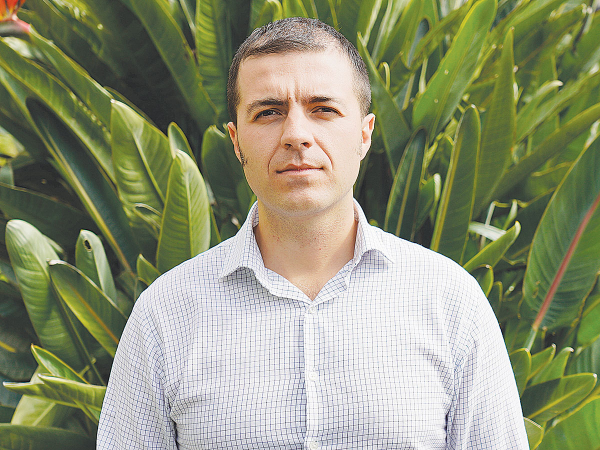 RaboResearch farm inputs analyst Vitor Pistoia.
Global fertiliser prices are easing but things could change if the Israel-Hamas conflict spreads, warns RaboResearch farm inputs analyst Vitor Pistoia.
In its just-released Semi Annual Fertiliser Outlook, titled What is next?, the agribusiness banking specialist says while escalating tensions in the Middle East create some uncertainty in the outlook for fertiliser markets, the current impact for the food and agri sectors is manageable.
Pistoia notes that overall, farmers around the world may feel some negative impact due to potentially rising costs of energy and fertilisers, at the margin, as well as slightly lower import demand and prices for grains and oilseeds due to the Israel-Hamas conflict.
“However, if the conflict spreads to the broader Middle East/ North African (MENA) region, impacts on fertiliser supply – as well as grain, meat, and dairy demand – could be notable,” he says.
The report says Israel is an important exporter of potash and phosphorus – in 2022 exporting 6% of the world’s potash and 8% of its phosphate fertilisers.
It remains to be seen how much of those trade volumes will be impacted in the coming months, Rabobank says.
The bank says the broader MENA region accounts for about 30% of the world’s nitrogen fertiliser exports, more than 25% of global mixed fertiliser exports, approximately 10% of potassic fertilisers and almost half of the phosphatic fertiliser exports.
Pistoia says that we are still some months away from 2024 – this year has been a much calmer year for the fertiliser market – and 2023 can be seen as a transition year, even with some remnants of all the market complications from 2022.
The bank’s models indicate a recovery in global fertiliser usage in 2023, up by around 3%, compared to the 7% drop in 2022.
For 2024, Pistoia says the initial analysis suggests an increase in global fertiliser use of close to 5%.
“All this is aligned with our affordability index which shows a much higher value than a year ago,” he says.
Pistoia says local fertiliser prices were significantly lower than a year ago, but this would not necessarily lead to increased fertiliser usage across New Zealand farms over coming months.
“Farm margins are incredibly tight across the majority of New Zealand farming businesses due to lower commodity prices and ongoing elevated costs for other farm inputs – like fuel and feed – as well as higher interest costs,” he says.
“And a key question is how much the recent drop in the New Zealand dollar will offset the reduced cost of fertiliser in farmers’ budgets.
“When this lower dollar is combined with the recent crude oil hikes, how much is left in those budgets to increase fertiliser application rates?”
RaboResearch senior analyst Emma Higgins expects the 2026/27 dairy season to be another profitable one.

New Zealand farmers will face higher urea prices this year, mainly on the back of tight global supply and a weak Kiwi dollar.
Global beef supply will contract this year for the first time since the Covid-19 pandemic, according to Rabobank.
Dairy
Dairy

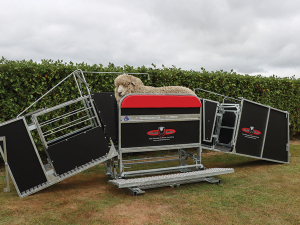
Oamaru-based livestock handling specialist Te Pari has bought Combi Clamp, the New Zealand manufacturer of Combi Clamp manual sheep handlers.

Agriculture Minister Todd McClay has admitted that a scheme bringing workers from Pacific nations to work on orchards has become too hard to navigate but says changes are coming.
A new app designed in New Zealand aims to help sheep, beef and deer farmers capture, analyse and use body condition score data more effectively.
Canterbury farmer Andy Macfarlane has been appointed to the board of AgriZeroNZ, the public-private partnership designed to accelerate the development and deployment of emissions reduction tools for New Zealand farmers.
For over 50 years Mel Ewers has been supporting the apple sector navigate through compliance and quality assurance issues.
The apple sector is enjoying a bumper harvest season.