Fonterra FY26 Results: $9.69 Milk Price, $3.4bn Profit
Fonterra has unveiled its annual results for the 2026 financial year, posting $27 billion in revenue and close to $20 billion returned to New Zealand farmer owners and unit holders.
 increase font size
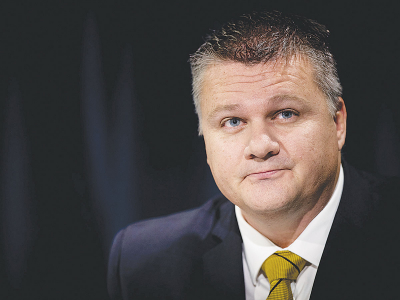 Miles Hurrell.
Fonterra says the 2050 methane target should be based on “official scientific advice”.
It also suggests the target should be set at the lower end of the proposed range and regularly reviewed against the science and options available to farmers.
The Climate Change Response Amendment Bill proposes that gross emissions of biogenic methane be cut within a range 24% to 47% below 2017 levels by 2050.
Fonterra and the Fonterra Shareholders’ Council last week released their submissions to the Bill.
The co-op says it intends doing its bit in New Zealand’s transition to a low carbon future and will work with the Government, researchers and the wider agriculture industry to get farmers practical help to meet new targets.
Fonterra chief executive Miles Hurrell says Kiwi farmers are already among the world’s most emission efficient producers of milk, but nearly half of NZ’s greenhouse gases come from the wider agriculture sector.
“Our actions today will keep NZ at the forefront of sustainable food production. We know this means some of the ways we farm will need to change.
“Fonterra farmers are adaptable and resourceful people. Once set a clear science based target, they will want to get on with the job and the co-op will support them.
“It’s not going to be easy. It will require farmers, industry, the Government and researchers to all pitch in and jointly develop innovative yet practical solutions for NZ’s emissions reduction challenges.
“The increased investment in R&D signalled by the Government and industry is the key to bringing new innovations to life.”
The co-op agrees with DairyNZ that the 2030 methane target, though ambitious, could be reached with new ideas and tools put in farmers’ hands.
The 2050 target should be based on official scientific advice, the co-op says.
“Climate change is a challenge for every NZer. Collectively we must examine our use of fossil fuels in transport and manufacturing, and find a way to manage and mitigate animal emissions.
“Agriculture depends upon a stable global climate, so there’s no shortage of motivation for us. Fonterra has a strong appetite to do its bit alongside the rest of NZ to reduce climate pollution,” says Hurrell.
The co-op also acknowledges the Government for supporting the agriculture sector’s proposal to set up an emissions pricing system by 2025, funded through levy organisations like DairyNZ.
Fonterra Shareholders’ Council chairman Duncan Coull says farmers are naturally apprehensive but are up for the challenge. They “have a proud history of being at the forefront of innovation and won’t shy away from this”.
“Business as usual is not compatible with NZ’s commitments under the Paris Agreement and dairy farmers need to contribute their share to the efforts of the wider economy,” Coull says.
“This is the beginning of a process. NZ has a scientifically advanced agricultural economy and the world will be watching us. But regulations must be fair and drafted with care not to jeopardise our comparative advantage in global export markets.
“I’m a firm believer that science and technology will provide solutions over time. So it is imperative that regulation doesn’t get too far ahead of the scientific solutions.”
Coull called for a joint industry effort to look after farmers’ interests. And he cautioned against industry politics getting in the way.
“I urge all farmers to engage with the industry... to tackle this issue head on to capture more opportunities as the lowest emitting, most sustainable producers of nutrition in the world.”
Fonterra has unveiled its annual results for the 2026 financial year, posting $27 billion in revenue and close to $20 billion returned to New Zealand farmer owners and unit holders.
Fonterra Co-operative Group has confirmed the independently assessed candidates standing for election to its board in 2026.
Fonterra has revised its Farmgate Milk Price forecast for the 2026/27 season, lifting the midpoint and narrowing the range on the back of improving global dairy commodity prices.
Outgoing Fonterra Co-operative Council chair John Stevenson says that it has been a privilege to represent the co-op's farmer shareholders.
OPINION: It seems Canterbury processor Synlait is still in the doldrums.



Federated Farmers says it welcomes Labour's commitment to reviewing the Sharemilking Agreements Act, calling on other major parties to do the same.
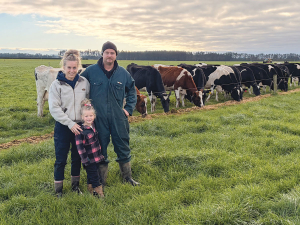
For Canterbury dairy farmers Sian Meijer and Rick Wobben, wearable technology has become one of their most valuable on-farm tools - helping manage 1850 cows across an expansive, high-performing dairy operation while improving efficiency, mating outcomes and day-to-day decision making.
Fonterra has unveiled its annual results for the 2026 financial year, posting $27 billion in revenue and close to $20 billion returned to New Zealand farmer owners and unit holders.
The first major update to the Dairy Cattle Code of Welfare in more than a decade has been released, marking what DairyNZ describes as an important step in ensuring animal welfare standards continue to evolve alongside scientific evidence and on-farm realities.
Ravensdown shareholders have elected Jane Montgomery and Kate Acland to the Ravensdown Board for three-year terms, following a closely contested director election.
Federated Farmers says new legislation replacing the Resource Management Act will cut red tape, unlock investment and help grow New Zealand's export-led economy, after the Planning Bill and Natural Environment Bill passed their third reading in Parliament yesterday.