New Rural Recycling Scheme to Replace Voluntary Farm Plastics Programmes by 2027
Environment Minister Nicola Grigg has announced details of a new rural plastics recycling scheme.
 increase font size
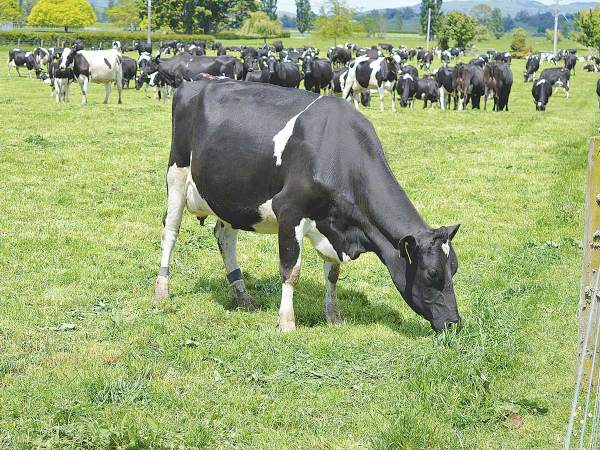 Provision of more shade and shelter will be needed on pastoral farms.
New research reveals how pastoral farm systems will likely be impacted by climate change.
Pasture production is projected to increase slightly over the next 80 years, with a shift in production towards spring and away from late summer, says the new climate change research, focused on impacts on farm systems.
The research findings suggest that pastoral farmers will probably see a small increase in overall pasture production in many regions of the country, due to increased carbon dioxide encouraging plant growth.
But this will come with a shift in production towards wetter springs and away from dryer late summers.
Higher temperatures will pose a greater risk to livestock production, with more days where heat stress may occur.
The research partnership between two National Science Challenges, Our Land and Water and the Deep South Challenge: Changing with our Climate, will help scientists, regional councils and industry bodies understand the potential impacts of climate change on pastoral, arable and horticultural farm systems, and identify appropriate adaptation measures.
Analysis with two models both gave consistent results for the slight increase in pasture production and shift in seasons for growth.
The report also identified for dairy, sheep and beef that heat stress will be an increased risk for animal health, with about two additional weeks of risk for moderate heat stress by the 2090s, and a more pronounced risk of severe heat stress.
Provision of more shade and shelter will be needed.
“Pastoral farmers, sector bodies and regional councils should prepare for increased frequencies of severe heat and summer drought,” the report says.
“Nitrate leaching will be higher and more variable. The most noticeable increase modelled was in the Southland case study, where annual leaching was modelled to increase significantly due to more spring rain and more frequent extreme rainfall events.”
More research is needed to confirm the trend. In the Hawke’s Bay case study, year-to-year variability was most extreme in free draining soil.
The report says for the arable sector change may have minimal effects on maize yields (except for a slight increase in Hawke’s Bay) if crop management is adapted to reduce risks of yield loss.
“For example, maize crops may be sown earlier in spring to minimise negative impacts on yield caused by faster reproductive development that shortens the crop cycle.
“Earlier sowing dates will enable the use of long-cycle maize hybrids for additional growth period, or the earlier establishment of autumn-sown crops such as wheat, forage oats and Italian ryegrass for additional winter production.”
The report says pressure on fresh water is likely to increase.
Environment Minister Nicola Grigg has announced details of a new rural plastics recycling scheme.

For the first time in a quarter of a century, Federated Farmers has something positive to say about the Labour Party’s climate change policy leading into a general election.
The Ballance Farm Environment Awards are coming to the West Coast of the South Island.
Climate, nature and animal wellbeing make up Fonterra's refreshed sustainability roadmap released last week.
There's been widespread support from the primary sector for the Government's announcement on changes to freshwater farm plans that come under the Natural Environment Bill, which is now set to replace the existing RMA.


National’s pledge to introduce 19 new national standards shows the party is serious about getting Wellington out of farming, Federated Farmers says.
The National Party’s policies to make it easier to grow fresh vegetables, secure reliable water and energy and simplify farm planning are practical changes that will give growers the confidence to invest, according to Horticulture New Zealand (HortNZ).
Fonterra Co-operative Group chief financial officer Andrew Murray has resigned to take up a role outside the dairy giant.
A major move is about to get underway to improve the quality and viability of dairy beef and cattle in NZ.
Veterinarians say changes to the code of welfare for dairy cattle provides a positive foundation for improved cattle welfare across the country.
Today, 15 October, is the International Day of Rural Women, which recognises rural women’s contribution to farming, communities and the environment.