Fonterra FY26 Results: $9.69 Milk Price, $3.4bn Profit
Fonterra has unveiled its annual results for the 2026 financial year, posting $27 billion in revenue and close to $20 billion returned to New Zealand farmer owners and unit holders.
 increase font size
 Fonterra’s chief operating officer Robert Spurway.
The first litres of Waikato-farmed milk are flowing through Fonterra’s newest high-efficiency milk powder plant, as the world’s joint-largest dryer comes online in the South Waikato.
The new 30 metric tonne an hour dryer at the Co-operative’s Lichfield site will be capable of processing an additional 4.4 million litres of milk each day – equivalent to almost two Olympic swimming pools – into high quality milk powder for global markets.
Large scale dryers such as this play a key role in driving value for the business, says Fonterra’s chief operating officer Robert Spurway.
“Premium milk powder is a valuable product for Fonterra in its own right, but people often underestimate the strategic importance of powder production to the cooperative’s overall asset mix,” he says.
“The capacity these assets give us takes the pressure off during the peak of the season, meaning we have more freedom to prioritise milk into higher returning products.”
“Our goal is to strike a balance in our assets that enables us to switch between products quickly to meet demand changes in global markets, push the pace on production when milk volumes dictate, and ultimately deliver the best product mix to generate returns.”
South Waikato operations manager Sam Mikaere says opening the new dryer is the culmination of more than two years of focus and effort from teams around the world.
“The successful commissioning of this project is the result of an exceptional breadth of experience and knowledge. We sought expertise locally, nationally and globally from more than 200 companies and their dedication has seen the project come in on time and well under budget.”
“The last few weeks as we geared up to first milk has been an exciting time not only for Fonterra, but for everyone in Lichfield and our surrounding communities who have lived this development along with us. It’s rewarding to see it all come off without a hitch as the plant heads into its first season,” says Mikaere.
The dryer is supported by a new distribution centre and a sophisticated wastewater treatment plant.
The distribution centre has the capacity to store 40,000 metric tonnes of whole milk powder which is then loaded into containers and shipped directly to port via an in-built rail siding. This provides a very cost effective infrastructure and helps reduce the number of trucks on road.
A new biological wastewater treatment plant is capable of turning dairy waste into fertiliser which is then irrigated onto neighbouring farmland to help pastures flourish – part of the Co-operative’s commitment to environmental sustainability.
The new dryer is expected to be running at full capacity in the next week, providing dairy nutrition to more than 20 markets around the world.
Fonterra has unveiled its annual results for the 2026 financial year, posting $27 billion in revenue and close to $20 billion returned to New Zealand farmer owners and unit holders.
Fonterra Co-operative Group has confirmed the independently assessed candidates standing for election to its board in 2026.
Fonterra has revised its Farmgate Milk Price forecast for the 2026/27 season, lifting the midpoint and narrowing the range on the back of improving global dairy commodity prices.
Outgoing Fonterra Co-operative Council chair John Stevenson says that it has been a privilege to represent the co-op's farmer shareholders.
OPINION: It seems Canterbury processor Synlait is still in the doldrums.



Federated Farmers says it welcomes Labour's commitment to reviewing the Sharemilking Agreements Act, calling on other major parties to do the same.
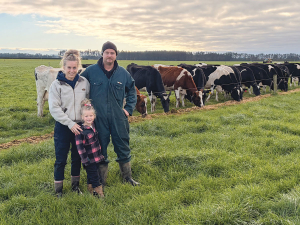
For Canterbury dairy farmers Sian Meijer and Rick Wobben, wearable technology has become one of their most valuable on-farm tools - helping manage 1850 cows across an expansive, high-performing dairy operation while improving efficiency, mating outcomes and day-to-day decision making.
Fonterra has unveiled its annual results for the 2026 financial year, posting $27 billion in revenue and close to $20 billion returned to New Zealand farmer owners and unit holders.
The first major update to the Dairy Cattle Code of Welfare in more than a decade has been released, marking what DairyNZ describes as an important step in ensuring animal welfare standards continue to evolve alongside scientific evidence and on-farm realities.
Ravensdown shareholders have elected Jane Montgomery and Kate Acland to the Ravensdown Board for three-year terms, following a closely contested director election.
Federated Farmers says new legislation replacing the Resource Management Act will cut red tape, unlock investment and help grow New Zealand's export-led economy, after the Planning Bill and Natural Environment Bill passed their third reading in Parliament yesterday.