Fonterra FY26 Results: $9.69 Milk Price, $3.4bn Profit
Fonterra has unveiled its annual results for the 2026 financial year, posting $27 billion in revenue and close to $20 billion returned to New Zealand farmer owners and unit holders.
 increase font size
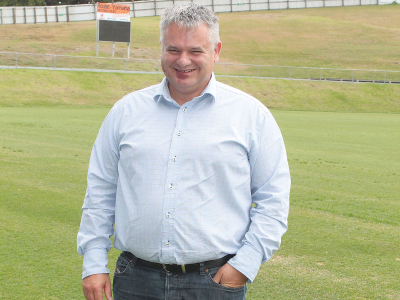 Fonterra director Brent Goldsack.
The Fonterra board’s thinking is focused on value rather than volume as it meets regularly to thrash out its new strategy, director Brent Goldsack says.
It still hurts to say the co-op lost $200 million last year, he says.
“Whatever we do as a board over the next few months will determine the future of our co-op for years and for our children and our children’s children,” he told the Northland Dairy Development Trust’s annual meeting in Whangarei last week.
“So we don’t want to be rash on this. Some of us like speed… so we have to slow down, take a breath.
“The decisions we make, they won’t be tampering at the edges. The directional thought on where we are heading today is clear but we need to understand why it is.”
Goldsack points out that the new board contains none of the directors who years ago decided on various business strategies, e.g. going into Chile and Sri Lanka in the 1970s, with their effects today on the New Zealand ‘bucket of milk’.
The board will provide updates on strategy in May and hopefully about September they “can really start to say ‘here are some concrete things we are focused on in strategy’.”
“We are a globally competitive NZ co-op. I don’t think we should lose sight of what a co-op means to us.
He said it was “incredibly sad” to see what was happening at Westland Milk.
“Maybe it is the demise of another co-op where the profits do not reside in NZ but go offshore.
“We all know that in Fonterra about 50% of our milk price gets spent in our local communities. And we should never underestimate that: the profit stays here.”
Sustainability is at the heart everything we do, he says. “This is the driver: why are we here, why do we do what we do, and the consumers -- what do they want, what are they demanding, what are they willing to pay for, where is the premium?
“Sure we have 30-35% of the traded dairy in the world but we are still relatively niche. People talk about whole milk powder being a commodity but is it, when we have 60-80% of what is traded? Skim is a commodity.
“When we talk about proteins and whey protein concentrates – a few years ago we sprayed whey on paddocks, we fed it to pigs. Now we feed it to the Americans and they pay us a lot of money for it.
“We convert that into very high quality product. The US is a very important market for us because, again, about 13-15% of our product goes there, but a disproportion of our profit comes out of that market because of the value they are willing to pay for. It’s the same in Japan – value rather than volume.”
Volume has been a strategy and meeting that unconstrained demand is sometimes very important.
“We have done some things incredibly well when you look at China and other markets and the amount we’ve grown there and the amount of money we bring back to NZ both in profit and in particular in our milk price; we should never underestimate that.”
Fonterra will prioritise NZ milk, Goldsack says.
“NZ milk is valuable and I think you will see it become more and more valuable. The way in which we make our milk, the quality of our milk, the standards for it, are important for us. So the question is, how do we get the value for that?
“But we are a globally competitive cooperative. Scale is important to us. We are very good traders.”
When Fonterra has taken “whole buckets of milk offshore sometimes we have struggled and had volatility,” Goldsack says.
The directors are looking at how to create value and bring it back to NZ from a portion of that bucket of milk -- “maybe in the proteins or fats, and using our expertise and technology, our logistical scale and our ability to trade in 140 countries”.
Fonterra has unveiled its annual results for the 2026 financial year, posting $27 billion in revenue and close to $20 billion returned to New Zealand farmer owners and unit holders.
Fonterra Co-operative Group has confirmed the independently assessed candidates standing for election to its board in 2026.
Fonterra has revised its Farmgate Milk Price forecast for the 2026/27 season, lifting the midpoint and narrowing the range on the back of improving global dairy commodity prices.
Outgoing Fonterra Co-operative Council chair John Stevenson says that it has been a privilege to represent the co-op's farmer shareholders.
OPINION: It seems Canterbury processor Synlait is still in the doldrums.


Federated Farmers says it welcomes Labour's commitment to reviewing the Sharemilking Agreements Act, calling on other major parties to do the same.
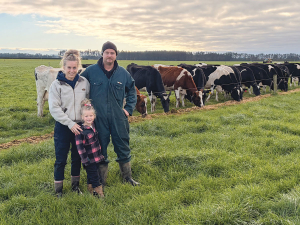
For Canterbury dairy farmers Sian Meijer and Rick Wobben, wearable technology has become one of their most valuable on-farm tools - helping manage 1850 cows across an expansive, high-performing dairy operation while improving efficiency, mating outcomes and day-to-day decision making.
Fonterra has unveiled its annual results for the 2026 financial year, posting $27 billion in revenue and close to $20 billion returned to New Zealand farmer owners and unit holders.
The first major update to the Dairy Cattle Code of Welfare in more than a decade has been released, marking what DairyNZ describes as an important step in ensuring animal welfare standards continue to evolve alongside scientific evidence and on-farm realities.
Ravensdown shareholders have elected Jane Montgomery and Kate Acland to the Ravensdown Board for three-year terms, following a closely contested director election.
Federated Farmers says new legislation replacing the Resource Management Act will cut red tape, unlock investment and help grow New Zealand's export-led economy, after the Planning Bill and Natural Environment Bill passed their third reading in Parliament yesterday.