Top dairy CEO quits
Arguably one of the country's top dairy company's chief executives, Richard Wyeth has abruptly quit Chinese owned Westland Milk Products (WMP)
 increase font size
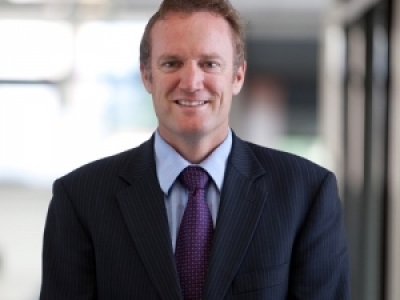 Westland chief executive Rod Quin.
Westland Milk Products has already received "substantial orders" for products from its new $40 million ultra-high temperature (UHT) plant in Rolleston.
Westland chief executive Rod Quin says the commissioning of the UHT plant marks Westland's first step into producing and exporting liquid milk, in addition to its powder-based products and butter.
"This is a significant milestone in Westland's strategy to move away from the volatile, and currently oversupplied, bulk dairy ingredients market," Quin says. "Our focus is now on producing high-profit, added-value products for the top end of the market."
Westland's research shows that, while global dairy prices are unlikely to bounce back soon for products such as bulk milk powder – and so continuing to provide poor returns back to shareholders – the high value products are a growing and more profitable market.
"This is especially the case in China, which is continuing to experience growth in its middle classes." Quin says. "These people are educated and have disposable incomes; they have high expectations around the quality, safety and health properties of dairy products they buy. Westland can meet these expectations, which means the future for these products is more secure and more likely to raise and stablise returns to shareholders."
The UHT cream that will be produced at the new plant also gives Westland the capacity to sell into the Chinese foodservice/bakery market. Chinese consumer interest in Western style foods, including bakery goods, is seeing a growth in demand for whipping cream for in a variety of bakery treats and desserts.
"For both UHT milk and cream," Quin says, "We have invested in a considerable amount of research to ensure we have the right combination of high functional performance, quality and taste, which will be the key to winning in this category. Already we have had glowing reports back from China that we are performing very well in taste evaluations."
Quin says that Westland's move into value-added products is already adding nearly 20 cents per kilo of milk solids to shareholder payouts.
"We are on target for that proportion to grow substantially as our recent initiatives – including the recently completed $114 million nutritionals dryer in Hokitka, and now the UHT plant in Rolleston, come into full production."
Westland has also recently redesigned its Westgold brand, under which the UHT products will be sold alongside Westgold Butter. Westgold unsalted butter recently won champion butter at the recent New Zealand Champions of Cheese awards. This award coincided with Westgold's formal release into the New Zealand retail market - another first for Westland. Previously, Westgold butter was sold only overseas, but now New Zealand consumers can enjoy the best of the West Coast too.
"Our early success with UHT orders, nutritional product sales and butter, reinforces our added value strategy and paints a more optimistic future for our shareholders than if we were to remain primarily a bulk ingredients supplier, Quin concluded.
Arguably one of the country's top dairy company's chief executives, Richard Wyeth has abruptly quit Chinese owned Westland Milk Products (WMP)
OPINION: This old mutt well remembers the wailing, whining and gnashing of teeth by former West Coast MP and Labour Agriculture Minister Damian O’Connor when Chineseowned Yili took over the troubled dairy company Westland Milk a few years back.
Westland Milk has reaffirmed its commitment to pay farmer suppliers 10c above Fonterra farm gate milk price for the following two seasons.
Not all milk processors in New Zealand are struggling; just look at Westland Milk Products on the West Coast.
Dairy farmers supplying Chinese-owned Westland Milk Products in Hokitika had another reason to celebrate this holiday season.

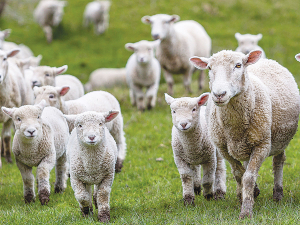
A New Zealand initiative supporting farmers to restore the health of grazing landscapes has received international backing through the Regenerative Fund for Nature, a global collaborative fund supporting regenerative agriculture and the communities that produce natural fibres for the fashion industry.
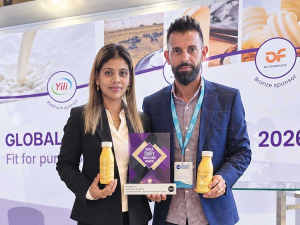
Combine premium New Zealand products, blend in a family ritual and what do you get? A world-class functional drink.
Entries are now open across eleven regions for the 2027 New Zealand Dairy Industry Awards (NZDIA).
Safer Farms is urging farmers to make sure everyone working on farm has safe, suitable footwear for the job.
The Government is backing work on a community-led water storage scheme that could irrigate up to 11,000 more hectares of the Poverty Bay flats, Agriculture Minister Todd McClay says.
Agri-tech company Herd-i has become a new all-region sponsor of the New Zealand Dairy Industry Awards (NZDIA), the largest nationwide celebration of excellence in the dairy sector.