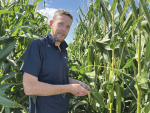
Fall Armyworm in NZ Maize: Four Years of Research
Four years since it was first detected in New Zealand, researchers and growers now know much more about management of maize pest fall armyworm (FAW).
 increase font size
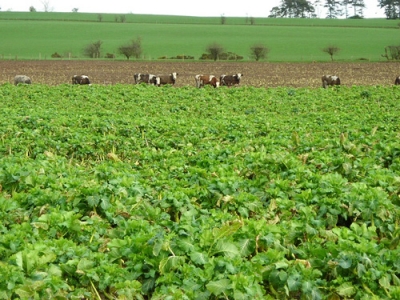 Could feeding cows brassicas help reduce nitrogen loss from the soil? Photo: Iain Thompson.
Could feeding cows brassicas help reduce nitrogen loss from the soil?
That's what University of Waikato second-year PhD student Sheree Balvert hopes to find out and recently landed a $10,000 scholarship to aid her research.
Sheree has been awarded the 2016 Pukehou Pouto Scholarship, which is awarded annually to students from any New Zealand university for postgraduate study in either agricultural science or silvicultural (forestry) science.
Sheree is researching negative agricultural impacts on the environment, which include water quality and greenhouse gas emissions.
"Cows are inefficient feeders with 70-95% of the nitrogen they eat being excreted in their waste," she says. "The concentrated urine patches that are deposited onto the ground contain more nitrogen than the plants and microbes in the soil can process, and the excess nitrogen is lost as nitrous oxide gas or as nitrate leaching out of the soil."
Sheree is researching the impact of feed change in cows, whether feeding them forage brassicas such as turnips, swedes and kale affects the nitrogen cycle and could reduce nitrogen loss in agricultural systems such as dairy or dry-stock farms.
"How and why this could work is what I'm trying to figure out," she says.
Sheree is supervised by Professor Louis Schipper at the University of Waikato and Dr Jiafa Luo at AgResearch. Her research is funded by the New Zealand Agricultural Greenhouse Gas Research Centre (NZAGRC) and the Pastoral Greenhouse Gas Research Consortium (PGGRC). Her stipend is also provided by NZAGRC. In 2015, Sheree was one of 10 finalists in the University's Three Minute Thesis Competition.
Four years since it was first detected in New Zealand, researchers and growers now know much more about management of maize pest fall armyworm (FAW).
Generative AI in the workplace, trials in the field, and industry-relevant research took centre stage at this year’s Grape Days events in Central Otago, Hawke’s Bay and Marlborough.
The University of Waikato has broken ground on its new medical school building.
New research could help farmers prepare for a future where summer rainfall is increasingly unpredictable and where drought risk is rising, no matter what.
Waikato is home to a diverse range of lakes, and experts say they urgently need better management and restoration.



Now in its fourth year, the 2026 Fencing Industry Awards, formed part of the proceedings of the FCANZ Conference, held in Nelson during August.
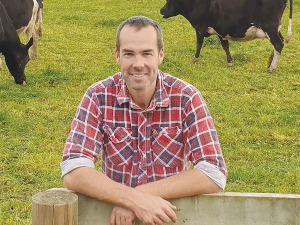
DairyNZ deputy chair Cameron Henderson has been re-appointed unopposed for another term.
OPINION: The stats speak for themselves.
Farms across the upper North Island are trialling different pasture mixes as part of a research programme that aims to build greater resilience into farming systems.
Election years are always a concerning time for farmers, according to DairyNZ chair Tracy Brown.
The Ballance Farm Environment Awards are coming to the West Coast of the South Island.