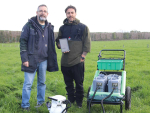
Massey Uses Portable Analyser to Measure Pasture Soil GHGs
Researchers at Massey University are using a special piece of scientific equipment to improve the measurement of greenhouse gas emissions from pasture soils.
 increase font size
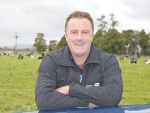
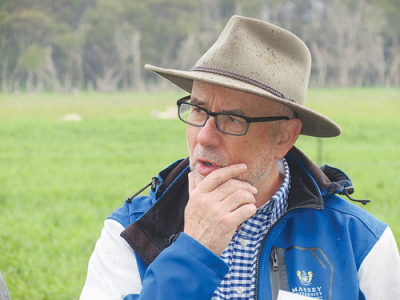 Peter Kemp, Massey University.
Except for veterinary science, all Massey University agricultural academic courses are now in one school – the School of Agriculture headed by Professor Peter Kemp.
He says it is exciting to have got all the agriculture and resources and staff into one school, also including animal science.
The new arrangement has the components of the former school of agriculture becoming part of a much larger school including agronomy and farm management, soils, the Massey farms and all aspect of horticulture.
“So we are better integrated and able to be more strategic across the whole range of agriculture than perhaps in the past. It’s not like we’ve done a bad job, but by getting synergy across the whole range of agricultural activity it will be a better deal for students. There will be no reason why an animal science student won’t see agronomy and soil management as part of what they may be doing.”
Kemp says in the past a student may have had second thoughts about going into another ag related institute in another building, but no longer.
And the change will also be positive for the wider primary sector.
“It’s part of Massey improving its ability to deal with the primary sector – the one-stop shop approach if you like. Everyone including the environmental side will be in this new ag school. It will be a lot easier for all the sectors, be it horticulture, dairy and sheep and beef, to know who they are dealing with.”
Kemp says ag student numbers at Massey seem set to remain static this year: there is no sign of them being up and they may possibly be slightly down -- disappointing given that the agricultural sector is doing pretty well.
“Sometimes we get this knee-jerk reaction. People may feel dairy may be down a bit but the reality is that jobs don’t go away. The professional jobs you get with a degree from Massey are always still there.”
Researchers at Massey University are using a special piece of scientific equipment to improve the measurement of greenhouse gas emissions from pasture soils.

Interest in agritech and production animal systems has prompted Massey University's School of Agriculture and the Environment to new majors to its popular animal science degree.
The industry is crying out for graduates with agricultural related degrees.
A four year trial has reaffirmed that mixing plantain into dairy pastures can help reduce nitrogen losses to freshwater while maintaining milk production and profitability, say researchers.
Special courses for secondary school teachers to help excite kids about agriculture and horticulture are now being run at Massey University.


LIC shareholders have elected a new North Island representative to the co-operative's Board, along with five representatives to its Shareholder Reference Group (SRG), following the company's Annual Meeting held in Invercargill.
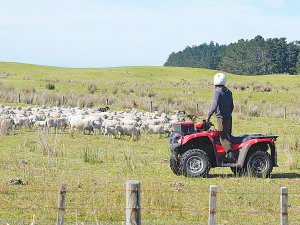
Farmers across parts of Southland and South Otago are continuing to deal with difficult conditions after a prolonged run of wet weather, with pressure building around feed supply, stock management, pasture damage, farm infrastructure and everyday workloads.
Federated Farmers says it welcomes Labour's commitment to reviewing the Sharemilking Agreements Act, calling on other major parties to do the same.
For Canterbury dairy farmers Sian Meijer and Rick Wobben, wearable technology has become one of their most valuable on-farm tools - helping manage 1850 cows across an expansive, high-performing dairy operation while improving efficiency, mating outcomes and day-to-day decision making.
Fonterra has unveiled its annual results for the 2026 financial year, posting $27 billion in revenue and close to $20 billion returned to New Zealand farmer owners and unit holders.
The first major update to the Dairy Cattle Code of Welfare in more than a decade has been released, marking what DairyNZ describes as an important step in ensuring animal welfare standards continue to evolve alongside scientific evidence and on-farm realities.