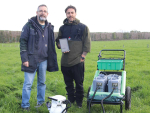
Massey Uses Portable Analyser to Measure Pasture Soil GHGs
Researchers at Massey University are using a special piece of scientific equipment to improve the measurement of greenhouse gas emissions from pasture soils.




 increase font size
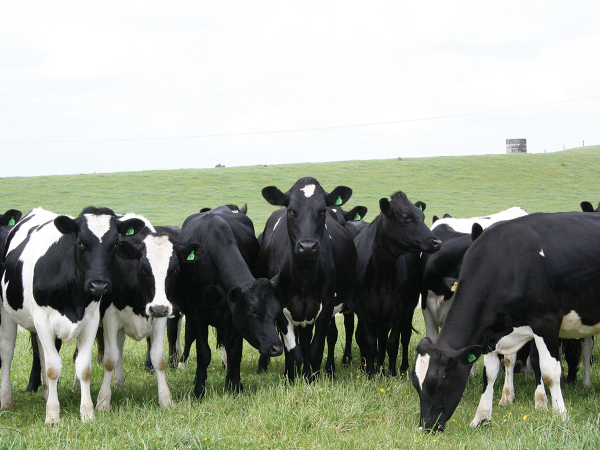 Many dairy farmers cross Holsteins with Herefords to produce calves that will perform well in beef systems.
The black and white coat of Holstein- Friesian cows is globally recognised as a symbol of dairy farming and a defining trait of domestic cattle. But until recently, scientists didn’t know which genes were responsible for the Holstein’s spots.
Coat patterns are some of the oldest traits selected by humans, likely since the dawn of domestication, showing how farmers have long shaped cattle populations.
For other breeds, the DNA variants behind unique patterns, such as the white face of Herefords or the belts of Galloways, are already known. Now, a study involving Massey University’s Professor Matt Littlejohn has solved the mystery of the Holstein’s unique coat.
Using genomic techniques, the team analysed the coat patterns of thousands of cows and identified two specific DNA variants controlling two different genes – KIT and MITF – that explain much of the variation in Holstein spotting.
“These genes are well-known for controlling pigmentation in humans, mice, dogs, horses, birds and other species,” Littlejohn says.
The KIT gene variant found in Holsteins is unusual because it doesn’t sit within the gene itself. Instead, it regulates the gene from a different position on the chromosome.
“Think of it like a light switch turning on a light in another room,” he says.
The MITF variant is also unusual for its ability to create unique coat patterns when different breeds are crossbred.
“This variant can create black speckles in dairy crosses, ‘black socks’ in Belgian Blue cattle, or reversal of the white face expected from a Hereford cross.”
While these patterns are interesting to look at, they aren’t simply aesthetic.
“Many dairy farmers cross Holsteins with Herefords to produce calves that will perform well in beef systems. The white face is important, since this marks the calf as a Hereford cross,” Littlejohn says.
“When ‘splotchy’ faced calves are born as a result of the MITF variant, these calves are harder to recognise as beef crosses and are often less valuable. Genetic testing could help produce calves with more predictable coat patterns in the future.”
Other practical applications of the research include possible animal welfare benefits. Skin pigmentation affects heat absorption and UV protection. Black coats absorb more heat but also provide better UV protection. Knowing how genes control pigmentation could help farmers select coat patterns that improve cattle comfort and performance.
“This research not only solves the mystery about how the Holstein gets its spots, but also shows how genes can interact to create unique and unexpected patterns,” Littlejohn says.
“It’s a great example of how modern genomics can uncover the hidden mechanisms behind traits we often take for granted.
Researchers at Massey University are using a special piece of scientific equipment to improve the measurement of greenhouse gas emissions from pasture soils.

Interest in agritech and production animal systems has prompted Massey University's School of Agriculture and the Environment to new majors to its popular animal science degree.
The industry is crying out for graduates with agricultural related degrees.
For Taupiri dairy farmers Logan and Sian Dawson, their involvement in the NZ Dairy Industry Awards has been a key catalyst in the growth of their business - the experience helping shape how they approach the farm ownership pathway they are pursuing today.
A four year trial has reaffirmed that mixing plantain into dairy pastures can help reduce nitrogen losses to freshwater while maintaining milk production and profitability, say researchers.


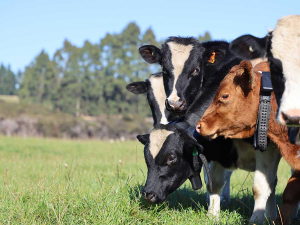
High country stations, mixed sheep and beef farms, Māori-owned farms, corporates and family operations are among the nine commercial farms taking part in the Livestock Innovation Farming Transformation programme, known as LIFT.
OPINION: New health and safety guidance unveiled by the Government recently provides farmers greater certainty about what is expected of them when managing risks on farm.
The National Animal Welfare Advisory Committee (NAWAC) is seeking public feedback on proposed changes to the Code of Welfare for Rodeos.
A New Zealand initiative supporting farmers to restore the health of grazing landscapes has received international backing through the Regenerative Fund for Nature, a global collaborative fund supporting regenerative agriculture and the communities that produce natural fibres for the fashion industry.
Combine premium New Zealand products, blend in a family ritual and what do you get? A world-class functional drink.
Entries are now open across eleven regions for the 2027 New Zealand Dairy Industry Awards (NZDIA).


OPINION: It seems Canterbury processor Synlait is still in the doldrums.
OPINION: Get offside with New Zealand First leader Winston Peters at your own peril.




