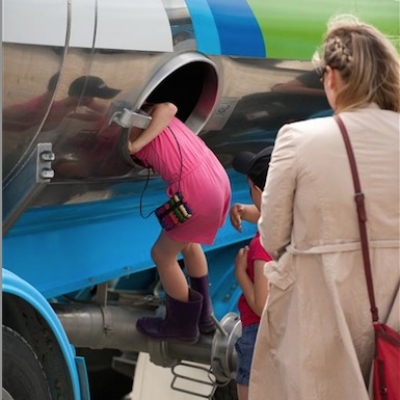
Lincoln University Dairy Farm (LUDF) opened its gates on Friday 21 and Saturday 22 November to more than 900 visitors.
Ron Pellow, executive director of SIDDC says they started the event last year with the aim of highlighting the operations of a commercial dairy farm.
"The purpose of the open days are to connect visitors with the transformation of 'sunshine into food' and answer their questions regarding the science and technology of producing milk on farm," says Pellow.
"Visitors often want to view cows being milked, so we're pleased our proximity to Christchurch enables us to give this opportunity on an annual basis. At the same time we can enhance their connection to where and how our food is produced."
This year also saw the addition of a schools only day on the Friday, which saw approximately 350 Year 9 and 10 students from nine secondary schools taken on a guided tour of the science and business of dairy farming, including a milking demonstration. The day was round off with a round of ice creams.
Visitors to Saturday's general public day gained an overview of the multifaceted world of modern dairy farming; such as photosynthesis, soil types, irrigation, pastures, cows, milking, and the aspect of collecting and processing milk for export to international markets.
They also had the chance to try a range of dairy products including a selection of cheeses, yoghurt and more ice cream.
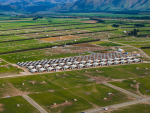
LUDF operates as both a demonstration farm for other farmers and a commercial entity. According to Pellow, it is aiming to increasing productivity without increasing its overall environmental footprint.
"This makes the information that comes out of SIDDC very relevant for farmers and the farm itself the perfect place to open up to the public to show how it all fits together," says Pellow.
Overall, the organisers were pleased with the attendance.