Fonterra FY26 Results: $9.69 Milk Price, $3.4bn Profit
Fonterra has unveiled its annual results for the 2026 financial year, posting $27 billion in revenue and close to $20 billion returned to New Zealand farmer owners and unit holders.
 increase font size
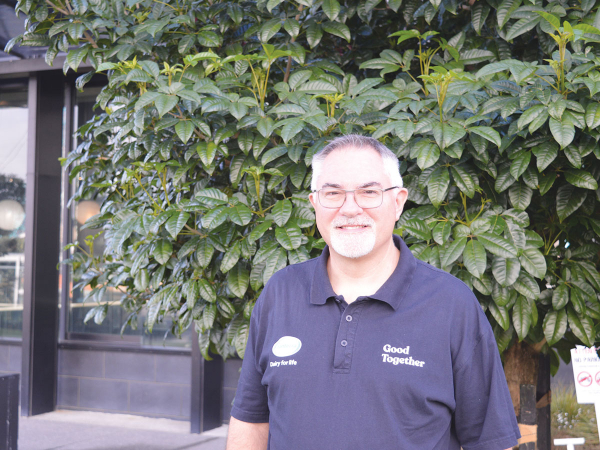 Marc Rivers says Fonterra's annual results make all the blood, sweat and tears of the last five years worth it.
Fonterra's departing chief financial officer Marc Rivers says delivering the co-op's annual results for the final time made for an emotional day.
There were mixed feelings: proud to be delivering a great result and sad that he will miss out on the next chapter in the co-op's journey.
Rivers, who stepped down from the role on September 30, will bid farewell to Fonterra's farmer shareholders at the co-op's annual meeting in Rotorua next month.
Rivers joined Fonterra in 2018, the year in which the co-op posted its first financial loss.
With Rivers at his side, then interim chief executive Miles Hurrell announced a major review of overseas assets and partnerships.
The co-op decided to focus on extracting value rather than pursue volume and put the focus back on its New Zealand milk pool. Two years later the co-op was back in the black. Last month the co-op announced a net profit of $583 million for the last financial year, on the back of revenues totalling $23.4 billion.
Rivers says he is proud of the results.
"It makes all the blood, sweat and tears of the last five years worth it - that's what it's all about," he told Dairy News.
He agrees that turning the co-operative around was quite a journey.
"Where we started, the difficulties we faced at the beginning, and then to see the first fruits of the new strategy and direction emerge," he says.
Rivers believes the co-operative is on the cusp of a new and exciting chapter.
"The next chapter is really bright and will be exciting for Fonterra. I guess I will be cheering from the sidelines."
Rivers believes that, after the 2018 results, it was clear that Fonterra had to change and everyone could see that.
As the CFO, Rivers had direct interactions with key customers from the around the globe.
He confirms that the co-operative has a great reputation overseas.
"I know from my direct interaction with global customers like Nestle. They really admire what the NZ farmer has done, in a quite entrepreneurial way and on their own.
"They have built up an amazing industry."
Fonterra is also one of the world's biggest exporters of dairy products, reaching out to as many countries as they are able to from a trade perspective.
Rivers says customers admire the technology and innovation achieved by Fonterra on proteins and products like mozzarella cheese.
The co-op's ability to deliver products to global customers during the pandemic was also much appreciated.
"Our supply chain reliability through a very disruptive period enhanced our reputation. Kotahi has been very valuable."
Rivers believes Fonterra's optimised manufacturing footprint, allowing it to divert milk into anything it needs to and responds to customer signals, was also highly valued.
Also setting Fonterra apart from other dairy producers is its sustainability story.
"We produce milk in a beautiful way. Our grass-based system is the lowest carbon way of producing that form of nutrition.
"That doesn't mean that we stand still, we have to keep getting better at that."
Fonterra has unveiled its annual results for the 2026 financial year, posting $27 billion in revenue and close to $20 billion returned to New Zealand farmer owners and unit holders.
Fonterra Co-operative Group has confirmed the independently assessed candidates standing for election to its board in 2026.
Fonterra has revised its Farmgate Milk Price forecast for the 2026/27 season, lifting the midpoint and narrowing the range on the back of improving global dairy commodity prices.
Outgoing Fonterra Co-operative Council chair John Stevenson says that it has been a privilege to represent the co-op's farmer shareholders.
OPINION: It seems Canterbury processor Synlait is still in the doldrums.


LIC shareholders have elected a new North Island representative to the co-operative's Board, along with five representatives to its Shareholder Reference Group (SRG), following the company's Annual Meeting held in Invercargill.
Farmers across parts of Southland and South Otago are continuing to deal with difficult conditions after a prolonged run of wet weather, with pressure building around feed supply, stock management, pasture damage, farm infrastructure and everyday workloads.
Federated Farmers says it welcomes Labour's commitment to reviewing the Sharemilking Agreements Act, calling on other major parties to do the same.
For Canterbury dairy farmers Sian Meijer and Rick Wobben, wearable technology has become one of their most valuable on-farm tools - helping manage 1850 cows across an expansive, high-performing dairy operation while improving efficiency, mating outcomes and day-to-day decision making.
Fonterra has unveiled its annual results for the 2026 financial year, posting $27 billion in revenue and close to $20 billion returned to New Zealand farmer owners and unit holders.
The first major update to the Dairy Cattle Code of Welfare in more than a decade has been released, marking what DairyNZ describes as an important step in ensuring animal welfare standards continue to evolve alongside scientific evidence and on-farm realities.