Once-a-Day Calf Feeding: How Probiotics Boost Heifer Growth
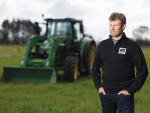
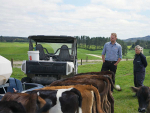
Matt Collier, Probiotic Revolution, says calves will drink a lot of milk once-a-day with their probiotic Calf Xtreme.
 increase font size
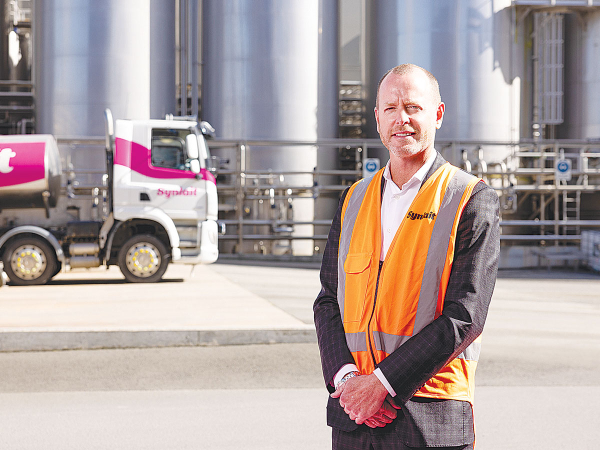 Former Synlait chief executive Grant Watson.
Former Synlait chief executive Grant Watson says the past two years have been quite the journey.
Watson, who stepped down last week, says now feels like the right time to leave the company following a turbulent period at its helm.
“It’s been quite the journey, I have to say, over the last two-and-three quarter years, but I’m really proud of the reset we’ve taken the business,” he told Dairy News. “So, for me, it certainly feels like the right time to leave.”
Watson’s decision follows a disappointing financial result which saw a 61% profit loss and a 221% drop in operating cashflow.
Those followed a difficult year for Synlait, one in which many farmers issued cessation notices.
However, Watson says he’s confident that “the business has really good momentum”.
“Financially, 2025 should be a really good year for Synlait, and for me personally, it’s time to decompress, time to spend some time with my family,” he says.
Despite the turbulence of the past few years, Watson says there have been some successes, among them the recapitalisation plan which took effect earlier this month.
The plan saw Bright Dairy of China increase its shareholding in Synlait from 39% to 65%, while a2 Milk Company’s stake remains at 19%.
“Between the shareholder loan from Bright Dairy and the equity from Bright Dairy and a2, injecting $350 million of new capital into the business when you’re sitting on a market capitalisation of $70 million is a real achievement,” Watson says.
He adds that another significant milestone in his time as chief executive was the strategy reset which he says enabled the company to diversify growth. “We’ve now commercialised the plantbased product in the North Island. We’ve also launched the highly profitable foodservice cream in the South Island.”
Coming off a tumultuous financial year, Watson says Synlait will need to continue its newfound momentum.
“Off the back of the reset, we’ve been through the foundations of the business,” he says. “We’ve paid down debt, we need to keep going.”
He says that in terms of lifting production, demand, and cost, the company has experienced good momentum. “That needs to continue to increase profitability.”
Finally, Watson says it will be important for the company to retain its suppliers.
“Obviously, we’ve had a lot of cease notices that were put into the company and we’ve put a programme in place to withdraw those cease notices and that’s been received really well, but it’s about making sure that that milk supply moving forward is shored up and gives the company the certainty it needs,” he says.
Watson will be replaced temporarily by Dairyworks chief executive Tim Carter, who has been appointed acting CEO of the company from 21 October.
Matt Collier, Probiotic Revolution, says calves will drink a lot of milk once-a-day with their probiotic Calf Xtreme.
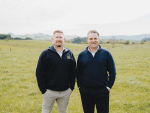
After a winter of frozen pipework and refrigeration call-outs, Terravest chief executive Kip Bodle and chief operating officer Luke Walker explain why this El Niño summer calls for a different kind of preparation, before the first heatwave finds the weak points for you.
Speculation of a possible joint move by Fonterra and a2 Milk to buy Synlait raises a much bigger strategic question, says agribusiness expert Dr Nic Lees.
After delivering a strong financial year, rural trader PGG Wrightson says the coming months will depend on customer confidence and weather.
Fonterra has opened its upgraded Chengdu Application Centre, bringing New Zealand dairy expertise closer to customers in one of China's fastest-growing regions.


Alliance Group's $16 million programme to install innovative heat pump systems at its Otago and Southland processing plants wins a New Zealand Energy Excellence Award after cutting annual emissions by more than 24,000 tonnes of CO₂e.
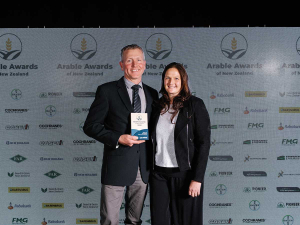
The arable sector losing good people and land is a major concern for the 2026 Arable Farmers of the Year, Mid Canterbury seed growers John and Mel McCaw.
The terrible floods that hit the Wairarapa may have subsided, but the danger to farmers still exists, according to local Federated Farmers president Rob Hickson.
New Zealand's Emissions Trading Scheme (NZ ETS) encourages afforestation while not achieving climate goals, says a new report released by the Parliamentary Commissioner for the Environment, Simon Upton.
Are you ready for El Nino? That’s the question asked by Beef+Lamb NZ’s Ian Tarbotton who leads B+LNZ’s farm extension service.
Bigger, bolder salads packed with colour, crunch and flavour are making headlines overseas — and the arrival of fresh spring vegetables means New Zealanders can now get chopping too, creating their own Great Kiwi Spring Salad.