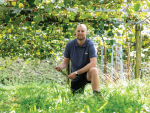
Rabobank Launches HortPathways for Emerging Hort Leaders
Twenty-eight emerging leaders from across the horticulture sector spent two days last month learning valuable skills and connecting with industry experts.
 increase font size
 Rabobank dairy analyst Emma Higgins.
Rabobank has lifted its forecast milk price for this season by 45c to $7.60/kgMS.
The bank, in its latest Dairy Quarterly report, says farmgate milk cheques are improving in most of the world’s major dairy-producing regions.
Report author, Rabobank dairy analyst Emma Higgins says increased global dairy prices were largely a result of reduced global stocks of skim milk powder (SMP) and modest milk production growth.
“The global market has picked up for SMP now that EU intervention stocks are a thing of the past and we’ve seen prices for SMP shoot upwards in the latest price rally,” she says.
Robust global prices are also being supported by tepid milk growth, with this forecast to continue into next year. Across the Big 7 - the EU, the US, New Zealand, Australia, Uruguay, Argentina & Brazil – milk supply growth is expected to remain at, or below, 1% in 2020.
Higgins says despite strong global milk price signals, a low global supply growth rate was anticipated due to a combination of demand and supply factors holding back production increases.
“Dairy producers around the world have spent the last several years waiting for a return to price levels similar to those seen in 2014, however, now that we are approaching that territory, there is anxiety over the ability of consumers to withstand price increases, with much of the world either recovering from, in the midst of, or on the verge of some degree of recession,” she says.
“In addition to demand-related concerns, farmers in key milk-producing regions continue to face constraints limiting their ability to expand supply, with environmental regulation and adverse weather conditions among the key factors restricting production increases.”
Higgins says adverse weather had played a role in New Zealand’s lower milk production in the season-to-date, but that this reduced supply had helped contribute to strong pricing for New Zealand product.
“In light of the strong demand – particularly out of China – that has seen Oceaniacommodity prices increase since our last quarterly report Fonterra has twice revised up its forecast range for the 2019/20 season.
“And this has fed into the bank’s upward revision to its own full-year forecast from $7.15/kgMS to $7.60/kgMS for the 2019-20 dairy season,” she says.
Twenty-eight emerging leaders from across the horticulture sector spent two days last month learning valuable skills and connecting with industry experts.

A 'tsunami' of milk from key exporting countries is winding down and this may be good news for New Zealand dairy farmers.
Chinese beef trade quotas and a looming suspension of Brazilian beef imports into the European Union are expected to reshape global beef trade flows over the remainder of 2026, with implications for New Zealand exporters, according to Rabobank's Q3 Global Beef Quarterly report.
New Zealand consumers are paying more for beef mince than ever before, with the average retail price now sitting above $24 per kilogram, according to Rabobank.
West Otago dairy farmer Luke Kane has been awarded the 2026 Rabobank Dr John Morris Business Development Prize.


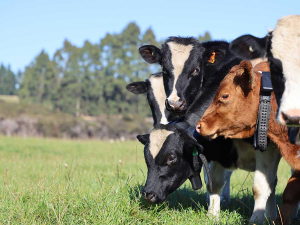
High country stations, mixed sheep and beef farms, Māori-owned farms, corporates and family operations are among the nine commercial farms taking part in the Livestock Innovation Farming Transformation programme, known as LIFT.
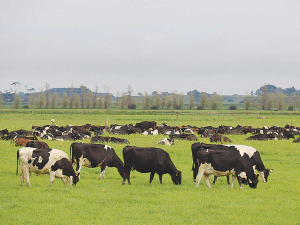
OPINION: New health and safety guidance unveiled by the Government recently provides farmers greater certainty about what is expected of them when managing risks on farm.
The National Animal Welfare Advisory Committee (NAWAC) is seeking public feedback on proposed changes to the Code of Welfare for Rodeos.
A New Zealand initiative supporting farmers to restore the health of grazing landscapes has received international backing through the Regenerative Fund for Nature, a global collaborative fund supporting regenerative agriculture and the communities that produce natural fibres for the fashion industry.
Combine premium New Zealand products, blend in a family ritual and what do you get? A world-class functional drink.
Entries are now open across eleven regions for the 2027 New Zealand Dairy Industry Awards (NZDIA).