Farmers Warned Over Track Dangers After Wairarapa Floods
The terrible floods that hit the Wairarapa may have subsided, but the danger to farmers still exists, according to local Federated Farmers president Rob Hickson.
 increase font size
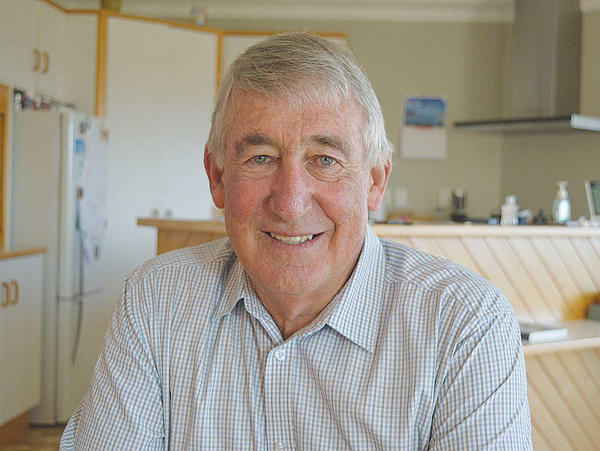 National Council of Rural Support Trusts chair, Neil Bateup says it’s a very busy time for trusts.
Rural Support Trusts from regions badly hit by the recent disastrous storms and cyclones are getting much needed assistance from other parts of the country, says the chair of the National Council of Rural Support Trusts, Neil Bateup.
He says it’s a very busy time for trusts, trying to help farmers and horticulturalists deal with the huge problems they face now and in the future. He says different regions are in different phases of dealing with problems.
He says in places such as Tairawhiti and Hawke’s Bay, RST people still don’t have access to some farmers because of damage to roads, bridges, power and lack of phone coverage. He says in Hawke’s Bay and Gisborne, most farmers still have their heads down trying to sort themselves out as best they can.
“In these early days a lot of people are running on adrenalin and that sort of thing, but sooner or later they will have to stop and think about their businesses and look at how they will get through the winter and into next season,” Bateup told Dairy News.
“Given what’s happening right now, it’s probably too early for the RST people to become very involved,” he says.
But Bateup says once farmers get over the initial phase of dealing with the immediate issues, they will probably need some advice around the next steps, so the RST can work with them and point them in the right direction to get help and support. He says they are there to provide with advice on what funds they can access and support them to deal with stress.
RST staff are helping their counterparts in Northland, Gisborne and Hawke’s Bay to field calls for help.
Bateup says trusts in other unaffected regions are coming to the rescue.
“Calls coming into Northland have been rerouted through to Taranaki, who have some capacity and haven’t been affected and so Taranaki has been supporting Northland.
Bateup says in the case of Northland, the Waikato and the Coromandel, RTS’s are more involved in the recovery stage. He says as a result they are busy organising barbeques and other events to get people together to share their experiences and offer mutual support. In Hawke’s Bay and Gisborne, he says the focus is still on response.
He says for RST’s the focus is getting farmers to talk to their accountants and other advisors and start to put together a plan for the future.
“You can’t change what’s happened but sitting down and having a plan going forward often takes some of the weight of the problem away. It’s the unknown that often causes most of the worry, but once you know what it means, then you can start to plan to go forward from there,” he says.
The terrible floods that hit the Wairarapa may have subsided, but the danger to farmers still exists, according to local Federated Farmers president Rob Hickson.

New Zealand’s rural sector has once again demonstrated its generosity, with the second Rural Industry Leaders Dinner, Debate and Auction raising an impressive $400,000 for the Rural Support Trust.
The Rural Support Trust is hosting a series of community wellbeing events featuring former NZSAS soldier and Victoria Cross recipient Willie Apiata.
Waikato dairy farmer Neil Bateup, made a companion of the New Zealand Order of Merit (CNZM) in the New Year 2026 Honours list, says he’s grateful for the award.
Rural Support Waikato is inviting farmers, growers, and rural communities to take a well-earned break and join us for 'Brunch on Us' - a series of all-sector, relaxed drop-in events across the region.


Minister of Conservation Hon Tama Potaka has appointed Susan O'Regan as Chair of the Queen Elizabeth II National Trust (QEII) for a three-year term.
Red meat farmers are welcoming Labour’s plan to review the Emissions Trading Scheme and not to campaign on pricing agricultural emissions.
Where any worker in the kiwifruit industry is mistreated, we expect the authorities to take action.
Mid Canterbury Federated Farmers arable chair, Bevan Lill, said Beef + Lamb NZ data indicated that for the last six years, the average arable return on investment was about 0.8% while inflation ran about 4% - so the average arable farm was going backwards at about 3% a year.
Seed and grain companies share the concerns of arable farmers about the viability of their sector, says Seed and Grain New Zealand chief executive Dr Sarah Clark.
The New Zealand Institute of Forestry (NZIF) says unnecessary changes to New Zealand’s Emissions Trading Scheme (NZ ETS) will seriously erode investor confidence and result in significant reductions in forest planting rates.