Milk Powder Prices Prop Up Farmgate Milk Price
Milk powder prices are keeping farmgate prices up, helping processors offset the dip in milk fat prices.
 increase font size
 Emma Higgins.
The Global Dairy Trade (GDT) price index is at a two-year low, but there is some good news ahead, says Rabobank dairy analyst Emma Higgins.
She notes that whole milk powder price for shipments in C2 (shipment date December 2018) lifted marginally, by 1.1%.
Higgins says this suggests Chinese buyers are procuring stock to land onshore in China to receive the lower tariff rate; a set volume of WMP and SMP will enter into China from 1 Jan 2019 free of tariffs – after the quota is reached, a 10% tariff rate will apply.
WMP price dropped 1.2%, to US$2,753/tonne. The GDT price index dropped 1.9% to US$2,901/tonne: the ninth consecutive fall or flat result and the lowest result in almost exactly two years.
“The general theme remains: The anticipation of a bumper season from New Zealand and product on offer through the GDT Events increasing in line with those expectations has provided no procurement urgency and prices have slipped lower as a result,” says Higgins.
Skim milk powder price softened just 0.3% to US$1,982/tonne.
Higgins says SMP is one of the few Oceania commodities notat a discount to Northern Hemisphere product, with the bulk of SMP already committed to buyers.
Aging SMP stocks remain burdensome in Europe, India has tagged a stockpile of SMP for export (helped by incentives for disposal onto export markets) and US non-fat dry milk stocks are higher than the prior year. “But – some potential good news for SMP hit the wires yesterday. As part of the USMCA trade agreement (replacing the old NAFTA) Canada has committed to limiting surplus SMP onto global markets. This is helpful in a market overloaded with surplus aging SMP,” she says.
Falling fat prices saw butter move lower by 6% to US$4,016/tonne, while anhydrous milk fat slipped 4.4% to US$5,069/tonne.
Higgins says a two-tiered global butter market has appeared: Oceania butter prices have recalibrated back to levels not seen in two years, yet European butter prices remain elevated.
‘It’s important to note that fat fundamentals haven’t significantly shifted: dairy fat demand is still robust at both foodservice and retail level.
“Fat stocks still remain low globally but the anticipated short-term lift in NZ milk is enough to see softer prices. Further, fat-filled milk powder with ample volumes of SMP could continue to provide pricing competition in the short term.”
Higgins anticipates butter prices to remain elevated over the next 6 – 12 months – although peak prices have passed.
Milk powder prices are keeping farmgate prices up, helping processors offset the dip in milk fat prices.

Chinese beef trade quotas and a looming suspension of Brazilian beef imports into the European Union are expected to reshape global beef trade flows over the remainder of 2026, with implications for New Zealand exporters, according to Rabobank's Q3 Global Beef Quarterly report.
New Zealand consumers are paying more for beef mince than ever before, with the average retail price now sitting above $24 per kilogram, according to Rabobank.
West Otago dairy farmer Luke Kane has been awarded the 2026 Rabobank Dr John Morris Business Development Prize.
Twenty five secondary school students from around New Zealand recently completed a three day residential programme designed to explore career opportunities across the food and fibre production supply chain.

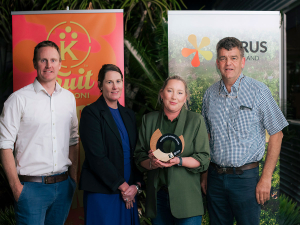
New Zealand's citrus growers were challenged to build their future on the value embedded in their fruit rather than the volume they produce, at Citrus New Zealand's annual gathering in Gisborne on 17 September.
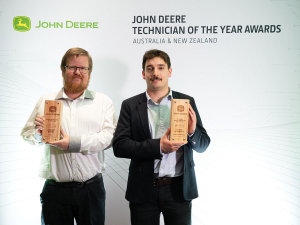
Leading John Deere technicians and apprentices from New Zealand and Australians were recognised at the recent sixth annual JD Technician of the Year Awards, held in Brisbane.
In Dacre, near Invercargill in New Zealand’s South Island, Bruce Dinnington is running a dairy operation unlike any other.
A free online platform aggregating governance vacancies across rural and regional New Zealand has been launched.
Environment Minister Nicola Grigg has announced details of a new rural plastics recycling scheme.
Agricultural drone operators say that a government decision to allow lower-risk drone work without certification won’t lower standards but drive innovation and efficiency.