New Dairy Holdings CEO Backs Self-Contained Model
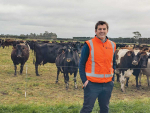
Running a tight and self-contained ship is the key to the success of the country's largest dairy farmer, says Blair Robinson, the new man at the helm of Dairy Holdings.
 increase font size
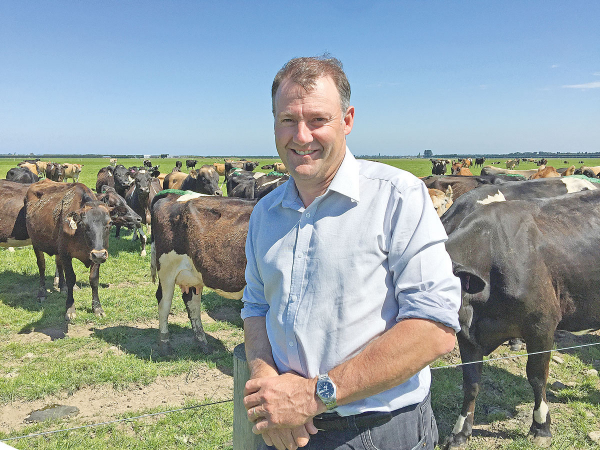 Dairy Holdings chief executive Colin Glass says there were a number of reasons to get the consent process dealt with early.
Environment Southland has granted its first winter grazing consent under the new National Environmental Standards for Freshwater.
The consent was granted to Dairy Holdings Limited with a series of conditions to ensure the best outcomes for water quality.
Dairy Holdings chief executive Colin Glass says there were a number of reasons to get the consent process dealt with early.
“It was important to get ahead,” Glass told Dairy News, due to the fact that Dairy Holdings has a number of farms.
“We know that this gives our operation a degree of certainty for the future.
“We were taking one for the team,” he says regarding being the first.
“We pushed back along the way on certain things,” but he thinks that both Dairy Holdings and Environment Southland got everything they needed out of the process.
“My best advice is to embrace that change is happening, get in early and don’t leave it till the last minute.”
Environment Southland acting consents manager Bruce Halligan says Glass was planning ahead and getting in early, in spite of the deferral of new national rules until 2022.
“We’ve had three consent applications in, specifically for intensive winter grazing. It’s great to see farmers looking at their practices and the rules that apply and preparing for the future.”
The council says it is focused on working with the rural community to understand and support good decisions around winter grazing practices because intensive winter grazing can have a significant impact on Southland’s water quality if not done well.
“To support farmers making decisions for cultivation and winter grazing next year, we have developed a series of online tools,” Halligan says.
The Environment Southland website now features a cultivation and intensive winter grazing mapping tool; a checklist to see whether resource consent is required; and an online resource consent application process.
“The map tool allows farmers and landowners to easily identify the optimum paddock for their intensive winter grazing activities,” says Halligan.
“Getting a resource consent application in now will ensure farmers are well prepared to meet the new rules requirements when they take legal effect in May 2022 and will provide more certainty for future farm management and planning.”
Previously, intensive winter grazing has not required resource consent. However, the proposed Southland Water and Land Plan and the National Environmental Standards for Freshwater state the activity is permitted if farmers can meet a list of criteria. If the criteria cannot be met, a resource consent will be required.
Running a tight and self-contained ship is the key to the success of the country's largest dairy farmer, says Blair Robinson, the new man at the helm of Dairy Holdings.
Environment Southland is calling on residents to be vigilant and check their properties after a new Old Man's Beard site was discovered near Dipton.
After 25 years it is the right time to step away, says Colin Glass, the retiring chief executive of New Zealand's largest private corporate dairying company, Dairy Holdings.
Southland farmers staring down a May deadline to submit freshwater farm plans under current regional plan rules have been given an 18-month reprieve by the Government.
Southland farmers are being encouraged to get ahead of the winter grazing season by attending a practical field day in Pukerau next week.


High country stations, mixed sheep and beef farms, Māori-owned farms, corporates and family operations are among the nine commercial farms taking part in the Livestock Innovation Farming Transformation programme, known as LIFT.
OPINION: New health and safety guidance unveiled by the Government recently provides farmers greater certainty about what is expected of them when managing risks on farm.
The National Animal Welfare Advisory Committee (NAWAC) is seeking public feedback on proposed changes to the Code of Welfare for Rodeos.
A New Zealand initiative supporting farmers to restore the health of grazing landscapes has received international backing through the Regenerative Fund for Nature, a global collaborative fund supporting regenerative agriculture and the communities that produce natural fibres for the fashion industry.
Combine premium New Zealand products, blend in a family ritual and what do you get? A world-class functional drink.
Entries are now open across eleven regions for the 2027 New Zealand Dairy Industry Awards (NZDIA).