Fonterra FY26 Results: $9.69 Milk Price, $3.4bn Profit
Fonterra has unveiled its annual results for the 2026 financial year, posting $27 billion in revenue and close to $20 billion returned to New Zealand farmer owners and unit holders.
 increase font size
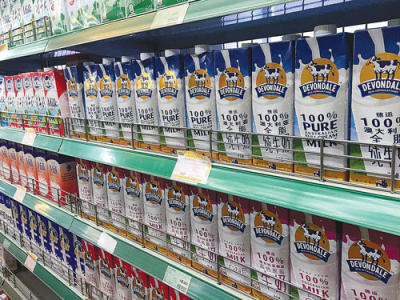 Australian UHT milk on sale in China.
China is likely to remain the largest export market for New Zealand dairy products – but watch out for competition from Australia, a new report warns.
The immense size of the Chinese market and increasing westernisation of consumer diets means it will remain our largest market.
“However, NZ dairy producers are likely to endure increasing competition from other dairy-producing nations attempting to expand their share of the Chinese market,” says a report on the NZ ‘Cheese, butter and milk powder manufacturing industry’ by business research company IBIS World.
“For example, dairy producers in Australia are likely to increase their focus on the Chinese market over the next five years, as tariffs are gradually reduced as part of a free-trade agreement signed between Australia and China in 2015.
“Given Australia’s reputation as a producer of high-quality agricultural products, Chinese consumers are likely to view products exported from Australia similarly to those produced in NZ, which may increase competition and constrain industry revenue growth from this market over the period.”
Annual revenue for the NZ cheese, butter and milk powder industry stands at a yearly $17.2 billion. Annual growth from 2018-23 is forecast at 1.5% versus annual growth from 2013-18 of 0.5%.
Profit margins in the cheese, butter and milk powder industry are projected to rise over the next five years.
“Recovering prices in export markets should allow processors to lift their margins, particularly on non-commodity products like premium cheeses and specialty butters.
“However, margins on some products, such as bulk-packaged milk powder, are likely to remain fairly stable over the period. The high volumes of stockpiled milk powder in key markets will likely take years to depleted, meaning prices for these products are likely to take longer to recover than other dairy product prices.”
Fonterra is likely to remain the dominant player in the industry, given its immense size compared with other players, the IBISWorld report says.
“However, a small proportion of dairy cattle farmers are likely to sell their interests in the co-op in pursuit of better prices and contract terms.
“This will reduce the supply of raw milk to Fonterra and is expected to constrain the co-op’s growth over the next five years. The trend of dairy farmers turning away from Fonterra is likely to continue to entice potential players to enter the industry. Consequently, enterprise numbers are forecast to increase over the five years to 2022-23, although at a slower rate than over the past five years.”
Industry employment is also forecast to rise slowly.
Fonterra has unveiled its annual results for the 2026 financial year, posting $27 billion in revenue and close to $20 billion returned to New Zealand farmer owners and unit holders.

Fonterra Co-operative Group has confirmed the independently assessed candidates standing for election to its board in 2026.
Fonterra has revised its Farmgate Milk Price forecast for the 2026/27 season, lifting the midpoint and narrowing the range on the back of improving global dairy commodity prices.
Outgoing Fonterra Co-operative Council chair John Stevenson says that it has been a privilege to represent the co-op's farmer shareholders.
OPINION: It seems Canterbury processor Synlait is still in the doldrums.



Federated Farmers says it welcomes Labour's commitment to reviewing the Sharemilking Agreements Act, calling on other major parties to do the same.
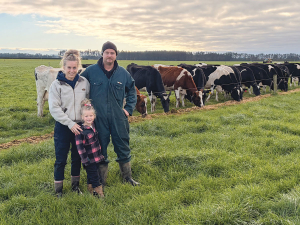
For Canterbury dairy farmers Sian Meijer and Rick Wobben, wearable technology has become one of their most valuable on-farm tools - helping manage 1850 cows across an expansive, high-performing dairy operation while improving efficiency, mating outcomes and day-to-day decision making.
Fonterra has unveiled its annual results for the 2026 financial year, posting $27 billion in revenue and close to $20 billion returned to New Zealand farmer owners and unit holders.
The first major update to the Dairy Cattle Code of Welfare in more than a decade has been released, marking what DairyNZ describes as an important step in ensuring animal welfare standards continue to evolve alongside scientific evidence and on-farm realities.
Ravensdown shareholders have elected Jane Montgomery and Kate Acland to the Ravensdown Board for three-year terms, following a closely contested director election.
Federated Farmers says new legislation replacing the Resource Management Act will cut red tape, unlock investment and help grow New Zealand's export-led economy, after the Planning Bill and Natural Environment Bill passed their third reading in Parliament yesterday.