Fonterra FY26 Results: $9.69 Milk Price, $3.4bn Profit
Fonterra has unveiled its annual results for the 2026 financial year, posting $27 billion in revenue and close to $20 billion returned to New Zealand farmer owners and unit holders.
 increase font size
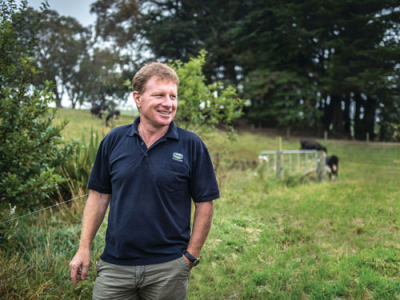 John Wilson.
There is no rural-urban divide over water quality, says Fonterra chairman John Wilson.
We all want swimmable waterways everywhere in New Zealand, he told the co-op’s annual meeting in Hawera this month.
“Every dairy farmer wants to pass on their land to the next generation in a better condition than they found it.
“We also want to keep directly contributing more than $13 billion dollars a year into NZ’s economy, and sharing the rewards of our hard work with all New Zealanders through the hospitals, social welfare programmes, conservation budgets and schools this money helps to fund.”
Being an election year, water rights and the quality of the nation’s waterways were always going to be part of the national conversation, he says.
“While it was disappointing to read about a supposed rural-urban divide being leveraged for political gain, it did galvanise our rural communities and the wider agriculture industry, proving once again that we are always stronger together.”
Dairy farming can continue to provide healthy economic returns, and not at the expense of the environment; we can have both, Wilson says.
There’s no better example of that than in Taranaki where last month a new report showed the region has recorded its best stream health trends in 21 years.
Findings in the Taranaki Regional Council’s 2017 Healthy Waterways Report showed that most measures were improving or not changing significantly in the ecological health and physical and chemical state of 99% of Taranaki rivers and streams.
Wilson says farmers know that NZ needs to address greenhouse gas emissions to meet its international climate change commitments.
“New Zealand is already one of the lowest-emissions dairy producers in the world thanks to our efficient pastoral grazing system,” he says.
“As long as people choose natural foods like dairy, curbing production here will not solve the issue; it will only add to emissions by moving dairy production to less efficient producers in other countries.”
Wilson says if agriculture was included in the Emissions Trading Scheme, or any replacement, we would have to align with how other dairy producing countries treated their emissions, and only be included once farmers gained access to effective mitigation technologies.
Fonterra has unveiled its annual results for the 2026 financial year, posting $27 billion in revenue and close to $20 billion returned to New Zealand farmer owners and unit holders.
Fonterra Co-operative Group has confirmed the independently assessed candidates standing for election to its board in 2026.
Fonterra has revised its Farmgate Milk Price forecast for the 2026/27 season, lifting the midpoint and narrowing the range on the back of improving global dairy commodity prices.
Outgoing Fonterra Co-operative Council chair John Stevenson says that it has been a privilege to represent the co-op's farmer shareholders.
OPINION: It seems Canterbury processor Synlait is still in the doldrums.


Federated Farmers says it welcomes Labour's commitment to reviewing the Sharemilking Agreements Act, calling on other major parties to do the same.
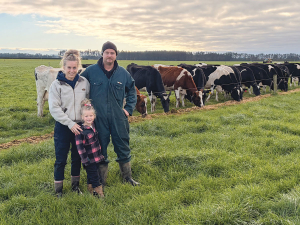
For Canterbury dairy farmers Sian Meijer and Rick Wobben, wearable technology has become one of their most valuable on-farm tools - helping manage 1850 cows across an expansive, high-performing dairy operation while improving efficiency, mating outcomes and day-to-day decision making.
Fonterra has unveiled its annual results for the 2026 financial year, posting $27 billion in revenue and close to $20 billion returned to New Zealand farmer owners and unit holders.
The first major update to the Dairy Cattle Code of Welfare in more than a decade has been released, marking what DairyNZ describes as an important step in ensuring animal welfare standards continue to evolve alongside scientific evidence and on-farm realities.
Ravensdown shareholders have elected Jane Montgomery and Kate Acland to the Ravensdown Board for three-year terms, following a closely contested director election.
Federated Farmers says new legislation replacing the Resource Management Act will cut red tape, unlock investment and help grow New Zealand's export-led economy, after the Planning Bill and Natural Environment Bill passed their third reading in Parliament yesterday.