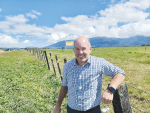
Top dairy CEO quits
Arguably one of the country's top dairy company's chief executives, Richard Wyeth has abruptly quit Chinese owned Westland Milk Products (WMP)
 increase font size
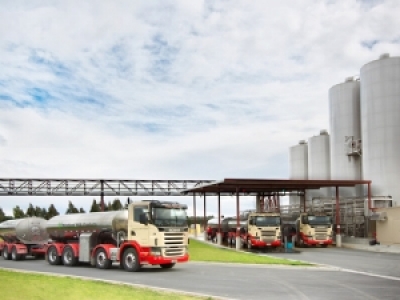 Westland Milk Products is dropping its forecast payout for this season.
Westland Milk Products is dropping its forecast payout for this season.
A forecast 15 to 25% reduction across all commodity products for the remainder of the season is the driving force behind the decision, it says.
Chairman Matt O'Regan says the new predicted payout of $4.15 to $4.45/kgMS (previously $4.90 to $5.30/kgMS) will be grim news for Westland's shareholders but, given the widely publicised state of the global dairy market, not unexpected.
O'Regan says lower prices are expected to remain for this season and probably into the second half of 2016 – the beginning of the 2016-17 season.
"As farmers this is extremely unwelcome news," O'Regan says. "It reflects Westland's view of what the market will deliver and we need to signal this to our shareholders so they can plan accordingly."
O'Regan says it is "definitely not a happy New Year" as far as dairy markets are concerned.
"Major volatility from around the globe has share markets on edge with concerns about China's short-term slow down perceived as a key risk to global fortunes, despite that country's 6.8% growth figure."
The major global driver of downward prices, however, is the ongoing growth of milk supply in Europe and the USA, O'Regan says.
"Demand from China is steady, but well down on two seasons ago. Sanctions against Russia remain in place and limit large volumes of European dairy products entering this key consumption market,
"Dairy farmers in Europe are receiving above market prices for milk – due to processors over paying for milk as farmers adapt to the removal of quotas and find a new sustainable farm gate price – which has kept their production higher than expected,
"Our customers are still buying, but have multiple sources and therefore the luxury of choosing from some reasonably aggressive offers as processors look to avoid a build-up of stock."
On the positive news front, O'Regan says the recent lift of sanctions against Iran is good for Westland, which has butter contracts into that market. He also notes that Westland remains confident that it can grow its sales in China, where the slow-down in the Chinese economy has had little impact on the consumer desire for quality food products at the high end of the market.
"With our ability to produce a higher proportion of added-value of nutritional products coming on stream, and our UHT milk plant almost ready to go, there remain good prospects for sales into China with products that return better profits back to shareholders," he says.
Arguably one of the country's top dairy company's chief executives, Richard Wyeth has abruptly quit Chinese owned Westland Milk Products (WMP)
OPINION: This old mutt well remembers the wailing, whining and gnashing of teeth by former West Coast MP and Labour Agriculture Minister Damian O’Connor when Chineseowned Yili took over the troubled dairy company Westland Milk a few years back.
Westland Milk has reaffirmed its commitment to pay farmer suppliers 10c above Fonterra farm gate milk price for the following two seasons.
Not all milk processors in New Zealand are struggling; just look at Westland Milk Products on the West Coast.
Dairy farmers supplying Chinese-owned Westland Milk Products in Hokitika had another reason to celebrate this holiday season.


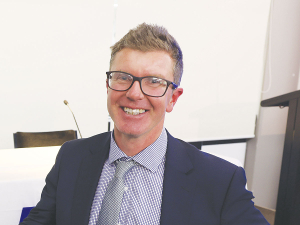
LIC shareholders have elected a new North Island representative to the co-operative's Board, along with five representatives to its Shareholder Reference Group (SRG), following the company's Annual Meeting held in Invercargill.
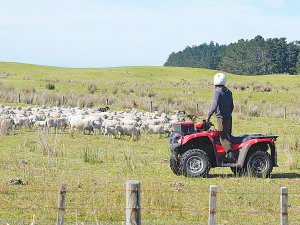
Farmers across parts of Southland and South Otago are continuing to deal with difficult conditions after a prolonged run of wet weather, with pressure building around feed supply, stock management, pasture damage, farm infrastructure and everyday workloads.
Federated Farmers says it welcomes Labour's commitment to reviewing the Sharemilking Agreements Act, calling on other major parties to do the same.
For Canterbury dairy farmers Sian Meijer and Rick Wobben, wearable technology has become one of their most valuable on-farm tools - helping manage 1850 cows across an expansive, high-performing dairy operation while improving efficiency, mating outcomes and day-to-day decision making.
Fonterra has unveiled its annual results for the 2026 financial year, posting $27 billion in revenue and close to $20 billion returned to New Zealand farmer owners and unit holders.
The first major update to the Dairy Cattle Code of Welfare in more than a decade has been released, marking what DairyNZ describes as an important step in ensuring animal welfare standards continue to evolve alongside scientific evidence and on-farm realities.