Farmers send clear message
A cacophany of sounds - barking dogs, the roar of tractors and tooting ute horns - descended on towns and cities around the country on Friday, July 16.
 increase font size
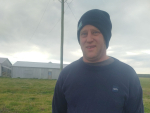
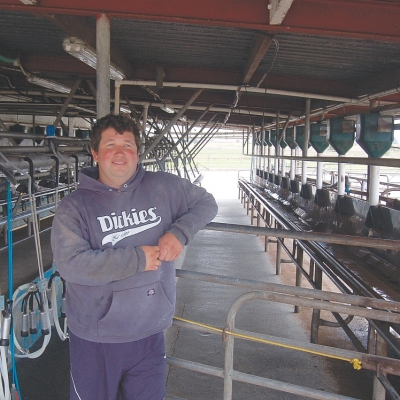 Mark Hexter in his milking shed.
Morrinsville farmer Mark Hexter has a good reason to be feeling excited: three robotic milking machines will arrive on his farm next month from Lely, in the Netherlands.
He expects that by late April the cows on his family’s 78ha eff farm will be milked around the clock by the robots.
“I’m excited about the change, a little nervous at the same time because it is a big step,” he told Dairy News. “We’re launching into robotics towards the end of the season; if the cows drop off milk at least we can dry them off and wait until next season.”
The investment is a big one for Hexter, who leases the farm from his parents: the robots, new races, fencing and other works will cost around $900,000.
New races and fencing will only cover half the farm. “We’ll see how it goes; we might split the paddocks a different way as well.”
Hexter says a record 2013-14 season prompted his decision to embrace robotics this year. “We had a very good season; we have no debt and I was able to save money and that’s the main reason we decided to go ahead this year.”
His first option was to look at a bigger farm for the robots, but at $4 million this was out of question.
Hexter’s sister, who helps on the farm, leaves at the end of next season; he hopes to break the cows into robotic milking by then and manage the farm on his own.
He started looking at robotics five years ago; labour was another reason for looking at the switch. “It’s hard getting labour and if we can get 20% more profit from the same land you can’t get much better than that.”
He doesn’t expect production to lift 20% in the first year of robotic milking.
“We’re doing 500kgMS/cow at the factory; hopefully we can get it to 600kg one day.”
Robotics will also allow year-round milking; this season he is milking 190 cows, compared to 230 last season. With robots he hopes to get to 200 cows during the first year.
“Milking year-round means we get to keep our good cows instead of putting them in the works because they’re empty. It’s a good way to keep our good cows and the price for winter milk has also gone up.”
The robots will solve a labour dilemma Hexter faces on the farm.
With enough work for only 1.5 people, including him, he found it hard
to pay two full time
staff. “Especially, with a payout like this year, paying someone $50,000 to do nothing is ridiculous.”
He has no plans to add a barn; a feed pad may be a better option.
“A barn would be for protecting cows during summer; it’s getting hotter and hotter here. But there’s no rush; one thing at a time.
“A covered feed is what I might look at one day. If you put maize down and it rains the cows don’t want to eat it; that’s why I am keen to put a roof over it.”
Animal health issues will also be kept at bay by the robots. Lameness is now a major issue, as cows rush in to get milked.
With robots, they can stroll, he says.
He chose Lely because it is a reliable company and the people are ‘switched on’. “Their robots weigh each cow every day and we can see if they’re being fed right; this will save us the cost of herd tests and vets’ charges.”
Last season’s 100,000kgMS was the best since Hexter’s family bought the farm 13 years ago. He hopes the Lely robots will help him better the record every season.
A cacophany of sounds - barking dogs, the roar of tractors and tooting ute horns - descended on towns and cities around the country on Friday, July 16.
More visitors are flocking to Morrinsville and the cows are responsible.
The operator of the world’s largest robotic farm under one roof is expanding.
Fifteen fibre-glass ‘cows’ have invaded Morrinsville in a show of street art that will be permanent and, hopefully, a signature icon for the town.
SOUTH CANTERBURY farmer Alvin Reid is a happy man when he wakes up in the morning without having had a text overnight from his robotic farm.
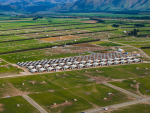
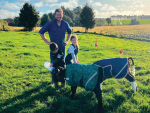
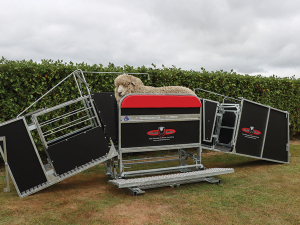
Oamaru-based livestock handling specialist Te Pari has bought Combi Clamp, the New Zealand manufacturer of Combi Clamp manual sheep handlers.
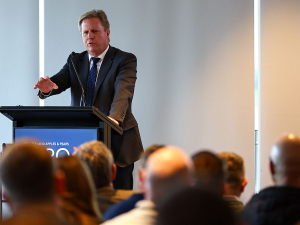
Agriculture Minister Todd McClay has admitted that a scheme bringing workers from Pacific nations to work on orchards has become too hard to navigate but says changes are coming.
A new app designed in New Zealand aims to help sheep, beef and deer farmers capture, analyse and use body condition score data more effectively.
Canterbury farmer Andy Macfarlane has been appointed to the board of AgriZeroNZ, the public-private partnership designed to accelerate the development and deployment of emissions reduction tools for New Zealand farmers.
For over 50 years Mel Ewers has been supporting the apple sector navigate through compliance and quality assurance issues.
The apple sector is enjoying a bumper harvest season.