
Science coming second in water decisions
Emotions and values now come first in water quality assessment and science comes second, says a water quality specialist with DairyNZ, Tom Stephens.
 increase font size
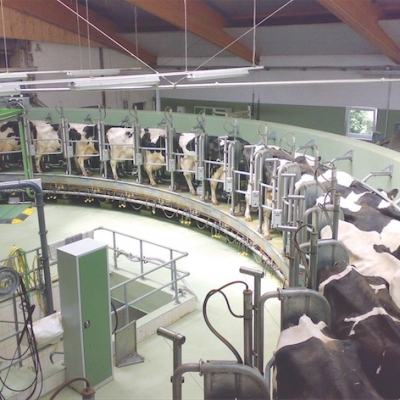
CLUSTERS LEFT on too long result in over-milking, liner creep and teat end damage, says DairyNZ.
Milking machine function must be maintained to ensure cluster removal is easy for the milker and causes no cow discomfort or teat damage; all milkers should know how to remove clusters correctly.
It says automatic cup removers (ACR) can create substantial increases in productivity per milker, in rotary and herringbone dairies. Working conditions are also improved by reducing cluster handling requirements. ACRs are designed to remove a cluster from individual cows at a pre-determined end point of milking.
A large percentage of New Zealand’s dairy cows are regularly over-milked resulting in reduced milking speed, poor udder health, and cow discomfort. ACR can provide a solution to these issues as it ensures the cluster is removed at the correct time.
The benefits of correct cup removal include correct timing of cluster removal, ensuring cows are milked out but not over-milked. It maintains milk quality, increase milking efficiency and reduces animal health issues.
It’s also important that milking clusters be removed at the appropriate time to avoid over- or under-milking. As over-milking is a more common problem than incomplete milking it is better to remove the cluster too early rather than too late. Clusters should be removed when there is less than 100ml of milk in any quarter; there should be a dribble of milk flow in the sight bowl.
Over-milking is when cups remain attached to teats after a cow’s milk flow rate has fallen below a certain end-point (traditionally 200ml/min). In New Zealand herds, over-milking can be excessive in the range of 2-5 min/cow for many herds, in herringbone and rotary dairies. It is particularly common during late lactation or in dairies that have too many clusters for the number of people milking.
Extensive international research indicates that cows giving 10L/milking (not per day) can be milked in 5 min, while cows giving 15 L/milking can be milked in about 6 min. This may be about a minute longer in New Zealand where cows commonly have less preparation, e.g. teat washing, before milking. Even so, considering typical rotation times are 12 minutes for many rotary platforms (with some cows going around twice), many cows are being severely over-milked. This can be caused by clusters being attached too early or left on too late.
It is also important to take care when removing clusters as careless removal may cause teat damage, leaving teats susceptible to mastitis.
The first step is to break the vacuum. Kink the long milk tube or pull the vacuum cut-off valve and wait 1-2 seconds while the claw fills with air at atmospheric pressure. Then rotate the cluster 30 - 60° to break the seal and assist with cluster removal. Clusters which do not slide off freely slow down the milking routine. When the clusters are not sliding off freely check that the vacuum to the clusters is being fully cut off. Also check the setup of the milking machine, including the compatibility of the liners with the cows and the working vacuum level.
For large volume clusters (400ml plus) it is necessary to kink the long milk tube and pull the vacuum cut-off valve to break vacuum in a timely manner. Even so it can take the claw up to 4 seconds to reach atmospheric pressure.
Once the cluster is removed the milker should be able to hang it on a convenient hook or swing it over to another cow.
Check teats for damage 30 seconds after the cluster is removed.
Emotions and values now come first in water quality assessment and science comes second, says a water quality specialist with DairyNZ, Tom Stephens.
Trucking firm are coming under particular scrutiny about transporting cows that aren’t fit to travel, says Chris Leach, DairyNZ senior developer - animal husbandry and welfare.
The Waikato Regional Council plans to hold another farm planning and environmental sustainability field day after the success of their last event at the Kaniwhaniwha Stream.
National average somatic cell count (SCC) levels have been dropping recently and are on track to reach a bulk milk SCC of 150,000 cells/ml by 2016.
Vastly improving a poorly performing paddock led to Waiuku farmer Robert Garshaw winning the first-year pasture category of DairyNZ’s Pasture Renewal Persistence competition.



Federated Farmers says the Government’s latest investment in road resilience is a positive step toward protecting rural communities and freight routes from increasing severe weather events.

The stockfood storage capacity of J Swap Stockfoods continues to grow in the South Island with the opening of a new store that boosts its capacity in Christchurch and work starting on another store in Southland.
Fonterra has lifted and narrowed its full year forecast earnings range to 60-70 cents per share after a strong quarter, supported by robust milk production, strong shipment volumes and continued demand across its Ingredients and Foodservice businesses.
Fonterra has announced it will continue with the planned expansion of its organic business into the South Island.
New Zealand farmers have been told they all have amazing people on their farms and have been urged to be “that one person” that can make a huge difference to those going through tough times.
OPINION: For thousands of Southland farmers, this week would have tipped them into the non-compliant category when it comes to following regional freshwater plan rules. But the Government has stepped in to give them the clarity they deserve.