Make your trailer visible at night
With the recent changes to daylight saving and nights drawing in, there is still plenty of traffic on rural roads after dusk.
 increase font size
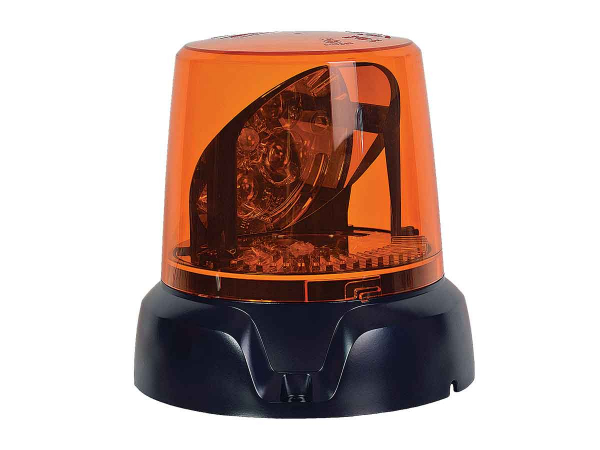 Aeromax LED Rotating Beacon.
Narva's new Aeromax LED Rotating Beacons are said to offer big performance and durability.
The beacons feature six, 1-watt LED’s paired with an engineered reflector designed to promote a concentrated light pattern that can be seen on all surrounding surfaces, providing additional visibility.
By comparison, traditional strobes produce directional light, which can be lost in some working environments, Narva says.
Furthermore, the new beacons feature quiet operation and CISPR25 Class 2 rating for Radio Frequency Interference (RFI) suppression that won’t disturb vital radio communications or electrical items around them.
To provide consistent and stable rotation regardless of the conditions, the single-piece reflector is driven by a software-controlled stepper motor with CISPR25 RFI protection to ensure super quiet operation with no interference to electrical equipment being used in the same area. A non-reflective back also ensures that any reflection from the sun or other light sources doesn’t cause the beacon to appear on when it is not operating.
For added durability, a heavy-duty, die-cast aluminium base dissipates heat and resists vibration and combines with virtually unbreakable polycarbonate lenses and a fully sealed and weatherproof construction to IP67 and covered by a five-year warranty.
Mounting options include a flange base and three-bolt system for permanent installations or vacuum magnetic base variants, enabling the beacons to be moved among vehicles if required. The latter option includes a 3-metre cable for use with a vehicle’s accessory socket, available in 12V or 24V options, with amber, blue or red outputs.
With the recent changes to daylight saving and nights drawing in, there is still plenty of traffic on rural roads after dusk.
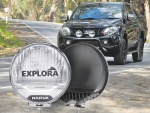
With shortening days meaning the need for good lighting is even more important out on the farm, it might be time to upgrade your illumination.
Originally available with amber lenses only, Narva’s ‘Geomax’ Heavy Duty LED Strobe Beacon light range has been upgraded with the addition of amber/clear, blue and green options.
High quality, reliable lighting is essential for anyone involved in agriculture or the great outdoors.
As small as a pen, so easily popped into a shirt pocket, the new Narva LED Pen Light packs a powerful lighting punch.



Federated Farmers has welcomed new rural policies released by ACT, saying they align closely with its own election priorities.

Rural Contractors NZ says proposed changes to land transport rules for agricultural vehicles are a welcome response by the Government to out of date regulations which have seen members hit with huge fines.
Alliance is calling for final applications for its 2027 Graduate Programme, with applications closing on Sunday 25 October.
Decades piloting planes has ensured vet and farmer David Hayes is focused on safety. So, after a serious accident while welding on farm, he is sharing his experience so others can learn from it.
Canterbury milk processor, Synlait Milk has confirmed Leon Fung as its chief executive officer.
OPINION: Making it easier to collect rainwater and use it to grow crops and livestock is a no brainer.