Massey Ferguson Reveals Ethanol-Powered Tractor Engine Concept at Agrishow 2026
Given that current diesel pricing is a bit like a ride on a fairground roller coaster, it should be no surprise to hear that manufacturers are looking for alternatives.
 increase font size
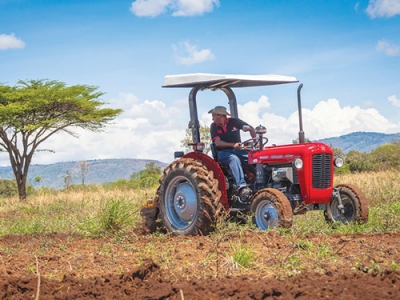 Massey Ferguson MF35.
If the workhorses on New Zealand’s paddocks and boat ramps are an indicator, the humble Massey Ferguson MF 35 was built to last. So it’s no surprise AGCO has launched a new model for the Kenya market.
Offering more mechanisation to the African sub-continent, the MF 35 – ‘the people’s tractor’ – should prove a great choice for first-time owners or those keen to develop existing businesses.
Based on the machine sold in the late 1950s and early 60s, the tractor has a 36hp engine, 6 forward and 2 reverse speeds and a rear lift capacity of 1100kg.
Compact size and manoeuvrability make it ideal for the small plots typical in Kenya’s food cultivation, planting, livestock and tea and coffee enterprises.
Richard Markwell, vice president and managing director of AGCO, noted “the model will be a great fit for this emerging market, and introduce a generation of farmers to mechanisation who probably never thought they would drive a new tractor out of a showroom”.
Given that current diesel pricing is a bit like a ride on a fairground roller coaster, it should be no surprise to hear that manufacturers are looking for alternatives.
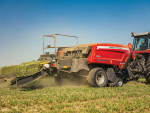
Massey Ferguson has announced the release of the SB.1436DB small square baler to New Zealand, featuring a unique layout producing two rows of bales during each pass, doubling output over a single baler producing 14-by-18-inch bales.
With the rapid rise of diesel prices since the start of the Iran conflict, farmers and growers are taking fuel consumption seriously as their bottom line is being eroded.
AGCO Power, part of the AGCO corporation, has won Diesel Engine of the Year with its Core80 Engine.
The parent company of Fendt, Massey Ferguson and Valtra – AGCO – reports lower net sales of around US10.1 billion in 2025, but forecasts a lift in 2026.


ACC says that this week's Fieldays is a great chance for farmers to pause and reflect on their processes and ensure that their life is in balance.

Bank of New Zealand (BNZ)will expand its First Farm support with a new funding boost designed to help more farmers and growers take their next step into farm ownership.
Westmorland Estate Ltd, a Waikato company running three dairy farms, runs on the philosophy that 'you are only as good as your team'.
AgriZeroNZ is ramping up efforts to accelerate the uptake of emissions reduction tools on farm with a new initiative to help more farmers put proven tools into practice.
With the general election just molnths away, farmers have launched a five-point plan for the next government.
The Government is investing in a range of initiatives designed to strengthen the resilience of rural communities and improve preparedness for future adverse events.