Boosting Crop Production by Spreading Effluent
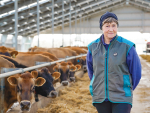
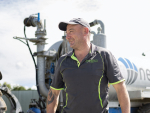
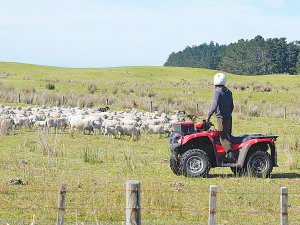
Tararua district farmer Jamie Harris milks around 400 cows using a split calving system on his farm, Crossdale Dairies.
 increase font size
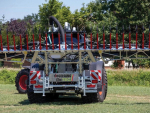
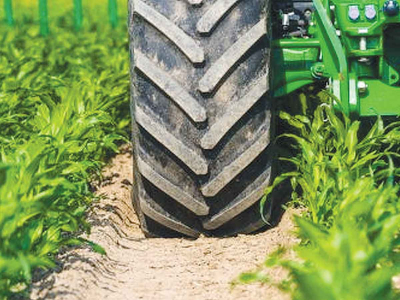 Vaaderstad WideLining keeps tankers on track.
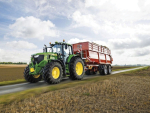
Applying liquid manures or farmyard effluents to standing crops of forage maize is largely unheard of in New Zealand, but the practice is gaining ground in Europe.
Precision drill manufacturer Vaderstad will use the Agritechnica event in November to launch such new technology for its Tempo V6-12 drills to make the practice much easier.
Its WideLining system is the world’s first tramlining system which enables farmers and growers to spread liquid manure in a standing crop without compromising yield potential.
Rather than shutting off row units to create tramlines, the system automatically changes the row spacing on the planter hydraulically, to create two 1050mm tyre tracks, so ensuring all row units plant at full capacity. In the body of the crop, the row spacing between the tyre tracks will reduce from 750mm to 600mm without compromising plant numbers.
Integrated into Vaderstad’s iPad-based, E-Control system,
when activated, the machine will calculate the field size and automatically adjust the row units to create tramlines based on the working width of the liquid manure spreader.
In practice, when planting silage maize with an eight row planter and intending to use a slurry tanker with a 18m working width, the drill will plant 8.3% more seeds in the field than alternative technologies now available.
Tararua district farmer Jamie Harris milks around 400 cows using a split calving system on his farm, Crossdale Dairies.
Water management is an integral component of sustainable farming practices, according to Watermetrics.
Two farmers and two farming companies were recently convicted and fined a total of $108,000 for environmental offending.
A Taupiri farming company has been convicted and fined $52,500 in the Hamilton District Court for the unlawful discharge of dairy effluent into the environment.
Founded in Germany as recently as 1977, today, the Fliegl Group employs more than 1100 workers, offering an expansive range of transport solutions, from their base in Bavaria.


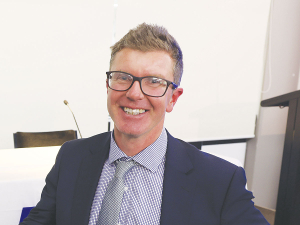
LIC shareholders have elected a new North Island representative to the co-operative's Board, along with five representatives to its Shareholder Reference Group (SRG), following the company's Annual Meeting held in Invercargill.
Farmers across parts of Southland and South Otago are continuing to deal with difficult conditions after a prolonged run of wet weather, with pressure building around feed supply, stock management, pasture damage, farm infrastructure and everyday workloads.
Federated Farmers says it welcomes Labour's commitment to reviewing the Sharemilking Agreements Act, calling on other major parties to do the same.
For Canterbury dairy farmers Sian Meijer and Rick Wobben, wearable technology has become one of their most valuable on-farm tools - helping manage 1850 cows across an expansive, high-performing dairy operation while improving efficiency, mating outcomes and day-to-day decision making.
Fonterra has unveiled its annual results for the 2026 financial year, posting $27 billion in revenue and close to $20 billion returned to New Zealand farmer owners and unit holders.
The first major update to the Dairy Cattle Code of Welfare in more than a decade has been released, marking what DairyNZ describes as an important step in ensuring animal welfare standards continue to evolve alongside scientific evidence and on-farm realities.