UK Politician Alistair Carmichael Praises "Positive Spirit" of NZ Farmers
A leading British farming politician says he's impressed with the positive attitude of New Zealand farmers that he met during his recent trip here.
 increase font size
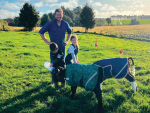
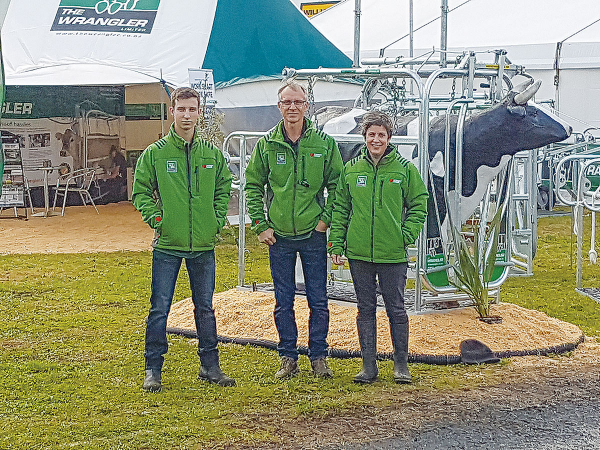 Waverley and Wilco Klein Ovink and their son, Josh, who is part of the team building product as well as salesman at Fieldays.
When it comes to award-winning innovation, Waverley and Wilco Klein Ovink got started early.
Twenty-five years ago, they invented the Wrangler, an innovation that has changed the game for farmers all over the globe.
They were encouraged to enter the Wrangler into the Fieldays Innovation Awards in 1995 where they took home an award. Since then, they have won three more Fieldays Innovation Awards, and achieved success locally and globally with their innovations.
Waverley, marketing and admin director at The Wrangler Ltd, says the family-owned engineering business continues to make quality New Zealand products in Whakatane.
She recalls that originally Wilco made the Wrangler to make their hobs as sharemilking easier.
"It was taking two people to treat a cow: one to hold the rope and the other to examine the hoof, and it wasn't safe for any of us," she says.
"As a cadet, Wilco watched a cow being treated for lameness, but she fell and broke her hip. It had got him thinking there had to be a better way.
"We looked around to buy something and were surprised to find there was nothing here for holding and treating a lame cow - so Wilco built one."
It was so novel that they were able to take out a patent on securing and lifting a hoof.
Soon vets wanted all of their farmers to have one. They suggested the couple take their innovation to the Fieldays.
"It was there talking to farmers at Fieldays that we started to find the true extent of lameness in the dairy industry.
"Every farmer had hoof knife scars on their arms and just considered it part of farming, and we heard from guys getting kicked in the head by cows.
"It was normal to put off treating cows, farmers would just give her a jab of penicillin and hope she'd come right, not realising how much a lame cow really cost them by being sick. Some of the figures of the number of lame cows on farms was staggering."
Waverley says when designing the Wrangler, they wanted something that would not only hold the hoof, but the cow too, and stop her falling during treatment.
"It needed to be easy for someone as small as me to use, and fast enought that our staff would use it. It needed to be bulletproof, multifunctional for every type of veterinary procedure we might need, and able to sit outside and be maintained just with a yard hose.
"Wilco welded various bits of scrap metal together and the cows soon showed us what worked and didn't work."
The couple were stoked to win the Fieldays Prototype Award in 1995.
Waverley says the judges were very excited to see the Wrangler.
"The encouragement they'd given us spurred us to refine it further, coming back the following year and winning the New Equipment Innovation Award in 1996."
Newspaper publicity from the wins was invaluable and having a small space to exhibit at the Fieldays Innovation Hub allowed them to get started.
Waverley and Wilco Klein Ovink will be at the Fieldays with the Wrangler.
A leading British farming politician says he's impressed with the positive attitude of New Zealand farmers that he met during his recent trip here.

Last month's National Fieldays was an important event for Canadian manufacturer Can-Am, as it unveiled its first electric ATV, the Outlander, adding extra option to the new Defender HD11 and Defender MAX HD11 line-up.
Fifty-eight selected individuals, companies, and start-ups will exhibit their ideas and cutting-edge solutions at the 2026 Fieldays Innovation Awards, with Amazon Web Services (AWS), who joins the programme in 2026 as overall sponsor.
New Zealand rural apparel brand Back Country is inviting Kiwis to part ways with tired, holey socks at Fieldays with a giant 'Sock Swap Fence' inspired by one of New Zealand's iconic rural roadside landmarks.
OPINION: The old saying 'a new broom sweeps clean' doesn't always hold up, if you ask the Hound.

OPINION: As the general election approaches, political parties are churning out policies in the hope of attracting more votes.
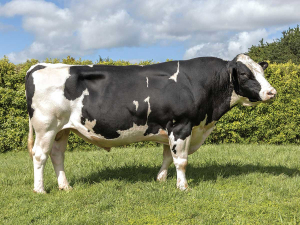
An LIC bull, Tronnoco AR Sadio-ET S3F, bred by Tony and Keri O'Connor of Tronnoco Farming Co Ltd near Timaru, has won the 2026 Mahoe Trophy.
With forecasters advising El Niño conditions will develop through winter and strengthen into spring and summer, Ballance Agri-Nutrients is encouraging farmers and growers to think ahead about nutrient planning and be prepared to work around challenging weather conditions.
In the past, much has been made of the concept of farm to fork, but an Australian expert in food science and marketing with experience in the dairy industry, Dr Angeline Achariya, says the reverse of this slogan is critical to win modern day consumers.
Efficiency is the big one because it tracks back into what is done on farm.
A four year trial has reaffirmed that mixing plantain into dairy pastures can help reduce nitrogen losses to freshwater while maintaining milk production and profitability, say researchers.