Farmers can now get a more reliable view of pasture covers across their farm, thanks to a combination of three data sources.
The new pasture monitoring capability, launched by Aimer Farming, taps into live modelling, satellite data and AI-powered smartphones.
Aimer Satellite automates pasture monitoring and continues delivering reliable pasture when satellite imagery is limited by cloud or when on-farm measurement isn't practical, such as during busy periods.
The system uniquely combines three sources of data: satellite imagery, highly accurate smartphone pasture measurement, and Aimer's live paddock modelling (digital twin of each farm).
Together, these inputs deliver more reliable pasture estimates than satellite-only approaches, while reducing the need for full farm walks or manual data entry, including recording grazing events.
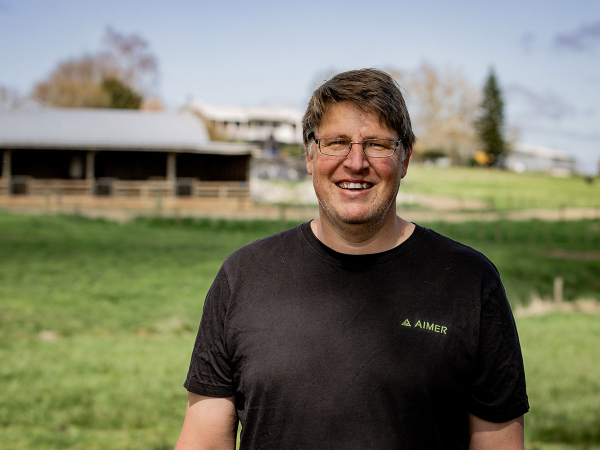
Aimer Farming founder Jeremy Bryant says satellite technology has huge potential for pasture management, but the real value comes when it is connected with accurate on-farm measurement.
"Satellite imagery is incredibly powerful because it gives farmers visibility across the whole farm," Jeremy says.
"But farmers make pasture decisions every day, not just when a satellite passes over. AIMER Satellite helps farmers keep a better handle on pasture across the farm, even when time, weather or workload make regular measurement difficult.
"That's what makes this technology different from satellite-only pasture technology. Aimer Satellite combines satellite data with smartphone measurement and what AIMER learns about paddock growth over time."
Using Aimer's AI-powered smartphone technology, farmers scan part of their farm, and Aimer estimates the rest, saving hours of farm walks while generating forecast feed wedges and automated grazing plans.
The satellite extends this by incorporating satellite observations into Aimer’s live paddock models, improving how the system understands individual paddock performance and increasing the reliability of pasture estimates over time.
Aimer’s smartphone measurement delivers more than 90% accuracy when pasture is measured directly. The Satellite is designed to maintain around 80% daily accuracy by combining satellite data, smartphone measurement and paddock learning.
Bryant says reducing admin for farmers and making the technology practical for them to use day-to-day has also been a major focus.
“We know many systems rely on manual data entry, particularly recording grazing movements, to maintain accuracy,” he says.
“AIMER Satellite is designed to deliver reliable pasture intelligence, without requiring farmers to record grazing events, making it far more practical during busy periods or difficult conditions.”
Bryant says the launch is another step towards making pasture management easier and less manual for farmers.
“Pasture remains one of the biggest drivers of farm performance, but it is also one of the hardest things to consistently monitor well,” he says.
“Our goal is to give farmers a clearer, more reliable view of what is happening in their paddocks, so they can make good decisions earlier and with less effort.
“We see satellite technology playing a major role in the future of pasture management, particularly when it is combined with other sources of on-farm intelligence.”