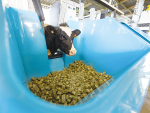
Climate-friendly cows closer
Dairy farmers are one step closer to breeding cow with lower methane emissions, offering an innovative way to reduce the nation's agricultural carbon footprint without compromising farm productivity.
 increase font size
 The gene mapping service identifies the ancestry of individual stock.
DNA parentage testing is now more accessible to dairy farmers with the launch of CRV Ambreed’s revitalised DNA parentage testing service.
The gene mapping service identifies the ancestry of individual stock.
DNA samples are collected by taking a small piece of tissue from an animal’s ear.
Allflex tissue sampling ear tags are either applied to calves at birth or as buttons on mature animals.
Tissue samples are then sent to CRV’s approved affiliated DNA genotyping laboratory, GenomNZ, where DNA is extracted for parentage and single gene analysis.
CRV Ambreed product development team leader Erin OConnor says DNA verification is inherently free of error when deciding on the best direction for a herd.
Herd records will show exactly who the animal’s sire and dam are through specific genetic markers.
“The farmer will then understand which cows in the herd are the best and which sires they can be mated to,” she says.
Samples analysed also identify the A2/A2 beta casein status of the individual animal and other defect genes.
CRV Ambreed last year trialled DNA testing on 4991 animals on nine farms.
Only 41% of the animals tested as having been recorded with the correct sire.
“The animals with incorrect parentage information also had inaccurate BW, PW and BV information,” OConnor said.
“This information is vital when making onfarm decisions and it would have resulted in misguided mating and culling decisions.
“We updated the sire information for 46% of the animals tested, which completely changed the rankings for BW and PW across the herd. Those farmers can now use that information when making decisions on mating and culling.”
Parentage results are sent by CRV Ambreed to NZ Animal Evaluation which uses the data to identify NZ’s most efficient feed convertors to milk.
“Inaccurate parental data is not only an issue dealt with onfarm; it impacts the wider industry too because accurate ancestry information substantiates breeding values and breeding indexes,” OConnor said.
“Future animal evaluation runs which estimate genetic breeding values and indices used in NZ will be a lot more accurate.”
OConnor says DNA verified animals could fetch higher premiums in saleyards and could influence farmers’ buying and selling decisions.
Dairy farmers are one step closer to breeding cow with lower methane emissions, offering an innovative way to reduce the nation's agricultural carbon footprint without compromising farm productivity.
CRV has produced the first homozygous polled bull to make New Zealand’s prestigious Ranking of Active Sires (RAS) list, demonstrating the strides the company is making in breeding top-quality polled bulls.
As Mycoplasma bovis (M. bovis) resurfaces in Canterbury, CRV is reassuring dairy farmers it has rigorous production processes and health testing programmes in place within its supply chain.
A Canterbury Hereford stud specialising in providing beef genetics for the dairy industry is claiming a major breakthrough in breeding for more environmentally friendly animals, with reduced urinary nitrogen emissions.
Some dairy farmers could be missing out on up to 160 kgMS of production because they are not herd testing.
Alliance is calling for final applications for its 2027 Graduate Programme, with applications closing on Sunday 25 October.
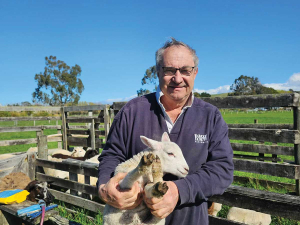
Decades piloting planes has ensured vet and farmer David Hayes is focused on safety. So, after a serious accident while welding on farm, he is sharing his experience so others can learn from it.
Canterbury milk processor, Synlait Milk has confirmed Leon Fung as its chief executive officer.
OPINION: Making it easier to collect rainwater and use it to grow crops and livestock is a no brainer.
As part of its Election 2026 coverage, Rural News asked political parties how they would help pull the arable sector out of the doldrums. Here's what they said:
Farmers are being encouraged to rethink how they manage waste on farm with the launch of ruralwastesorted.co.nz, a new website bringing together practical tips, real farmer experiences and resources.