Indian FTA 'opens doors for dairy'
A New Zealand dairy industry leader believes the free trade deal announced with India delivers wins for the sector.
 increase font size
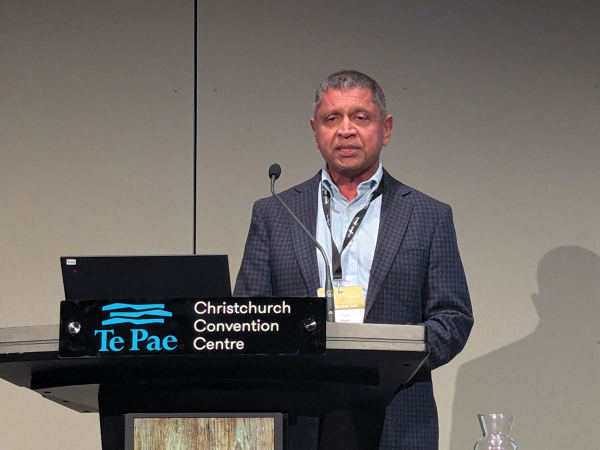 Southern Pastures executive chair Prem Maan at the recent Beef+Lamb Out The Gate 2026 event.
Dairy farmers need to be high quality partners to the beef industry, says Prem Maan, the co-founder and executive chairman of the dairy corporate Southern Pastures.
Introducing himself as the “dairy guy” at Beef+Lamb NZ’s recent Out The Gate 2026 event, Maan said dairy farming produced a lot of bobby calves and that was no longer acceptable to its social license to operate.
Southern Pastures recognised that early on and decided to develop a solution that integrated with beef industry needs, producing specialist beef calves.
Maan presented photos of some of the calves already being produced through the programme.
“As you can see, they look like magnificent beef animals. I’m sure you’ll agree that they don’t look like traditional dairy bobby calves.”
Maan said Southern Pastures partnered with Hawke’s Bay bull breeders Rissington Cattle, using their Angus-based Profit Maker genetics.
“The quality of what’s going out of our dairy platforms today is streets ahead of where it was a few years ago and what people expect when they think of dairy beef,” said Maan.
Every dairy beef calf born on a Southern Pastures farm was now bred for a beef system.
“These are not accidents. They are not your traditional bobby calves,” he said.
They deliberately select for growth rates, temperament, and carcass quality - the things that matter to finishers.
He said feedback from finishers was that the calves were consistent, predictable and a tenable proposition for anyone running a beef finishing operation.
They have since also joined forces with Taylor Preston and Wilson Hellaby as the Better Beef Collective, which invites dairy farmers, beef breeders, rearers and finishers to join in a data-driven collaborative effort to support scale, consistency, and better outcomes across the supply chain.
Maan said Southern Pastures was heading towards producing 6000 beef calves – numbers which none of the dairy farmers in the Better Beef Collective would have the carrying capacity for, or could manage, without knowing the destination of the calves well before they are born.
“This year, the collective has arranged a small deposit from finishers for their calves to be born for this coming season - finishers who intend building their own systems on the back of well-bred well-raised animals being delivered on time to specifications each year.
“They will then supply finished calves back to the processors in the collective so we can all improve each year from the data generated along the whole supply chain.”
The traditional beef spot market does not support the same degree of information capture as the Collective’s system, said Maan.
Maan said a key part of the trial process was to take their beef to some of the top restaurants in Auckland and ask them to test it on their customers.
“And the feedback we got was that they love the product and they’re willing to buy at the top prices.
“That is quite important to us because there’s no point creating product the market is not going to buy.”
Explaining some of the finer points of the programme, Southern Pastures southern regional manager James Booker said their dairy herd would not change from its Jersey-cross focus.
Low calving weight was important and they were getting 32kg Angus composite calves, about 90% of them turning out black like the animals in the photos shown at the event.
Partnering with a range of calf rearers, Booker said Southern Pastures fully backs them on nutrition, and maintains ownership to 100kg.
On emissions policies, Prem Maan said customers care about climate change whether or not farmers believed in it. UK supermarkets would not buy unless they could prove their carbon footprint.
“On a per unit basis, New Zealand grass fed pastoral farming stacks up well against anyone in the world,” said Maan.
“When you add beef production from our dairy herds, the whole system efficiency improves even further. That allows New Zealand to maintain its advantage as one of the most emissions-efficient beef systems on the planet.”
Southern Pastures was committed to working with the beef industry “because in the end we believe we’re intertwined. At the end of the day, we are all grass farmers”.
He said that he was not there “to sell Halter” but technologies like Halter would soon allow beef and sheep farmers to start farming grass as intensely as dairy farmers now do.
“So, imagine the productivity gains we’re going to get out of our pastures. This is going to be quite immense for the country.”
A New Zealand dairy industry leader believes the free trade deal announced with India delivers wins for the sector.
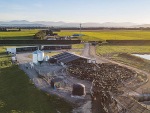
One of New Zealand's largest dairy farmers won the 2024 'Food, Beverage and Fibre Producer' award at the NZ Primary Industries Awards.
OPINION: The recent extreme weather events in New Zealand, which included fatalities and significant property damage, including an estimated $1 billion to the agriculture sector alone, should makes us pause and think again of the best way forward for us to make our contribution to the planet’s climate and food needs.
Corporate dairy farmer Southern Pastures has been judged to be a responsible investment leader for the seventh year running.
Specialty butter made from New Zealand grass-fed milk is now available locally after sales success in the US over the past two years.


Now in its fourth year, the 2026 Fencing Industry Awards, formed part of the proceedings of the FCANZ Conference, held in Nelson during August.
DairyNZ deputy chair Cameron Henderson has been re-appointed unopposed for another term.
OPINION: The stats speak for themselves.
Farms across the upper North Island are trialling different pasture mixes as part of a research programme that aims to build greater resilience into farming systems.
Election years are always a concerning time for farmers, according to DairyNZ chair Tracy Brown.
The Ballance Farm Environment Awards are coming to the West Coast of the South Island.