Less Wellington in the way of farming
OPINION: For many farmers, the biggest regulatory challenge they face is the myriad things that the Resource Management Act throws up.
 increase font size
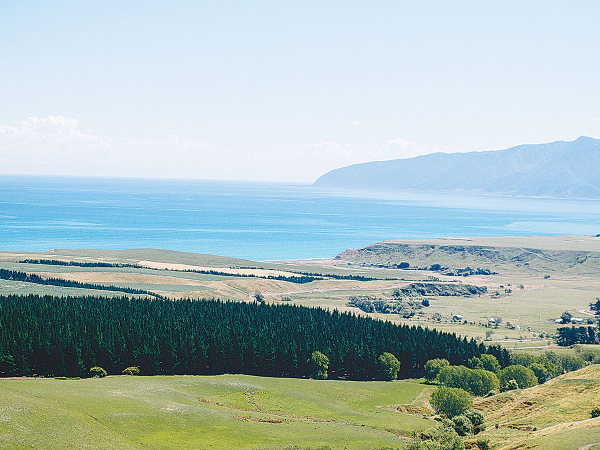 Significant Natural Areas (SNAs) are becoming a very important topic for farmers.
Significant Natural Areas (SNA) are becoming a very important topic for farmers who are finding that parts of their properties have been or will be designated as SNA’s due to a perceived high level of indigenous biodiversity and will be captured under the proposed National Policy Statement (NPS) for Indigenous Biodiversity.
As the saying goes ‘the devil is in the detail!’ The proposed NPS does not just cover the designated SNA but also covers areas that are seen as connecting pathways between SNA’s.
This NPS for Indigenous Biodiversity doesn’t take into account private property rights. Currently, landowners have been working under permitted activity rules under the RMA, and have been voluntarily protecting many significant areas on the land. Yet now under this NPS they are to be constrained in what they can do.
Common justice would expect compensation for land taken by the Crown. Surely landowners should be compensated. But no, Minister Shaw (Climate Change Minister James Shaw) has stated that they would not be compensated because the policy would not stop them from using their land. Rubbish!
An example of government paying for taking away private property rights was the Waikato Regional Council’s Variation 5. This paid for the nitrogen to be taken out of the Lake Taupo Catchment. Using this example, if the crown wants to impose conditions on Indigenous Biodiversity on private land they should enter into meaningful consultation with landowners. If SNA’s are agreed to, then compensation must be applied. We see the three district councils and the regional council chair on the West Coast and two local rūnanga chairmen wrote to the Minister James Shaw opposing the SNA process and only received a “generic response letter” back.
Minister James Shaw said existing activities would be able to continue on SNA’s providing they happen in partnership with nature. Some new activities could be possible with a resource consent, the minister said. What on earth is he talking about?
Minister Shaw, the question needs to be asked, why are these proposed SNA’s to be imposed on private land? If you know how farmers think and behave, you would know that these areas were left because landowners recognised the value of retaining these special places, making that decision unfettered by needless legislation. It has long been part of landowners’ culture.
We note too that the Prime Minister made a clear statement that there would be no new taxes under her government this term. Yeah Right!
The short definition of a tax is: “A tax is a compulsory financial charge or some other type of levy imposed on a taxpayer by a governmental organisation”.
The designation of an SNA which takes away some private property rights surely falls within the definition of “some other type of levy imposed on a taxpayer by a governmental organisation”.
The Government seems to want to blame the rural sector for all the ill winds that blow through. There is no acknowledgement of all the good works that rural sectors have achieved. It seems highly likely that imposing SNA’s as part of the NPS will lead to more unproductive government bureaucracy.
Peter Buckley is a Waikato farmer and a former chairman of Waikato Regional Council.
OPINION: For many farmers, the biggest regulatory challenge they face is the myriad things that the Resource Management Act throws up.

Red meat farmers have hailed the Government for passing the Resource Management Act Amendment Bill.
OPINION: We all need energy to live the lives that we aspire to.
Moves are underway for farmers and Māori in Southland to try and resolve and get clarity over what appears to be a controversial section of the proposed Gore District Plan.
Despite some earlier confusion around the exact timing, the new Government is moving to reform the way local bodies implement Significant Natural Areas (SNAs) rules on farmland.



A Palmerston North shearer has been sentenced to six months' community detention and 12 months' supervision after being found to have physically abused three lambs while shearing them.

Power Farming has launched a joint venture in Southland.
Food rescue charity Meet the Need has released its 2025/26 Impact Report, revealing a record year of growth alongside a stark warning: demand for food support across New Zealand is rising faster than supply can keep up.
As we move into the second half of 2026, the Tractor and Machinery Association (TAMA) reports that Year-to-Date figures ending June 30 saw new tractor deliveries hitting 1,386 units or 10.7% ahead of the same period in 2025.
The avocado sector is entering the new season with a larger crop and positive market opportunities.
New Zealand growers have always adapted to changing conditions, but one challenge is steadily gaining ground across the horticulture sector: resistance.