Rural Medical Immersion Programme Students Finish Year
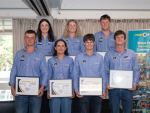
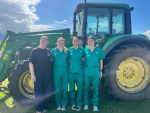
This year's Rural Medical Immersion Programme (RMIP) students have finished their placement year in South Taranaki, and all three are staying in Taranaki for their next placement.
 increase font size
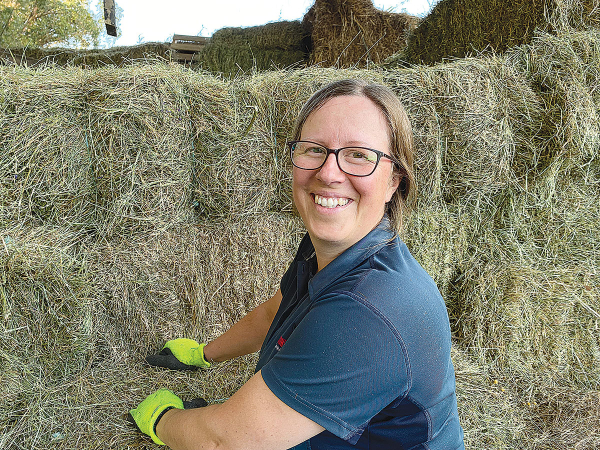 Primary ITO agriculture sector manager Marianne Awburn.
Primary ITO has a wide range of work-based training options to help you grow the skills and knowledge of your staff in 2025.
Our team and I will be at the Dairy Expo to talk you through the options, from entry-level skills to micro-credentials (bite-sized pieces of learning), apprenticeships, and more. We'd be delighted to share what's involved and help identify the best options for your team.
This year is the perfect time to train your staff, with several exciting initiatives available now at 50% off fees in 2025. The popular 50% off fees for agriculture training has been extended into 2025. This is available for our NZ Certificates (Level 3 and 4).
In the face of ongoing cost pressures on farmers, this offer aims to help make training more accessible for all. We look forward to seeing even more of you take advantage of this fantastic offer this year.
Apprenticeship Boost payment for employers
The Government has extended the Apprenticeship Boost payment into 2025, with up to $6,000 available for agriculture employers with first-year apprentices.
This is excellent news for employers looking to take on, train and retain new workers.
The payment of $500 a month from Work and Income is only for first-year apprentices. It recognises the time and effort made by employers taking on new staff, and the value that work-based training adds to a business.
Short courses for all visa holders
Primary ITO has launched two new dairy short courses that provide affordable and flexible options for all dairy staff, no matter their visa or residency status.
The Dairy Basics: Milking course covers key knowledge in milking and dairy plant hygiene. This includes describing and reporting on milking problems, risks to on-farm milk quality, and how to prevent and implement solutions to milk quality problems.
The Dairy Basics: Effluent course provides knowledge on effluent management at all stages, from production to storage and spreading. It also covers monitoring a dairy effluent management system.
Developed in response to industry demand, both courses are suitable for farm assistants and relief or experienced milkers who want to develop or refres their knowledge. They are available any time of year.
Learners will take part in one or two short off-job workshops, where they will complete a workbook, engage in interactive activities to put theory into practice, and share knowledge and experience with other course participants.
These courses are non-formal, meaning learners will not complete any formal assessment. They will receive a certificate of attendance upon completion. Each course has a similar level of content to a Level 3 programme.
Find information on all of these exciting initiatives on our website (primaryito.ac.nz). Or come and chat to our friendly team at the Dairy Expo - site 25. We look forward to seeing you there!
Marianne Awburn is sector manager for agriculture for Primary ITO.
This year's Rural Medical Immersion Programme (RMIP) students have finished their placement year in South Taranaki, and all three are staying in Taranaki for their next placement.

OPINION: The Government's decision to reinstate agriculture and horticultural science as a standalone subject from Year 11 is the right one.
Teachers are welcoming the outgoing Government’s U-turn allowing agriculture and horticultural science to remain a standalone Year 11 subject.
Students will be able to study Agriculture and Horticultural Science from Year 11, creating a clear pathway into Years 12 and 13 and future careers in New Zealand’s primary industries, Education Minister Erica Stanford says.
Alliance is calling for final applications for its 2027 Graduate Programme, with applications closing on Sunday 25 October.

OPINION: The World Dairy Summit, held in Auckland last week, delivered a poignant message – when it comes to global trade, the old order has passed away.
Deer Industry New Zealand (DINZ) has welcomed Government co-investment in a new $10 million programme aimed at increasing the value of New Zealand farmed venison, velvet and co-products and improving returns to deer farmers.
A former Fonterra Brands product, Anlene, is making its return to China.
New Farmlands chair and South Otago dairy and beef farmer, Will Clarke says the co-operative will take the learnings from this week’s annual general meeting to work more closely with shareholders.
Farmlands shareholder and Waitaki Valley sheep and deer farmer, Paige Wills says the co-operative’s board has “a considerable amount of work to do if they want to rebuild shareholder trust and confidence in their governance”.
New analysis from DairyNZ highlights the growing importance of efficiency and cost control in maintaining profitability, with a widening gap between New Zealand’s highest and lowest performing dairy farms.