Fonterra FY26 Results: $9.69 Milk Price, $3.4bn Profit
Fonterra has unveiled its annual results for the 2026 financial year, posting $27 billion in revenue and close to $20 billion returned to New Zealand farmer owners and unit holders.
 increase font size

Dairy industry optimists have for months been talking up the future, saying things will improve.
Others who saw the bright sky in the morning as a warning some time ago were bemused at Fonterra’s optimism.
Now emerges the reality: economic forecasting by DairyNZ which will send shivers up the spines of dairy farmers who are highly geared, have high cost/high input systems and are relatively new to the sector. Not too many businesses outside dairying would survive for a year or more on overdraft, but farmers and their bankers have little choice.
The raw facts are that the $4.50 payout will not even give most farmers enough cash to service debt and pay farm working expenses, let alone buy a loaf of bread from the corner dairy. It will be a case of borrow and hope and in the case of the banks, lend and hope. They too are inextricably caught up in this mess.
New Zealanders living in provincial cities and towns will feel the pinch pretty quickly as farmers cut back on rural services. Capital spending will probably be a no-no and, as DairyNZ predicts, farmers will likely cut back on repairs and maintenance and be strategic with fertiliser use and supplementary feeds.
There may be job losses on farms. Retail outlets in dairy dependent towns have reason to be worried. With less cash, optional environmental projects on farm could also be cut.
The trickle-down effect will flow on to the big cities as well. With a lower tax take, government spending is likely to face the chop and overpaid bureaucrats in Wellington may have to revert to instant coffee rather than their expensive lattes. God forbid, even their Koru Club memberships could be under threat.
To be fair, not all hope is lost: farmers are lucky that interest rates are very low and will likely remain so for the foreseeable future – but things can change. The banks are predictably suggesting that all will eventually come right and that only a few years ago there was a similar volatile price upheaval. They are basing their optimism on developing economies, especially in Asia, where people demand more protein in the form of milk products. But more milk from the US and Europe will also hit these markets and there are no guarantees.
Right now there is an undeniable financial crisis in the dairy industry which could last 18 months or more.
While this is hard on individuals, maybe it will help all concerned to have more realistic expectations of an industry that is clearly prone to volatile market swings.
Fonterra has unveiled its annual results for the 2026 financial year, posting $27 billion in revenue and close to $20 billion returned to New Zealand farmer owners and unit holders.
Fonterra Co-operative Group has confirmed the independently assessed candidates standing for election to its board in 2026.
Fonterra has revised its Farmgate Milk Price forecast for the 2026/27 season, lifting the midpoint and narrowing the range on the back of improving global dairy commodity prices.
Outgoing Fonterra Co-operative Council chair John Stevenson says that it has been a privilege to represent the co-op's farmer shareholders.



LIC shareholders have elected a new North Island representative to the co-operative's Board, along with five representatives to its Shareholder Reference Group (SRG), following the company's Annual Meeting held in Invercargill.
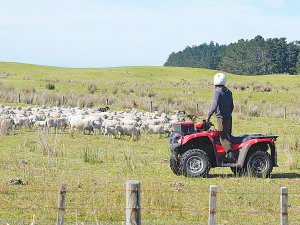
Farmers across parts of Southland and South Otago are continuing to deal with difficult conditions after a prolonged run of wet weather, with pressure building around feed supply, stock management, pasture damage, farm infrastructure and everyday workloads.
Federated Farmers says it welcomes Labour's commitment to reviewing the Sharemilking Agreements Act, calling on other major parties to do the same.
For Canterbury dairy farmers Sian Meijer and Rick Wobben, wearable technology has become one of their most valuable on-farm tools - helping manage 1850 cows across an expansive, high-performing dairy operation while improving efficiency, mating outcomes and day-to-day decision making.
Fonterra has unveiled its annual results for the 2026 financial year, posting $27 billion in revenue and close to $20 billion returned to New Zealand farmer owners and unit holders.
The first major update to the Dairy Cattle Code of Welfare in more than a decade has been released, marking what DairyNZ describes as an important step in ensuring animal welfare standards continue to evolve alongside scientific evidence and on-farm realities.