OPINION: It's official! New Zealand dairy farmers have the world’s lowest carbon footprint – at nearly half the emissions of other international producers.
AgResearch analysis released last week confirmed New Zealand retained first position in low-emission dairy milk production, with an on-farm carbon footprint of 46 % less than the average of 18 countries studied.
The report’s release came on the eve of the Climate Change Commission releasing its draft advice for public consultation.
As public consultation on the commission’s report is now open, it’s imperative that the Government takes into account the AgResearch report when it makes decisions on climate change. The Government should celebrate, rather than decry, the excellent work our dairy farmers do, and work with them to maintain this world leadership. Its new policies must reflect the work farmers are already doing.
The research analysed 55% of global milk production, including major milk-producing countries.
New Zealand was the most efficient producer at 0.74kg CO2e/kg FPCM (fat and protein corrected milk). The average was 1.37kg CO2e/kg FPCM.
New Zealand was followed by Uruguay at 0.85kg CO2e/kg FPCM, Portugal at 0.86, Denmark at 0.9 and Sweden at 1. Peru clocked in as the highest emissions producer among the countries studied, at 3.29 kg CO2e/kg FPCM.
The research has played a key part in understanding how New Zealand dairy farms stacked up, and informed how Kiwi farmers could be even more efficient.
DairyNZ says New Zealand’s dairy sector is committed to remaining the most efficient producer of low emissions milk in the world. The sector’s focus is sustaining success as consumers and communities increasingly seek sustainably produced food.
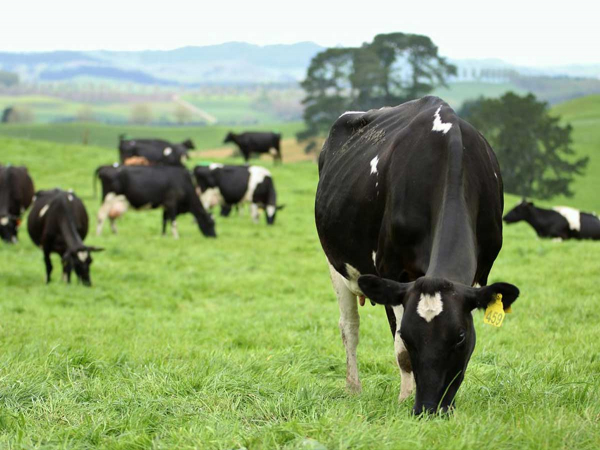
There is a huge amount of work underway to support farmers to reduce emissions. NZ dairy farmers’ hard work and investment over decades has contributed to this world-leading status. Our grass-based, outdoor grazing system is unique globally and is critical to our success.
For NZ dairy farmers, pasture-based farming and genetic improvement are key components to their low carbon footprint.
They agree that more can be done and that they must continue to adapt and adopt new technology and knowledge.
Our global competitors are never far behind, plus farmers know it is the right thing to do for our environment, our consumers and humanity as a whole.
It’s time the Government starts recognising the efforts farmers are putting in behind the farmgate when it comes to climate change.