
Ministry for the Environment to sponsor Ballance Farm Environment Award
The Ministry for the Environment is joining as a national award sponsor in the Ballance Farm Environment Awards (BFEA from next year).
 increase font size
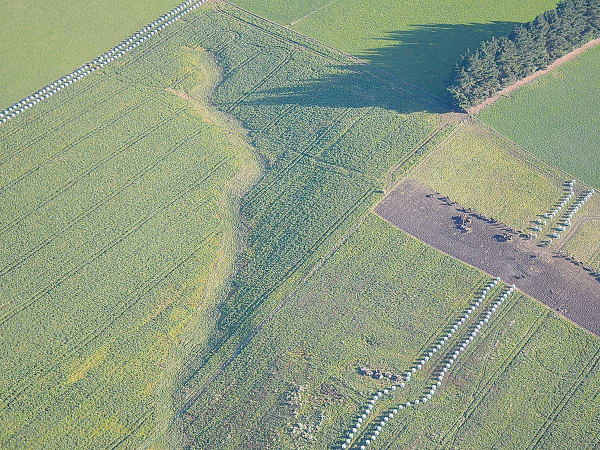 Encroachment of residential living onto productive farmland will mean the farmers who remain will face higher land values and higher rates.
OPINION: The recent Our Land 2021 report released by the Government is a wake-up call.
In our quest to build houses for a burgeoning population, productive agricultural land is being swallowed up by housing developments.
With Auckland’s population set to hit 2 million in the next decade, pressure for both housing and food will rise.
New Zealand will have 6.8 million consumers by 2073, the Ministry for Environment (MfE) report says, and food growers will also be responding to overseas demand for New Zealand food exports.
While most dairy farms are not affected by the urban sprawl, if productive land was is not available for agriculture, it forces less suitable areas to be used.
The report goes on to say that the land used for agriculture has been decreasing since 2002. It says between 2017 and 2019 it fell by 2%. In terms of dairying, the report notes the increase in cow numbers and the greater use of irrigation, especially for dairy farming.
Any encroachment of residential living onto productive farmland not only means a loss of that farming land, it also has consequences for those farmers who remain.
They face higher land values and consequently higher rates, along with increased council rules and restrictions that fall upon them due to increased amenity expectations of those new urban residents.
Export earnings from NZ land-based primary industries shot up 91% - from $23 billion in 2010 to $44 billion in 2019. The MfE report notes the Government wants those earnings to grow by another $44 billion in the next decade to support post-covid economic recovery.
Federated Farmers describes this as “a hairy and audacious goal” when you consider that since 2002 nearly 1.9 million hectares has gone out of agriculture and horticulture production.
They point out that, even more tellingly, of our most highly productive land (flat, best soils), the amount lost to urban sprawl and lifestyle blocks jumped 54% from 69,920 hectares in 2002 to 107,444 hectares in 2019.
NZ farmers are just getting on with driving up production from less land and from management and genetic improvements. But there comes a time when they run up against the limits of nature and efficiency.
The time has come for NZ to better manage where we are building houses and stop building on land best suited to growing healthy food for people.
The Ministry for the Environment is joining as a national award sponsor in the Ballance Farm Environment Awards (BFEA from next year).

Horticulture New Zealand says that while it welcomes plans to extend planning permissions for post-cyclone rural recovery work in Hawke’s Bay, Tairāwhiti Gisborne needs to be included in that work.
OPINION: The old saying ‘Everyone wants to go to Heaven, but nobody wants to die’ seems to apply to the wailing coming from public service entities facing cuts under the new Government’s belt tightening.
The Ministry for the Environment (MfE) has found itself in a stoush with NZPork over the controversial National Policy Statement for Highly Productive Land (NPS-HPL).
Food Waste Action Week 2024 is encouraging New Zealanders to ‘Choose What You’ll Us’, highlighting the benefits of buying loose fruit and vegetables.



Testing confirms H5 bird flu in a single northern giant petrel, found dead on a remote Cape Palliser beach in the Wairarapa, says Dr Mary van Andel, the Ministry for Primary Industries' (MPI) Chief Veterinary Officer.

"What's for dinner?" may sound like a simple question, but for many Kiwi parents, answering it has become a job in itself.
Fifty Eight years ago, on the 16th of August 1968, August Claas, the founder of the harvesting company and father of Helmut Claas, personally presented a Claas Senator combine harvester to Scottish farmer John Steven.
New Zealand consumers are paying more for beef mince than ever before, with the average retail price now sitting above $24 per kilogram, according to Rabobank.
State farmer Pamu has delivered its strongest operating result on record.
Four years since it was first detected in New Zealand, researchers and growers now know much more about management of maize pest fall armyworm (FAW).