DairyNZ chair wants cross-party deal
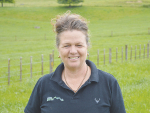
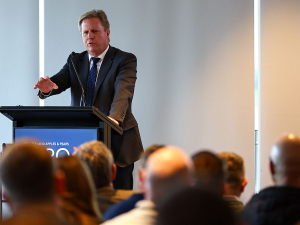
New DairyNZ chair Tracy Brown says bipartisan agreement among political parties on emissions pricing and freshwater regulations would greatly help farmers.
 increase font size
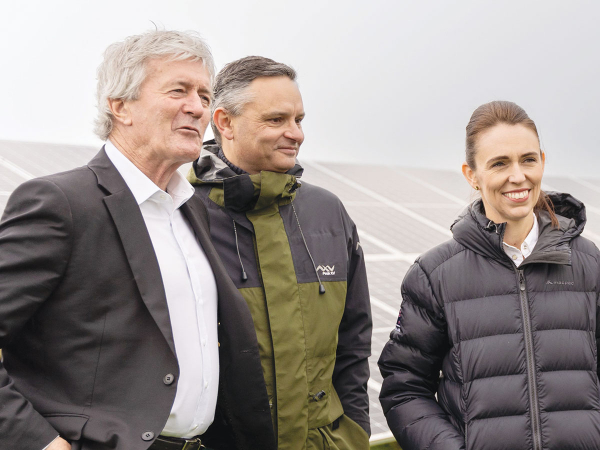 Agriculture Minister Damien O'Connor with Climate Change Minister James Shaw and Prime Minister Jacinda Ardern at the consultation document announcement last week.
OPINION: The agriculture sector has long asked for certainty around what the Government might finally determine on how agricultural emissions will be treated and that is seemingly just weeks away.
We now have a 'consultation' document and most know what the word 'consultation' actually means. Essentially it means prove us wrong and come up with a much better idea that is politically and practically acceptable.
No one - the wild greens or the rabid rural types - will be completely happy with the 94-page document because, in the end, the decision about what to do is a political one and as with most such documents, if everyone is unhappy, then the government or the writer will probably be happy because everyone is both a winner and a loser to some degree.
Most unhappy with this proposal will be dry stock farmers who for some incomprehensible reason are the hardest hit - even though they are lowest emitters. The logic is bewildering and Beef + Lamb New Zealand is rightly very concerned. For dairy farmers there are more options.
Just a week ago the Parliamentary Commissioner for the Environment Simon Upton stated very clearly and correctly that NZ cannot plant its way out of dealing with ag emissions. Federated Farmers says the proposal outlined in the consultation document will "rip the guts out of small town NZ" - the assumption being that good productive land will end up under pine trees. It's not just the trees, it's the long term effects and pressure these have on roading infrastructure and the environment. Ask the people of East Coast NZ what they think!
Regardless of the rhetoric that has greeted the report, there will be those farming leaders who will say it could have been worse. If Government had its initial wicked way, agriculture would be in the ETS. In some ways it's a victory of sorts for He Waka Eke Noa (HWEN) - the consortium of agricultural groups who came up with a plan to counter the Government's initial crazy one.
Agriculture Minister Damien O'Connor argues that most of the proposals in HWEN are in the report. The key word is 'most' and it'll be interesting to see whether the submissions to the Government' 'consultation' proposal result in any significant changes. Interestingly, the National Party is being pretty coy on the issue - a bob each way you might say - on the one hand supporting the overal emissions targets, but then expressing its concern about the way the Government is planning to price emissions.
In the end most, if not all the protagonists should prepare to be unhappy with the final outcome - that's life these days!
New DairyNZ chair Tracy Brown says bipartisan agreement among political parties on emissions pricing and freshwater regulations would greatly help farmers.

First up to the podium at the recent Tractor and Machinery Association (TAMA) Conference in Wellington, Minster for Agriculture, Todd McClay, reflected on a difficult 12 months, but hinted at signs that things were turning the corner, saying “when ag does well, New Zealand does well”.
A horror story - that’s how Federated Farmers describes new research looking at forestry conversions’ impact on water quality.
OPINION: When Groundswell showed up in the 'advocacy hub' at Fieldays alongside the same groups that brought you He Waka Eke Noa, the Hound feared the ginger group had been brought into the woke fold and given the old rubber ring.
OPINION: Industry-good bodies have had a torrid time recently, with some facing backlash from farmers particularly over their stance on emissions pricing and He Waka Eke Noa.
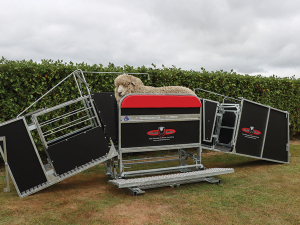
Oamaru-based livestock handling specialist Te Pari has bought Combi Clamp, the New Zealand manufacturer of Combi Clamp manual sheep handlers.
Agriculture Minister Todd McClay has admitted that a scheme bringing workers from Pacific nations to work on orchards has become too hard to navigate but says changes are coming.
A new app designed in New Zealand aims to help sheep, beef and deer farmers capture, analyse and use body condition score data more effectively.
Canterbury farmer Andy Macfarlane has been appointed to the board of AgriZeroNZ, the public-private partnership designed to accelerate the development and deployment of emissions reduction tools for New Zealand farmers.
For over 50 years Mel Ewers has been supporting the apple sector navigate through compliance and quality assurance issues.
The apple sector is enjoying a bumper harvest season.