Dairy Sector Drives Strong Rural Property Market Activity in NZ
The latest data from the Real Estate Institute of New Zealand (REINZ) reveals a mixed rural property market due to consistent inflation concerns.




 increase font size
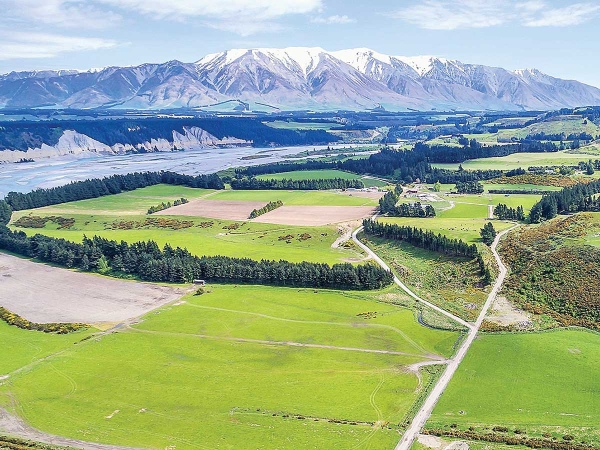 The dairy market was a standout performer for the year ending December 2025.
The Real Estate Institute of New Zealand (REINZ) has released its latest rural property report, providing a detailed view of New Zealand’s rural real estate market for the 12 months ending December 2025.
“Across New Zealand, farming sectors displayed varied activity in 2025, influenced by regional strengths, commodity returns, and seasonal conditions. Buyers seem to prioritise properties that deliver consistent performance, with reliable water, proven production, and established infrastructure driving interest,” says REINZ Rural Spokesperson Shane O’Brien.
The Otago region had the most grazing sales in New Zealand for the year ending December 2025, up 50.0% to 48 sales, followed by Northland, at 42 sales (up 27.3%). Other regions saw increases in sales, such as Taranaki (up 62.5% to 13) and Canterbury (up 57.1% to 22), compared to the 12 months ending December 2024. Despite the percentage increases, the market is returning to more normal levels after the year ending 2024 had a lower-than-usual number of sales.
The dairy market was a standout performer for the year ending December 2025, where sales were higher year-on-year in the key dairy regions, including Canterbury (up 18.2% to 26), Manawatu-Whanganui (up 84.6% to 24), Southland (up 84.6% to 48), and Taranaki (up 104.0% to 51).
“Buyers are looking for farms that deliver consistent performance and reliable returns,” said O’Brien. “In both dairy and grazing, properties that combine scale, infrastructure, and sound environmental management are commanding attention. The market is operating in a more stable environment than a year ago, suggesting steady momentum into 2026 for well-developed, productivity-focused farms.”
“The dairy sector, in particular, experienced its best performance in the past decade, driven by farmgate returns, lower interest rates and favourable growing conditions. Grazing farms followed, also showing steady engagement.”
Finishing farm sales increased slightly in the 12 months to December 2025, with several core districts like Manawatū-Whanganui, Canterbury and Otago, recording increases in sales. Stronger lamb and beef schedules boosted purchasing confidence, while buyers showed a clear focus on operational efficiency and long-term performance.
“Activity in the finishing sector has been steady in 2025, with core districts showing modest growth. With buyers continuing to favour properties that combine productivity, reliable infrastructure, and strong cashflow potential, while drawing careful attention to policy and long-term land use, the market outlook remains measured,” states O’Brien.
Horticulture sales grew strongly year-on-year, reaching 117, up from 84. The most growth was seen in the Bay of Plenty, at 58 sales (up 107.1%) for the 12 months ending December 2025. As sales increased, so did the median price per hectare, up 9.7% to $271,170.
“Horticulture activity stabilised in 2025, with improved sales in selected regions and prices aligning closely with productive capacity. Stronger export returns supported interest in established orchards with proven yields, modern plantings and secure water access,” said O’Brien. “However, New Zealand’s viticulture sector faces a challenging year, with margin compression and weak global demand for wine weighing on vineyards from Marlborough to Tasman. Short-term conditions are expected to remain challenging as those in the viticulture sector have mentioned that there are no new buyers entering the market.”
The arable sector saw a slight increase in sales activity over the year ending December 2025, with 52 sales across New Zealand, up from 50 the year prior. Canterbury recorded 22 sales during this period, up 29.4%, and Waikato saw 12 sales, up 50.0%.
Forestry sales increased by 22.2% compared to the year ending December 2024, to reach 66 sales nationwide. Weather events, rising harvest costs, and global log volatility challenged forestry operations. Regionally, Otago and Southland saw steady sales (10 and 4 sales, respectively).
Farmlet (lifestyle properties with residences on them) sales were most prominent in Auckland (up 22.4% to 644 sales), Waikato (up 19.7% to 923 sales), Canterbury (up 21.6% to 721 sales) and Northland (up 4.2% to 543 sales) for the year ending December 2025. Bareland sales increased across most regions, except Taranaki and Wellington.
“Interest in farmlet properties remained strongest in Auckland, Waikato, Canterbury and Northland, reflecting ongoing demand for lifestyle options close to main centres, quality schooling, and coastal or provincial amenities. Interest also increased in Southland and Manawatu-Whanganui, supported by competitive pricing, proximity to rural towns, and lifestyle opportunities that appeal to families seeking more space and flexibility,” says O’Brien.
Heading into 2026, the agricultural market is expected to remain steady, with buyers focused on operational performance, efficiency, and long-term resilience. Arable, dairy, and finishing sectors will benefit from stable earnings and strong on-farm results, while grazing and forestry will continue to show cautious confidence supported by commodity strength. Forestry sales in 2026 are likely to see reduced market activity compared to 2025 due to new regulations. Horticulture continues to attract interest where production quality, infrastructure, and risk management are proven. Overall, the market points to deliberate, selective investment rather than rapid expansion.
The latest data from the Real Estate Institute of New Zealand (REINZ) reveals a mixed rural property market due to consistent inflation concerns.

Beef + Lamb New Zealand (B+LNZ) says the Government needs to close loopholes in the guidance around limits on carbon forestry as news of further whole-farm sales emerges.
Buoyed by strong forecasts for milk prices and a renewed demand for dairy assets, the South Island rural real estate market has begun the year with positive momentum, according to Colliers.
Farm sales are on the rise. According to recent data from the Real Estate Institute of New Zealand (REINZ), there was an 18.9% increase in farm sales for the three months ending August 2024 compared to the same period in 2023.
Recently released data from the Real Estate Institute of New Zealand (REINZ) shows there were 77 fewer farm sales for the three months ended November 2023 than for the three months ended November 2022.


Farmers are being encouraged to rethink how they manage waste on farm with the launch of ruralwastesorted.co.nz, a new website bringing together practical tips, real farmer experiences and resources.

New Zealand Winegrowers (NZW) is celebrating the India-New Zealand Free Trade Agreement (FTA) coming into force today, bringing New Zealand wine improved access to one of the world’s fastest-growing economies.
New Zealand’s red meat sector has welcomed the India-New Zealand Free Trade Agreement taking effect, which removes India’s 33% tariff on New Zealand sheepmeat.
More than 95 per cent of New Zealand’s forestry and wood exports to India can now enter tariff free as the New Zealand-India Free Trade Agreement comes into force today.
Federated Farmers is backing Feilding High School’s call to keep Agriculture and Horticultural Science as a standalone subject in Year 11.
Food and fibre exports have returned a billion- dollar bonus to the country.


OPINION: The same mainstream media muppets that brought you Jacindamania in 2017 have been flat out pimping for the Opportunities…
OPINION: Your old mate reckons the atrocious way farmers in the UK are treated by their lords and masters in…




